A Google core update is a broad, sitewide change to how Google ranks pages, applied across all types of sites rather than aimed at any one of them. Google describes each release as "a regular update designed to better surface relevant, satisfying content for searchers from all types of sites." The March 2025 core update started on 13 March 2025 and completed on 27 March 2025, taking about two weeks.
What changed
The core facts are straightforward, and worth keeping conservative given the lighter primary detail on this one. According to Search Engine Journal's record of Google algorithm updates, Google launched the March 2025 core update on 13 March and finished rolling it out on 27 March, a span of roughly two weeks. It was the first core update of 2025, which makes it the opening reference point for the year's sequence of broad ranking changes.
Beyond the dates, duration and its position as the year's first update, the detailed rollout record for this one is thinner than for later updates. Rather than lean on volatility figures that were not consistently documented, the reliable takeaways are the timeline and the sequence: a standard two-week core update, completed 27 March, setting the baseline that the June and December 2025 updates would later build on.
What it means for your firm being found
As the first broad update of 2025, the March release reset the starting positions for the searches that bring clients to professional-services firms. For an Australian accounting, legal, health or consulting practice, this is the update against which the rest of the year's movement should be measured. If you never established where you stood after 27 March, later drops and gains are harder to interpret, because you lack a clean line to compare against. UK firms sit in the same position, since the rollout was global.
The deeper implication is about foundations. Core updates consistently reward sites with genuinely useful, well-organised content and tend to erode sites carrying a lot of thin, overlapping or dated pages. For a firm, that usually means a handful of strong service and industry pages will outperform a sprawl of shallow ones. This matters more each year as Google feeds its trusted pages into AI Overviews and AI answers: a lean, authoritative site is easier for Google to rank and easier for an AI system to cite, while a bloated one dilutes both. Getting the foundation right after the year's first update pays off across every update that follows.
What to do now
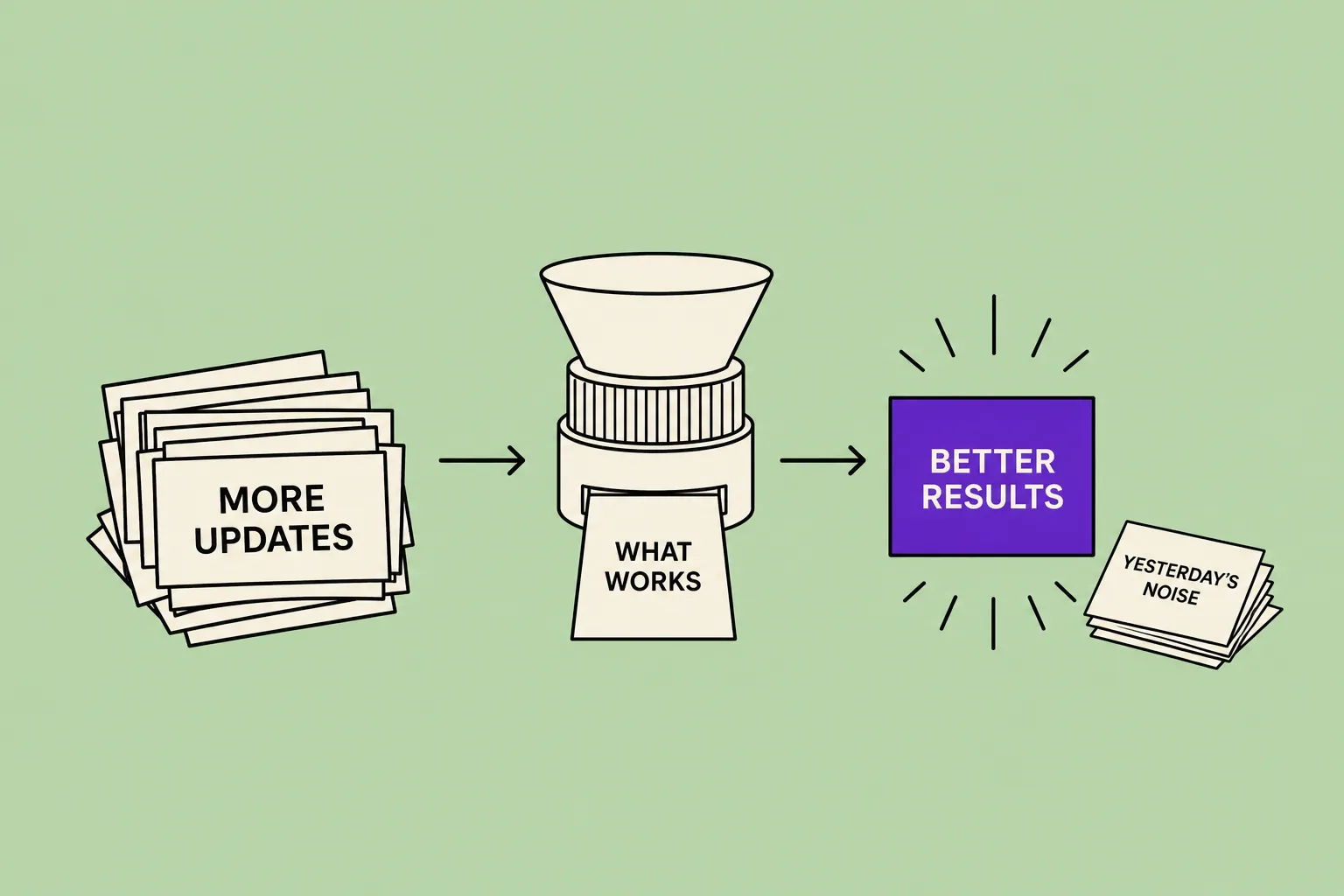
Prune and consolidate thin content. Use the first update of the year as the prompt to audit your pages for shallow, duplicative or outdated material, then merge overlapping pages into stronger single resources and retire the ones that serve no purpose. A tighter set of genuinely useful service and industry pages gives Google fewer weak signals to weigh and a clearer sense of what your firm is authoritative about. Set your post-update rankings on 27 March as the baseline you will track through the rest of the year. An Amina Website Review and SEO Audit can identify which pages are pulling their weight and which thin pages are worth consolidating or removing, so your site enters the next update leaner and stronger.
FAQ
Was the March 2025 core update the first of the year?
Yes. It ran from 13 to 27 March 2025 and was the first broad core update of that year, which makes it the natural baseline for measuring how your rankings moved across the rest of 2025.
How long did the March 2025 core update take to roll out?
About two weeks. Google launched it on 13 March and completed the rollout on 27 March, which is a typical duration for a broad core update.
Does pruning thin content really help after a core update?
It often does. Core updates tend to reward sites with genuinely useful, well-organised content, so consolidating overlapping pages and removing shallow ones gives Google fewer weak signals and a clearer picture of what your firm is authoritative about.