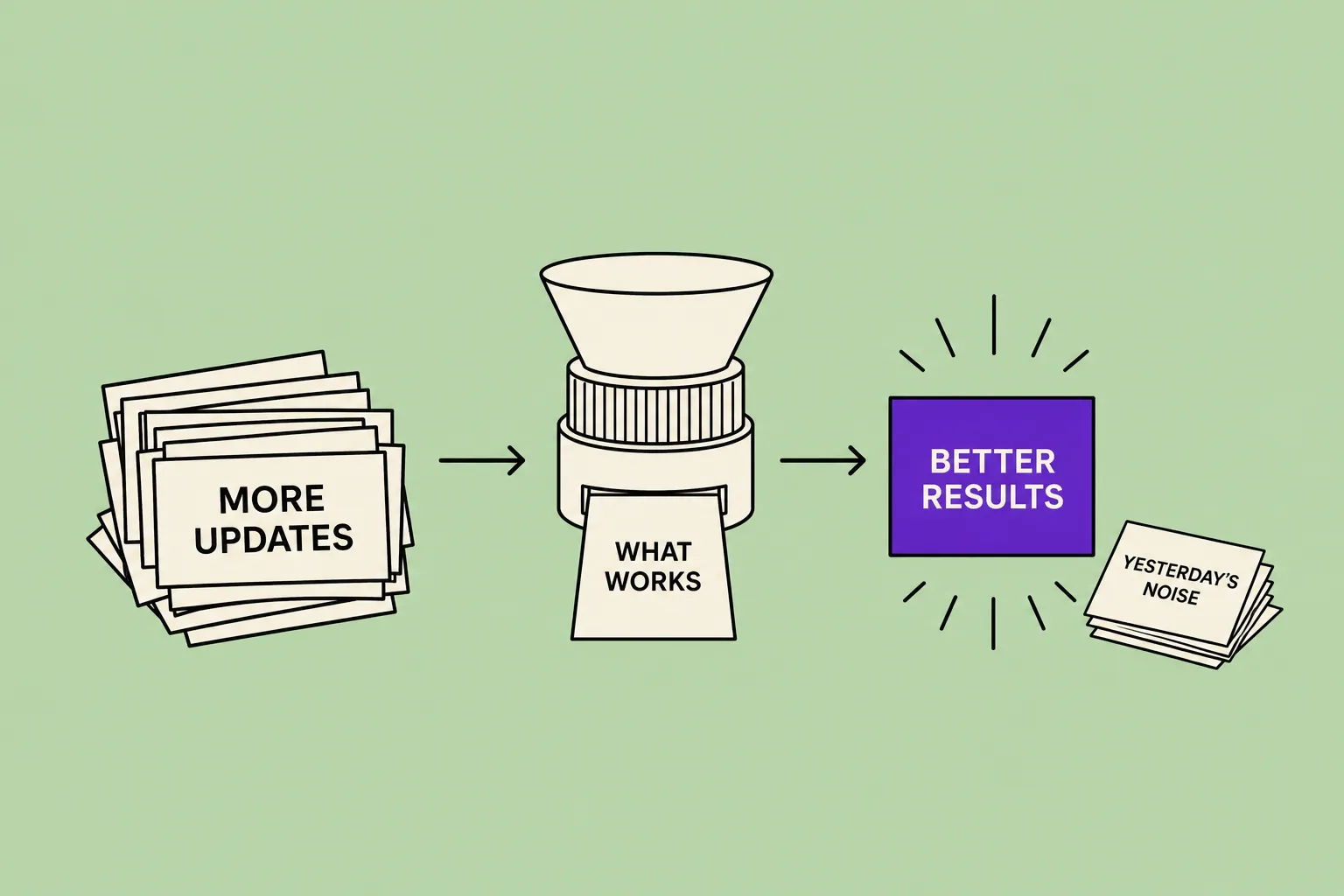
A Google core update is a broad, sitewide change to how Google assesses and ranks pages, applied across all types of sites at once. Google frames each one as "a regular update designed to better surface relevant, satisfying content for searchers from all types of sites." The March 2026 core update started on 27 March 2026 and completed on 8 April 2026.
What changed
This rollout took about 12 days. Search Engine Land (owned by Semrush) reported that the March 2026 core update completed its rollout on 8 April, having launched on 27 March. It was the first core update of 2026 and the first broad ranking update of the year, which makes it the natural reference point for anything that shifted in your search performance during that spring window.
Alongside the completion, Google repeated its standard guidance. As the running log of Google updates at Search Engine Roundtable records, the company's long-standing position is that a ranking drop after a core update does not necessarily mean you have done something wrong, and that recovery often arrives with a later update rather than through an immediate fix. That guidance is the single most important thing to hold on to this time, because it sets a realistic timeline for anyone who lost ground.
Unlike some recent rollouts, the March 2026 update did not draw the same reports of extreme turbulence. The headline facts are the dates and the sequence: first update of the year, about a fortnight long, completed 8 April.
What it means for your firm being found
For a professional-services firm in Australia, the practical takeaway sits in Google's own recovery guidance. If your accounting practice, law firm, allied-health clinic or consultancy dropped for its core terms after 27 March, that is not a verdict that your site is broken. It is a re-scoring, and the next core update is when many affected pages get re-evaluated. UK firms operate on the same clock, since the rollout was global and the guidance applies everywhere.
That said, "wait for the next update" is not the same as "do nothing." Recovery tends to reward sites that used the gap to genuinely improve, not sites that simply waited. And the reach of any recovery now extends beyond the ten blue links. The pages Google ranks are also the pages it treats as eligible sources for AI Overviews and AI answers, so a firm that rebuilds its standing in classic results is also rebuilding its chance of being cited when a prospective client asks an AI assistant "who are the best tax advisers near me." Losing the ranking and losing the AI citation tend to happen together, and so does regaining them.
What to do now
Establish a clean baseline and plan around the recovery window. Record where your priority pages ranked before 27 March and where they landed by 8 April, then diarise a review for the next core update, since that is when Google says recovery is most likely to show up. Use the gap deliberately: strengthen the pages that slipped by improving depth, accuracy and genuine usefulness, rather than making cosmetic tweaks and hoping. If you want an objective read on which pages to prioritise before the next rollout, an Amina Website Review and SEO Audit will benchmark your current position and pinpoint the content most likely to respond, and an AI Visibility Check will show whether you are still being surfaced in AI answers for your core services.
FAQ
My firm's rankings dropped after 27 March. Does that mean my site broke?
No. Google's own guidance is that a ranking drop after a core update does not necessarily mean something is wrong with your site. It reflects a broad re-scoring, so the priority is improving quality rather than hunting for a fault.
When can I expect to recover if I lost rankings?
Google says recovery often comes with a later core update rather than immediately. The realistic plan is to improve the affected pages now and treat the next core update as the point at which those improvements are most likely to be reflected.
Was this the first Google core update of 2026?
Yes. The March 2026 core update, which ran from 27 March to 8 April, was the first broad core update of the year, making it the baseline against which later 2026 updates are compared.