A Google core update is a broad, sitewide change to how Google ranks pages. It is not a penalty aimed at any single website. Google describes every one of them the same way: "This is a regular update designed to better surface relevant, satisfying content for searchers from all types of sites." The May 2026 core update began on 21 May 2026 and finished rolling out on 2 June 2026.
What changed
The rollout ran for roughly 12 days. According to Search Engine Land (which is owned by Semrush), the May 2026 core update completed on 2 June after starting on 21 May. This was the second core update of 2026, following the March 2026 update that wrapped up in early April. In other words, firms saw two broad ranking shifts inside a single half-year, so any movement you noticed in late May sits on top of whatever the March update already did.
This one was noisy. Search Engine Roundtable reported that the update was done rolling out and, like other trackers, flagged unusually choppy conditions during the run. SEO trackers reported heavy volatility across the rollout, with the sharpest spikes clustered around 23 May and 30 May. Those spike observations come from third-party ranking tools, not from Google, so treat them as vendor readings of the weather rather than an official measure of impact. Search Engine Journal also covered the update as it began rolling out.
The plain reading: a normal core update, delivered over about a fortnight, but with more day-to-day turbulence than usual before positions settled.
What it means for your firm being found
For an Australian accounting, legal, health or consulting firm, a core update is really a re-scoring of who deserves to appear for the searches your prospective clients type. If your rankings for terms like "SMSF audit Melbourne" or "commercial lease lawyer Brisbane" wobbled in the last week of May, that is the update at work, not necessarily a fault on your site. UK firms serving comparable professional-services markets saw the same rollout, since core updates are global.
The stakes now run wider than the classic blue links. The pages Google trusts enough to rank are also the pages it draws on to build AI Overviews and AI answers. So a core update quietly resets two things at once: where you sit in the ranked results, and whether your content is considered a credible source for an AI-generated response. A firm that slips in the rankings can also lose its place in the answer box, which is where a growing share of high-intent buyers now form their first impression.
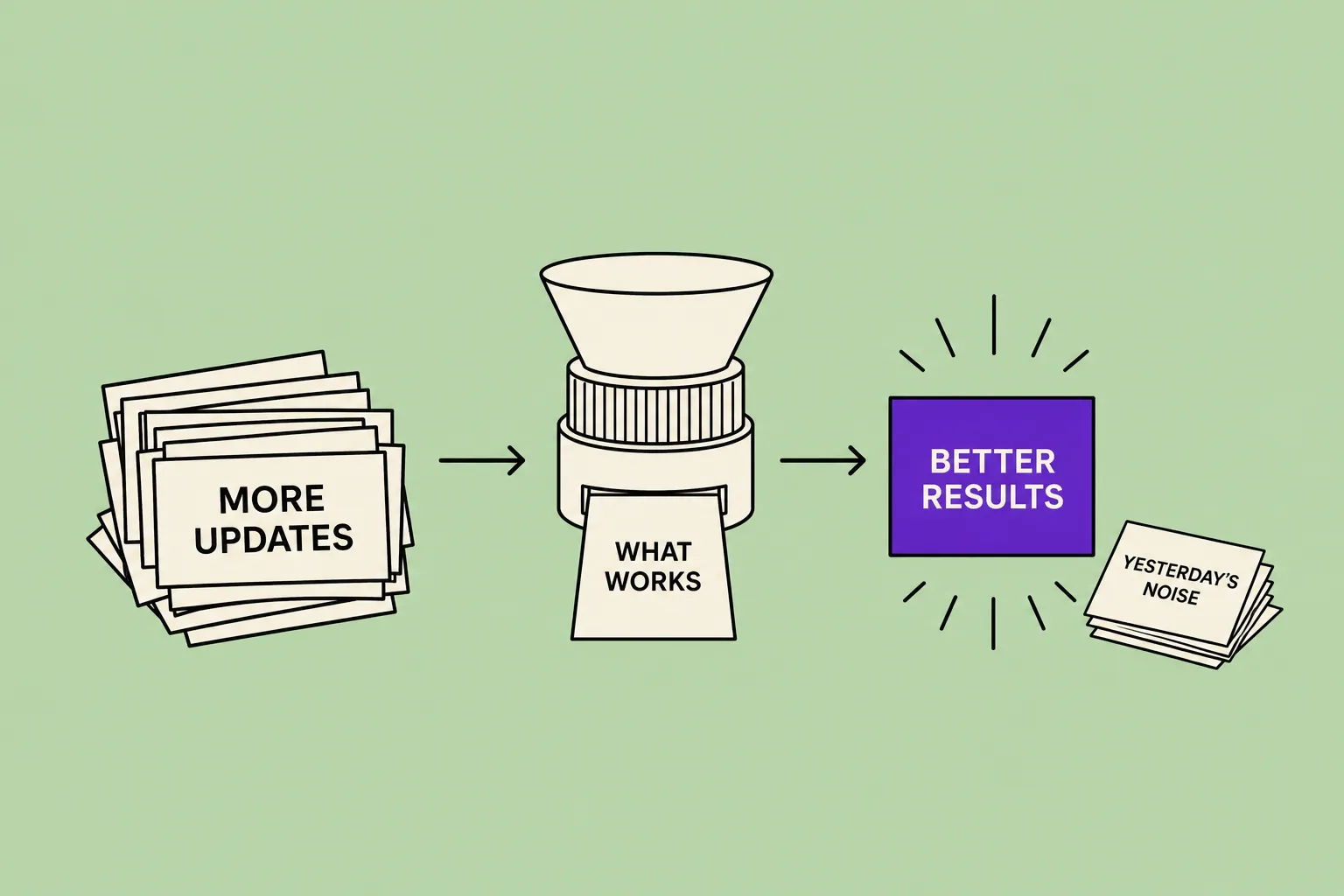
The heavy volatility matters here too. When trackers report big swings, mid-rollout snapshots are unreliable. A position you held on 24 May may not be the position you hold on 2 June, so reacting to a single bad day risks chasing noise.
What to do now
Do not panic-edit. The single most useful move during a volatile core update is to hold steady and give it a full observation window before you touch anything. Wait until the rollout is complete (2 June here) and then let another week or two pass so positions can stabilise, rather than rewriting pages while the algorithm is still moving. Log your key rankings and traffic before and after the dates above so you can compare like with like. Once the dust settles, an Amina Website Review and SEO Audit can tell you which changes are real and which were just rollout turbulence, so any edits you make are aimed at genuine losses rather than temporary dips.
FAQ
Did the May 2026 core update penalise my site?
No. A core update is a broad re-ranking, not a manual penalty. If your rankings fell, it usually means Google is now rewarding other pages more, so the fix is to improve quality and relevance rather than to assume a rule was broken.
Why did my rankings jump around so much during late May?
SEO trackers reported heavy volatility during this rollout, with spikes around 23 and 30 May. Rankings commonly swing while an update is still rolling out, which is why any position you saw before the 2 June completion date should be treated as provisional.
Should I change my content immediately after a core update?
Not straight away. It is better to wait for the rollout to finish and for positions to settle, then assess real losses against a baseline before editing, so you are responding to lasting changes rather than short-term noise.