Ask most agencies what content pruning is for, and you'll get the answer from 2018: hack away the thin pages, tidy up the crawl budget, and tell the client you cleaned house. That version of the job is quietly obsolete. Pruning survives the shift to AI search, but its purpose has inverted. The work is no longer subtraction for its own sake; it's consolidating and expanding scattered pages into the one comprehensive, first-hand answer that AI agents actually cite. For a client-services lead, that's the difference between a vague "we should do something about AI" conversation and a defined, billable project your SEO team can run without being replaced. Let's break down what changed, and how to package it.
Why pruning flipped: from crawl-budget housekeeping to authority consolidation
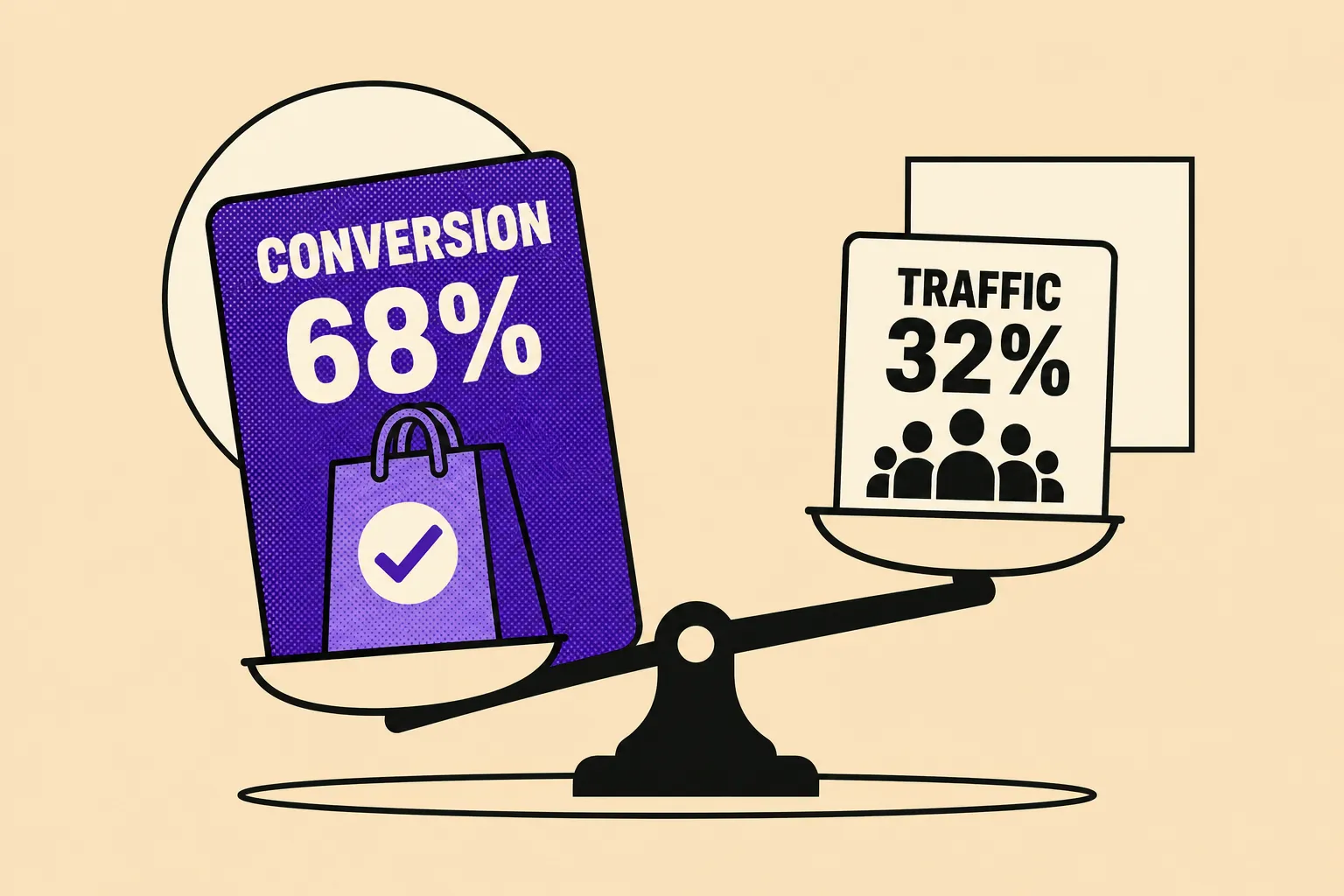
The old pruning logic assumed ranking was the prize. Rank a page in the top 10 and you'd earn the traffic; spread keyword-targeted pages across the site and you'd cover more queries. AI search breaks that assumption at the root, because ranking position is now a weakening predictor of whether you get cited at all. Ahrefs found that only around 38% of Google AI Overview citations come from pages ranking in the top 10, down from roughly 76% in July 2025. That figure is drawn from 863,000 keyword SERPs and about four million AI Overview URLs as of March 2026 (https://ahrefs.com/blog/ai-overview-citations-top-10/). Search Engine Journal reported the same numbers, and both trace back to that single Ahrefs study, so treat it as one well-attributed source.
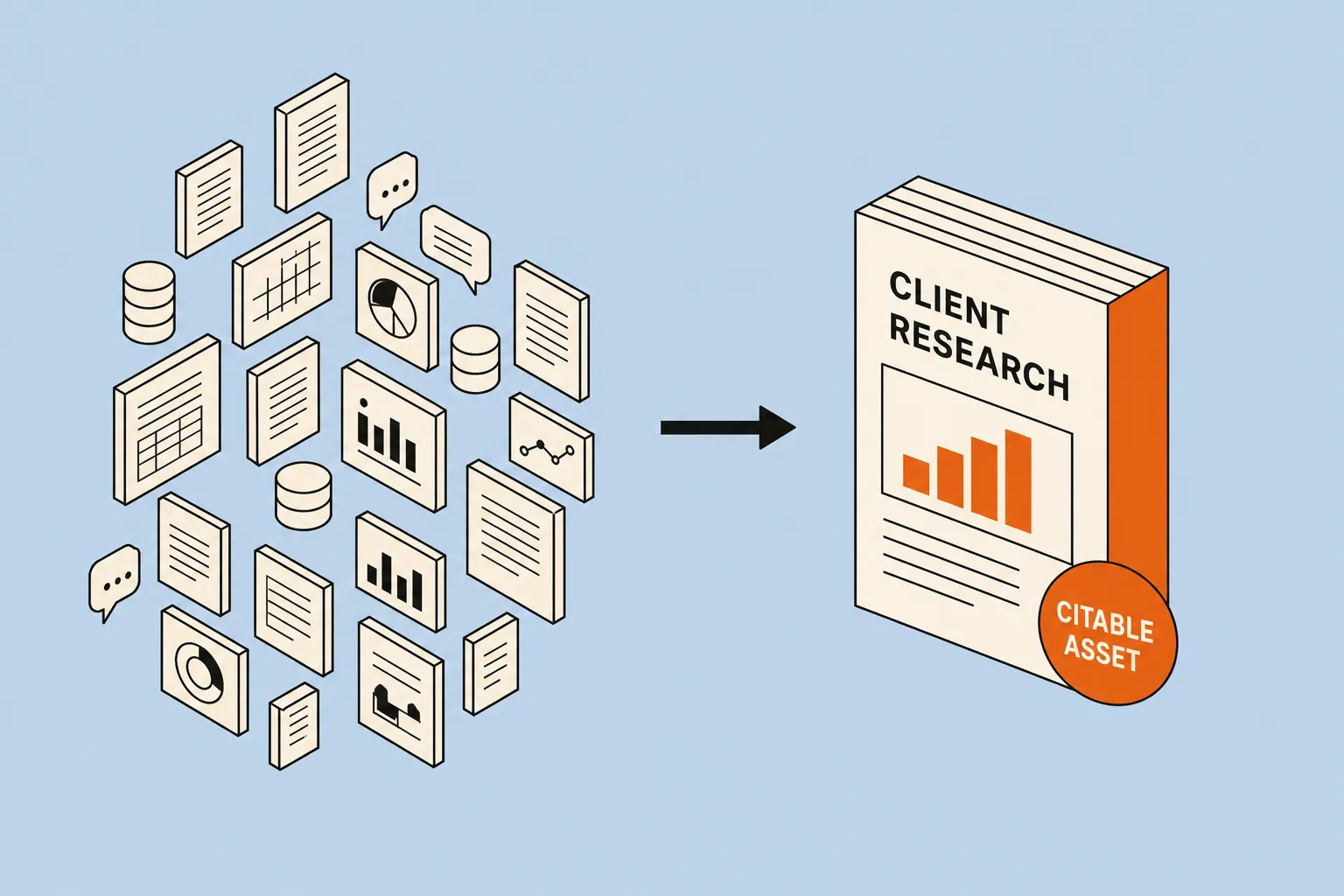
The takeaway for your content model is blunt: fragmenting authority across a dozen head-term pages is a losing move. Search Engine Land's guide to content pruning for AI search (worth noting the site is owned by Semrush) reframes the goal as combining or expanding pages into thorough topic coverage that sends strong authority signals to AI agents, rather than chasing one central keyword per URL (https://searchengineland.com/guide/content-pruning-for-ai-search). Think of it less as weeding and more as merging three half-empty shops into one flagship: the inventory doesn't shrink, it concentrates.
There's a live buyer behind this shift. A growth-marketing analysis in Startup Daily argues the crowded race to be cited by AI is won not by publishing more pages but by building authority in the gaps (becoming the default reference for the specific, high-intent questions AI still answers poorly), and notes that around half of consumers now use AI search platforms like ChatGPT, Claude, Perplexity and Gemini, with roughly 60% using AI search to inform purchasing decisions [AU] (https://www.startupdaily.net/advice/business-strategy/ai-gold-rush-where-the-opportunity-is/). Your client's buyers are already there. The only question is whether one page owns the answer, or five pages split the vote.
The audit that finds what to combine
Before you consolidate anything, you need to know what you're holding. Start with a complete URL inventory, including orphaned pages that have no internal links pointing to them, because those are exactly the pages that quietly split your topical authority. Search Engine Land's process pulls that list from more than one source (CMS export, sitemap, crawl and analytics tools), since any single method leaves gaps (https://searchengineland.com/guide/content-pruning-for-ai-search).
Then layer on metrics, referral and engagement, filtered against AI referral traffic where you can see it, so you're judging pages on how they perform in AI search rather than on 2019 pageviews. From there it's a decision tree: for each page, does it stay, redirect, or combine? Keep and strengthen the pages that own a topic, redirect the ones whose value can be absorbed elsewhere, and combine the near-duplicates into one deeper resource.
One local guardrail belongs in that decision tree. Under Australian Consumer Law, the ACCC prohibits false or misleading representations, and it notes operators have quickly amended or removed potentially misleading information once contacted [AU] (https://www.accc.gov.au/consumers/advertising-and-promotions/false-or-misleading-claims). When you redirect or merge legacy pages, make sure the claims you carry forward are still accurate and substantiated. A consolidation project is the moment stale or unsupportable statements get caught, not perpetuated, so make it a client-protection point your team can lead with.
Building the page AI will actually quote
Consolidation only pays off if the page you build is one a model can't get anywhere else. On this, Google's own guidance is unusually direct. At its Search Central Live event in Milan, Google said rewarded content must be Unique (unreplicable viewpoints), Specific (vertical case-study analysis) and Authentic (first-hand field experience), and that it's taking a restrictive approach against synthetic or programmatic "commodity" content lacking proprietary data, what it calls Scaled Content Abuse, as reported by Search Engine Roundtable (https://www.seroundtable.com/google-search-central-live-milan-41533.html). Site-level quality matters too: Google reiterated that pages don't sit on islands, and weak site-wide quality can drag a whole domain down. So consolidation isn't just tidy. It removes the low-quality ballast that was holding your good pages back.
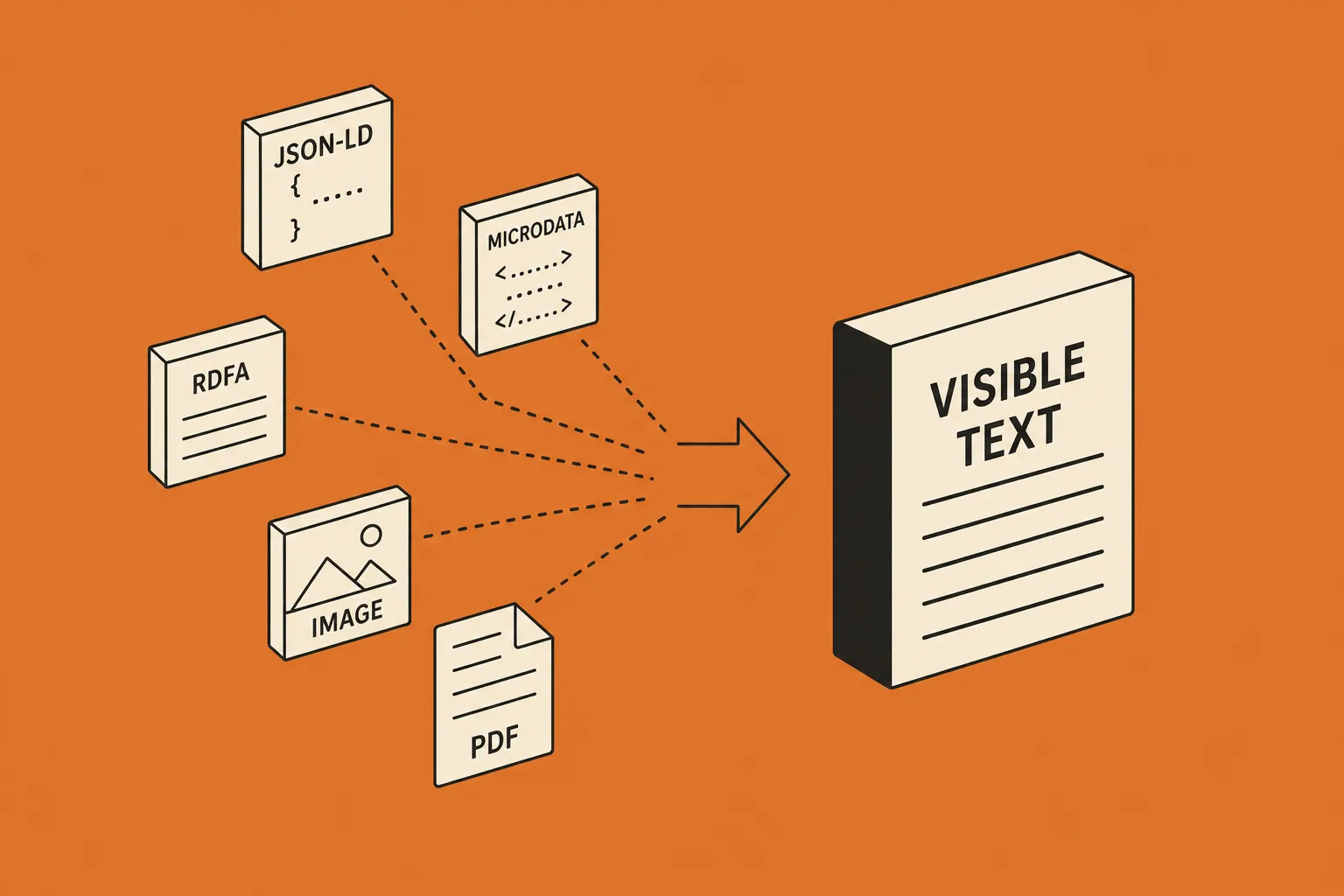
And kill one client misconception while you're at it. Forcing paragraph "chunking" to please the machines is useless; Google says content organisation should follow human readability, not some imagined AI parsing format (same source). The move that earns citations is first-hand substance a competitor can't replicate, structured for a person to read. Nothing more exotic than that.
Prove it worked: measuring the AI-visibility lift
This is the step that turns a one-off cleanup into a repeatable retainer line. Once you've consolidated, measure whether AI visibility actually moved. That is the same close-the-loop logic Search Engine Land builds into its process, which ends by verifying gains with an AI-visibility tool (https://searchengineland.com/guide/content-pruning-for-ai-search).
Be honest about what the number looks like today. An analysis of 115 Australian businesses found ChatGPT drives 90.2% of identifiable AI referral traffic (Perplexity 4.25%, Gemini 2.5%) and that AI sessions grew about 1,200% year on year at the median by September 2025. But AI still contributes only around 0.1% of revenue and converts below organic (2.9% purchase conversion versus 6.0%), with Perplexity and Gemini visitors converting three to six times higher than ChatGPT's [AU] (https://www.smartcompany.com.au/artificial-intelligence/chatgpt-drives-90-ai-website-traffic-in-australia-converts-worse-than-perplexity-gemini/). So you're not selling a big current number. You're tracking a small base compounding fast, which is exactly why measurement matters. It's the only way to show a client the lift before it shows up in revenue.
A caveat to set expectations honestly: "GEO," "AEO" and "AI visibility" aren't settled doctrine. Google has publicly pushed back on the idea that optimising for AI is a separate discipline ("good SEO is good GEO"), so use the measurement, but frame it as a directional read on citations and mentions rather than a guaranteed rulebook. Be candid about the consolidation lift itself, too. Robust before-and-after case studies are still thin. Search Engine Land points to a single directional example: SEO consultant Jeanne Grunert's LinkedIn account of a decade-old home-and-garden site that pruned everything down to its core "growing food" topic to improve AI visibility (https://searchengineland.com/guide/content-pruning-for-ai-search). Treat that as a signpost, not a benchmark, and let the client's own measurement supply the proof.
The tooling to do that is now a real, locally served category. Sydney startup Hall, backed by a $2m Blackbird pre-seed, runs a free self-serve platform tracking how a brand appears across five AI assistants (ChatGPT, Perplexity, Claude, Google Gemini and Microsoft Copilot) and reported hundreds of signups from SEO agencies, in-house teams and brands within months of its April launch [AU] (https://www.smartcompany.com.au/startupsmart/four-aussie-startups-raised-4-25-million-this-week-myostellar-fytonbio-remagine-labs-hall/). Founder Kai Forsyth put the stakes plainly: "When someone asks ChatGPT for restaurant recommendations or software comparisons, they're bypassing Google entirely." Across the market, a UK agency roundup sets a practical 2026 baseline of monitoring five to six platforms and flags the exact pain that makes this a recurring retainer line: "Tracking ten clients across ChatGPT, Gemini, and Perplexity on platforms built for single-brand use gets expensive fast" [UK] (https://businesscloud.co.uk/news/top-6-ai-visibility-tools-for-seo-agencies-flexible-pricing-powerful-features-2026/).
Key takeaways
- Pruning's purpose inverted: the goal is authority consolidation into one citable answer, not deleting thin pages to save crawl budget. Ranking in the top 10 no longer guarantees the citation (Ahrefs: ~38%, down from ~76% in July 2025).
- Run the audit as a defined project: a full URL inventory (including orphans) → AI-filtered metrics → a stay / redirect / combine decision tree.
- Build for U/S/A: unique, specific, first-hand content structured for humans. Skip the "chunking" theatre; Google says it does nothing.
- Bake in a compliance check: under Australian Consumer Law, don't carry stale or misleading claims forward when you merge or redirect [AU].
- Close the loop with per-client AI-visibility measurement. The lift is small but compounding, and it makes this a recurring retainer line rather than a one-off.
Frequently asked questions
What is content pruning for AI search?
Content pruning for AI search is the practice of consolidating and expanding scattered pages into comprehensive, first-hand topic coverage that AI agents are more likely to cite, rather than simply deleting thin pages. Search Engine Land (owned by Semrush) frames the goal as sending strong authority signals through combined coverage, then verifying gains with an AI-visibility tool.
Does content pruning still matter now that AI can summarise anything?
Yes. Ranking position is a weakening predictor of AI citation. Ahrefs found only about 38% of AI Overview citations now come from top-10 pages, down from roughly 76% in July 2025, so concentrating topical authority on one comprehensive answer is more useful than spreading it across many head-term pages.
Should I delete pages to improve AI visibility?
Not as a first move. The point is authority consolidation, not mass culling: keep and strengthen pages that own a topic, redirect ones whose value can be absorbed elsewhere, and combine near-duplicates. When you do, check that any claims you carry forward stay accurate, which under Australian Consumer Law is a genuine obligation, not just good hygiene.
How do I measure whether consolidation improved AI visibility?
Track how often your brand is cited or mentioned across the major AI assistants before and after, using an AI-visibility tool covering five to six platforms as a 2026 baseline. Robust before-and-after case studies are still scarce, so install measurement per client to demonstrate the lift directly rather than relying on someone else's number.
Is "GEO" or "AI visibility" a separate discipline from SEO?
It's contested. Google has publicly argued that "good SEO is good GEO," so treat AI-visibility work as an extension of solid SEO and content quality, not a distinct rulebook with guaranteed mechanics.
Bringing it to your clients
If a client keeps asking what you're doing about AI, content consolidation gives you a concrete, defensible answer instead of a shrug. It's an upgrade to your existing SEO retainer, not a rebuild: a scoped Website Review to inventory and consolidate the sprawl, paired with an AI Visibility Check to measure the lift per client. That is the kind of white-label add-on that turns a nervous "do something about AI" conversation into a repeatable line item. That's how M2.0 packages it, so your team can run it under your own brand without hiring for it.