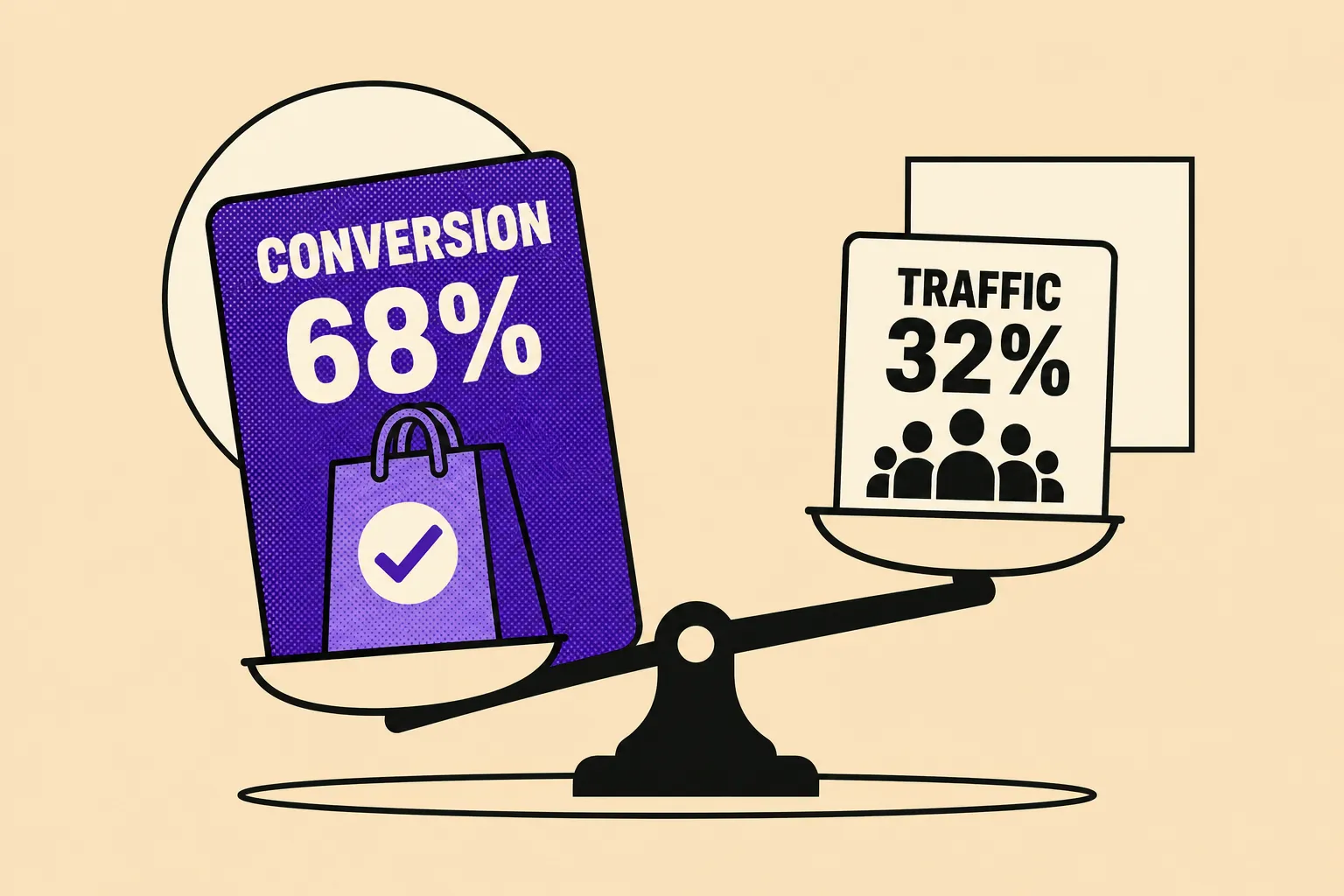
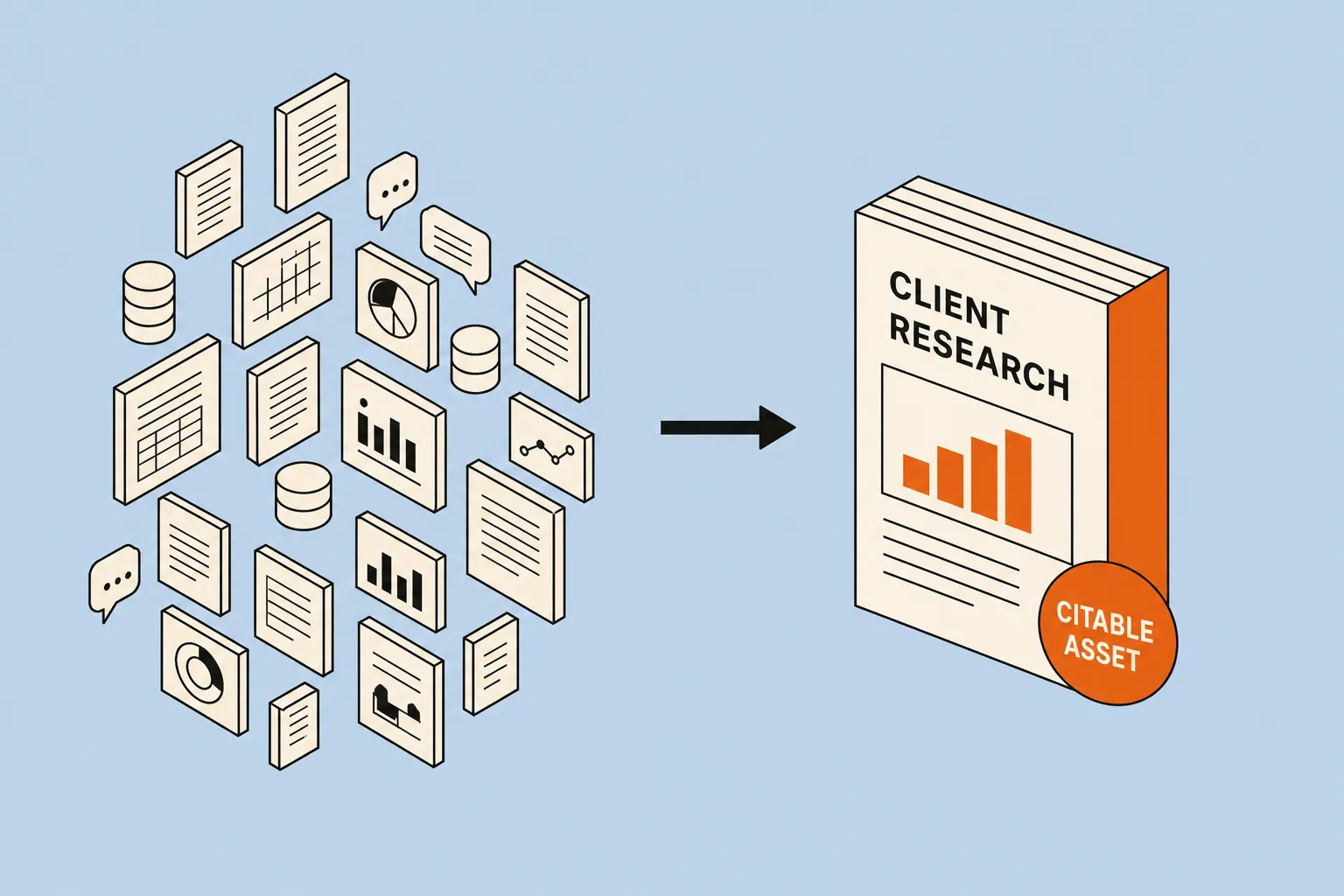
Every client who panics about being invisible in AI answers arrives with the same theory. They haven't published enough, or they're missing some magic file, or the schema needs work. It's a comforting diagnosis because it points outward, at volume and tricks. The real cause is quieter, and for a client-services lead it's far more billable. Whether ChatGPT, Perplexity or Google's AI Overviews can navigate, trust and cite a site is decided by its underlying structure: the taxonomy, the vocabulary, the legibility of both the content and the code. Not how much you publish. This piece reframes information architecture as "context architecture," and turns a vague visibility worry into a scoped Website Review your team can actually run.
From "information architecture" to "context architecture"
Start with the reframe, because the words do real work here. The Nielsen Norman Group argues that information architecture is re-emerging in a form it calls context architecture: the discipline of structuring the knowledge, labels and vocabulary an AI system reasons over. Their story runs through three eras. First prompt engineering, then context engineering (a term coined by Shopify's Tobi Lütke), and now agentic systems that retrieve, decide and act on your content with growing autonomy.
NN/g's analogy is worth borrowing for a client conversation. Context engineering is the plumbing and wiring of an AI system. Context architecture is what an architect does on top of it: deciding what a space is for and how people should move through it. A well-designed taxonomy lets a system pull only the billing-dispute policies instead of trawling every support doc, and labels aligned to how people actually talk ("reset password," not "credential-recovery workflow") help it match a request to the right content. Apply that to a website and the point lands: legible structure is what lets a machine find the right answer on your site and attribute it to you.
How messy structure produces retrieval noise and hallucinations about your brand
When structure is messy, a retrieval system behaves like a person rifling through a disorganised filing cabinet. It grabs whatever is nearby and plausible. NN/g describes the failure plainly: feed a support agent an unstructured knowledge base and it surfaces deprecated procedures, internal notes and "hallucinated procedural steps," because the model is left interpreting noise. The problem isn't the model. It's the mess it's reading.
Research on how AI systems retrieve from documents backs that mechanism. In a 2025 evaluation of structure-aware hierarchical chunking (respecting a document's real hierarchy rather than slicing it into arbitrary blocks), researchers at Tencent's Youtu Lab measured evidence recall climbing from 74.1 to 81.0 and fact coverage from 63.2 to 68.1 against a fixed-size baseline. A separate December 2025 study on enterprise retrieval found that structure and metadata enrichment reached 82.5% precision at ten results, versus 73.3% for a content-only approach. Both are arXiv preprints from the retrieval-engineering literature, not field tests on live marketing sites, so treat them as evidence of the mechanism: structure improves how accurately a machine retrieves the right passage and how fully it covers the facts. Better fact coverage is the closest measurable proxy for less raw material to hallucinate from. It is not a measured drop in brand misattribution, and no study yet claims that number.
The mechanism has an Australian footprint you can put in front of a client. An Optimising analysis of 115 Australian businesses, tracked between September 2024 and September 2025, found AI-referred sessions up roughly 1,200% year on year at the median, with the share of projects receiving any AI traffic jumping from 13.5% in 2023 to 88.5% in 2025 (ChatGPT drove 90.2% of it). The detail that matters for structure: brands surfacing inside AI-generated answers correlated with consistent details, clear descriptions and credible third-party proof. Consistency and clarity, in other words. Not volume. [AU]
Legibility is infrastructure, in your content and in your code
The same discipline shows up one layer down, in the code. Webflow makes an argument that translates cleanly for a non-developer: code is a message to the future, a communication channel aimed at the next engineer and, increasingly, at the AI agent reading it. Atomic commits, legible pull requests and comments that explain why a line exists rather than what it does make an AI agent's reasoning auditable before mistakes reach production. You don't need to write code to sell the principle. Legibility is the control layer over probabilistic systems, whether the thing being read is a support taxonomy, a product page or a git history.
There's a second reason legible structure pays off, and clients in regulated sectors already understand it. The structure that makes a site legible to a retrieval system is largely the same structure that makes it legible to a screen reader. Under the UK's Public Sector Bodies Accessibility Regulations 2018, which build on the Equality Act 2010, public sector sites must meet WCAG 2.2 AA and be "perceivable, operable, understandable and robust," as GOV.UK guidance sets out. [UK] Heading hierarchy, predictable navigation and robust markup are accessibility requirements and machine-legibility requirements at once. Australian government services are generally expected to meet the same WCAG 2.2 AA bar under the Digital Service Standard, with broader private-sector obligations flowing from the Disability Discrimination Act 1992. [AU] Fixing IA for AI and fixing it for humans is often the same invoice.
Why schema tricks and quick fixes don't substitute for real structure
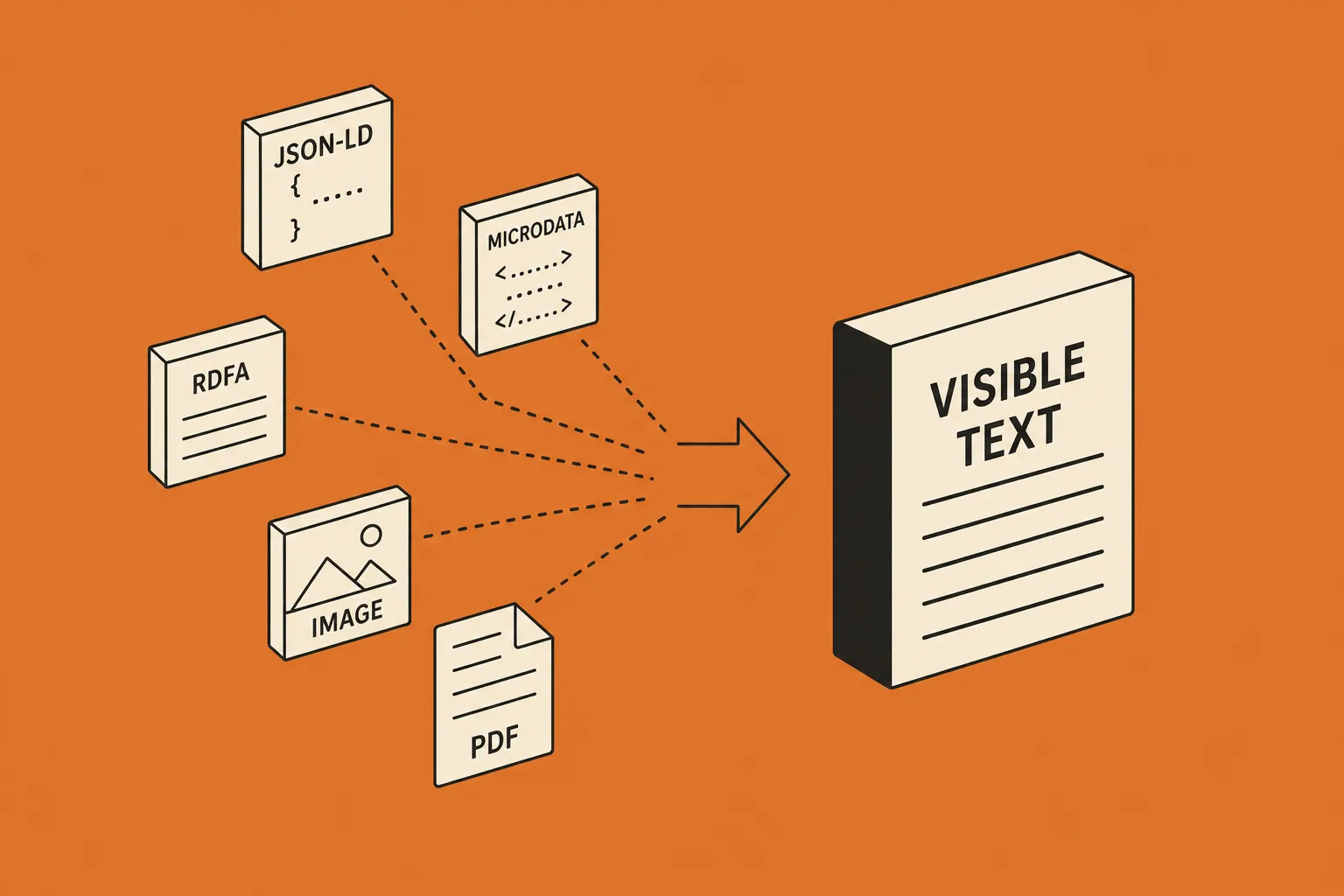
Clients love a shortcut, so name the ones that don't work before they spend money chasing them. Search Engine Land's analysis of retrieval versus citation in AI search (worth noting the publication is owned by Semrush) is blunt that satellite pages, hidden copy and stuffing content into schema don't work for AI Overviews and can drag down your SEO at the same time. What earns a citation is duller: genuine, crawlable, easy-to-understand structure that lets a model work out what you offer and who you serve. A companion piece on how travel brands earn AI recommendations makes the entity-consistency case, that the same details told the same way across the sources a model already trusts reduces the ambiguity these systems struggle with.
A Melbourne agency put the idea in local terms. Writing for an Australian startup outlet, Hungry Bull argued that in GEO, structure beats quantity, with a worked example any client will recognise. A page answering "how much does a bathroom reno cost in Sydney?" opens with three paragraphs of company history before the number, so the model skips it, while the competitor who leads with the answer gets cited. [AU] Treat that as an agency's practitioner view (it's partner content, not independent research), but the mechanic matches everything above.
One caution keeps the advice honest. "GEO," "AEO" and "AI search visibility" aren't settled doctrine. Google has publicly pushed back on the idea that optimising for AI is a separate discipline, arguing that good SEO is good GEO. So sell structure as an extension of solid technical SEO and content quality, not a secret new rulebook.
Scoping it as a Website Review: what to audit and what "good" looks like
The commercial stakes are drawing real money. In the UK, AI-search startup Searchable raised £10.3m in May 2026, with founder Chris Donnelly calling search "a once-in-a-generation reset" and the company's own data suggesting customers arriving from ChatGPT and other LLMs could convert at up to three times the rate of other channels. [UK] That's vendor data, not an IA-causation study. Still, it sharpens why being structured enough to get cited is worth a defined project rather than a shrug.
Reframed as an AI-readability audit, a Website Review turns "do something about AI" into a scope your existing SEO team can run without being replaced. Let's break down what it examines:
- Taxonomy and URL structure: does the site's organisation map to how buyers describe the problem, or to an internal org chart no model can infer?
- Controlled vocabulary: are the same things named the same way across pages, so a system isn't guessing whether two labels mean one concept?
- Entity consistency: do your core details (who you are, what you sell, who you serve) match across the site and the third-party sources AI already trusts?
- Crawlability and legibility: can a model reach and parse the answer, or is it buried below history, gated, or stuffed into markup?
- Heading hierarchy and navigation: the accessibility layer that doubles as machine-legibility.
Good looks like a page that leads with the answer, a vocabulary a stranger could predict, and a structure that reads the same to a crawler as it does to a screen reader. None of that requires publishing more. It requires publishing legibly.
Key takeaways
- Reframe the problem for the client: AI invisibility is usually a structure problem, not a volume problem, and the fix is context architecture (taxonomy, vocabulary, legibility), per NN/g.
- The causal mechanism is real but measured on documents, not live sites. Structure-aware retrieval research shows better evidence recall and fact coverage; frame it as less raw material for hallucination, not a guaranteed citation lift.
- Localise the stakes: across 115 Australian businesses, brand surfacing in AI answers tracked with consistent details and clear descriptions, not publishing volume. [AU]
- Legibility is infrastructure. The same heading hierarchy and predictable navigation that satisfy WCAG 2.2 AA also make a site legible to retrieval systems. [UK]
- Skip the tricks. Satellite pages, hidden copy and content-in-schema don't earn AI citations and can hurt SEO, and "GEO" isn't settled doctrine, so sell structure as good SEO.
Frequently asked questions
What is information architecture for AI search?
Information architecture for AI search is the practice of structuring a site's content, taxonomy and vocabulary so an AI system can navigate, trust and cite it. The Nielsen Norman Group reframes this as "context architecture": well-designed taxonomies, controlled vocabularies aligned to user language, and findability that reduce retrieval noise. The goal is legibility for machines, not publishing more pages.
Can AI actually read and cite my website?
It can, but how reliably depends on your structure. Research on how AI systems retrieve from documents finds that structure-aware organisation improves how accurately a model retrieves the right passage and how fully it covers the facts, which is the mechanism behind being cited. Messy, unstructured content leaves a model interpreting noise, which raises the odds it retrieves the wrong thing or misattributes it.
Do schema tricks improve how AI cites my site?
No. Search Engine Land (owned by Semrush) reports that satellite pages, hidden copy and stuffing content into schema don't work for AI Overviews and can hurt your SEO. What earns citations is genuine, crawlable structure that makes clear what you offer and who you serve.
Is "GEO" a separate discipline from SEO?
It's contested. Google has publicly argued that "good SEO is good GEO," so it's safer to treat AI-visibility work as an extension of solid technical SEO and content quality rather than a distinct rulebook with guaranteed mechanics.
How does clearer structure reduce AI hallucinations about my brand?
By reducing the noisy, ambiguous material a model has to interpret. Structure-aware retrieval research shows better evidence recall and fact coverage, meaning the system pulls more of the correct information and less irrelevant material. That lowers the raw material available for misattribution, though no study yet measures a specific drop in brand hallucination from website structure alone.
Bringing it to your clients
If a client keeps asking what you're doing about AI, context architecture gives you a concrete answer instead of a shrug. It's an upgrade to the retainer you already run, not a teardown: a scoped Website Review, reframed as an AI-readability and structure audit, paired with an AI Visibility Check to measure whether citations actually move. That's how M2.0 packages it, so your team can run the work under your own brand without hiring a new one.