Website design cost in 2026 turns less on the build, which AI and no-code tools have made cheaper for some tasks, and more on what surrounds it: the brief and content, who maintains the site, platform fees that scale after launch, and whether the firm can take the site with it. Compare those line items across quotes, not the hourly rate.
A website should cost almost nothing now. That assumption sits behind a lot of client conversations this year, and it has a respectable source: in July, Canva released Canva Code 2.0, which builds websites and web apps from text prompts, forms and quizzes included, as SmartCompany reported.
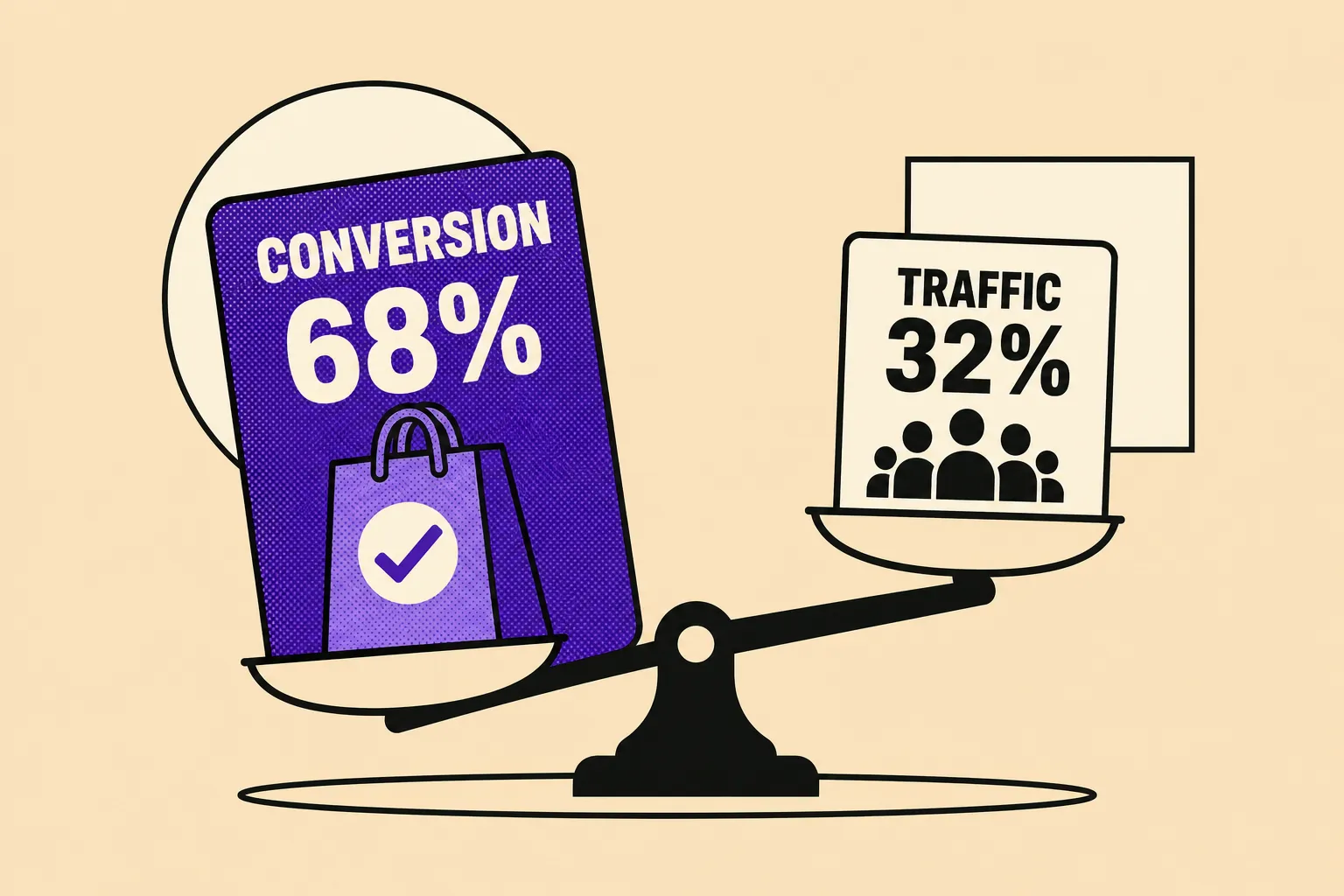
The reality is more useful than the myth. AI has made the part of a website you can see in a demo cheap to produce. It has not made cheap the parts that decide whether the site still works for the firm a year later: the brief and the content, who maintains it, the platform fees that grow after launch, and whether the firm can take the site with it when the engagement ends. So when a client forwards you two quotes that look miles apart, those are the line items to compare. The hourly rate is the least useful number on the page.
What AI and no-code tools actually made cheap
Production is the genuine change, and the vendors say so loudly. Canva says Code 2.0 "takes 75% less time to generate code", a figure worth reading carefully: it is Canva's own claim, and it measures code generation, not a website project. SmartCompany's coverage records the limits as well. "Right now there's no e-commerce capability," and the tool supports "front-end apps and interactivity at small to medium scale".
Webflow's roundup of white-label landing page builders describes the same shift from a competitor's seat. In Leadpages, it says, you describe a page in chat and "a branded, mobile-responsive result arrives in about 60 seconds", with logo, colours, fonts and tone pulled from the client's URL. Leadpages, Landingi and GoHighLevel all generate pages from a prompt, and Webflow says its Campaigns product, announced at WebflowConf in September 2026, also generates audience variants and ad creative. Treat all of it as vendor-reported capability. The back end has moved too: Webflow's guide to no-code backends describes marketing teams shipping logins, forms and gated pages through an interface, without waiting on engineering.
We found no independent measurement of how much faster a website gets built, only vendor demos and a vendor-commissioned study. The controlled studies that exist are about coding, not websites, and they disagree. In a GitHub Copilot experiment co-authored by GitHub and Microsoft staff, developers built an HTTP server in JavaScript 55.8% faster with the tool (95 recruited through Upwork, 35 per group completing), on a standardised task where code quality was not examined. A randomised trial at Google of 96 of its own engineers found AI cut time on a complex enterprise task by "about 21%, although our confidence interval is large." Then METR's trial of 16 experienced open-source developers on 246 real issues in their own repositories found they took 19% longer with early-2025 AI tools, despite forecasting a 24% speed-up; METR stresses this does not show AI fails to speed up most developers. The honest summary for a client: build effort has fallen for some tasks, and no independent study yet shows by how much for websites.
What they didn't make cheap: the brief, the content and the judgement
A tool that can produce anything still has to be told what to produce. Joshua Leigh put it neatly in For the Designless on UX Collective: "AI has not changed what a designer does. It has changed who can now attempt to do it themselves." His essay is about posters, flyers and menu photography rather than websites, so read what follows as an analogy. It transfers uncomfortably well.
Leigh prompted the same model twice for a farmers market poster. A one-line prompt returned generic output; a prompt carrying named visual references returned something specific to a place. "The tool did not change. The person operating it did." A website brief behaves the same way. The inputs (who the firm serves, what it knows that competitors don't, which cases prove it) are the part a model cannot supply, and someone on the quote is either doing that work or quietly leaving it to the default.
His sharpest category is the Corner-Cutter: "a business with real revenue and real marketing spend, fully able to commission the work, that simply doesn't." Customers notice. Leigh cites designer Kenzi Green quoting followers who made the connection that if you cut corners on the marketing, people assume you're cutting corners on the food. In our view the stakes run higher for a firm that sells judgement, such as a consultancy or an advisory practice, because its website is a public sample of that judgement. We have argued that judgement, not production, is what clients now pay for; the same logic prices a website brief.
Sameness carries a search cost as well. Leigh warns that models shipped with the same defaults produce "the placeless default everywhere at once", and Canva's head of AI products, Danny Wu, concedes the point: "In an age where anyone can generate content in seconds, looking like everyone else is the fastest way to get lost in the noise." By our reasoning, a site whose copy is the model's default gives a search engine or an AI assistant nothing specific to the firm to cite.
No-code relocates the engineering judgement rather than removing it. Webflow's backend guide says "the build still needs a defined data model, permission rules, error handling, and an owner for integration failures", and notes Supabase's own warning that tables exposed without SQL policies are readable by any role holding the grants, so an engineer must configure a production site safely. A chat assistant alone stops earlier still: ChatGPT's Canvas can draft copy and generate HTML for a landing page concept, but publishing, custom-domain setup, form storage, CRM connections and conversion tracking require a builder or additional services. A cheap prototype with the failure moved somewhere less visible is the pattern we described in how AI-assisted builds relocate failures.
The costs that never appear on the pricing page
Cheap to build and cheap to own are different numbers. Webflow's landing-page roundup makes the point about its own category: hosted builders bundle hosting, SSL and platform updates into the subscription, while "a self-hosted stack puts hosting, certificates, plugin updates, and staging on your team for every client site, and that cost never appears on a vendor's pricing page."
Plugin updates sound like housekeeping until you see the volume. Patchstack's State of WordPress Security in 2026 counted 11,334 new vulnerabilities in the WordPress ecosystem in 2025, up 42% on 2024, with 91% of them in plugins and just six in WordPress core. It also reports that "46% of vulnerabilities were not fixed in time for public disclosure", and that heavily exploited flaws reached a first exploit in a weighted median of five hours. Patchstack sells WordPress vulnerability protection, so weigh it as vendor research; Wordfence, another security vendor, put plugins at 96% of WordPress vulnerabilities disclosed in 2024 in its annual security report. Someone has to watch and patch continuously, and the quote should name who.
Hosted platforms have their own version. Think of a platform subscription like a printer: the machine is cheap, and the cartridges are where the money goes. Webflow's roundup says costs "rise with client projects, traffic overages, email volume, extra domains, AI usage, and mobile-app add-ons, so the subscription price alone does not show the effective per-client cost." Published entry prices in that list run from US$5 per month (Leadpages HTML Pub Starter: five pages, one domain, no A/B testing) to US$1,199 per month billed annually (Landingi Enterprise). Those are tool subscriptions in US dollars, not the price of a website, and the spread is the point. Canva follows the same pattern closer to home, with more AI credits on higher tiers and domain connection limited to paid plans.
Pricing models also shift after launch. Appwrite dropped per-seat pricing in September 2025 in favour of per-project pricing, and Firebase has no fixed monthly plan at any level, which is why Webflow's backend guide tells teams to set billing alerts before launch. Free tiers are at least candid: their published caps "tell you exactly when a site will outgrow it."
Who owns the site when the engagement ends?
Ownership is the line item that only surfaces when something goes wrong. Webflow's backend guide states the rule plainly: "Choose based on who will maintain the system after launch." It advises recording the expected exit path before committing, "because generated or visual logic may still need to be rebuilt during a later move," and offers a handoff test worth putting to any builder: can the person who will own the site rotate credentials, inspect logs, restore a backup and reverse a schema change without vendor support?
For agency-built sites, the platform underneath matters as much as the agency. Webflow's landing-page roundup says that if the client expects to own the site when the engagement ends, "the handoff matters more than full interface rebranding", and that where a platform offers continued access instead of ownership transfer, agencies should keep each client's pages, domains, integrations and assets isolated so the account can be separated without a rebuild. A removed "Powered by" badge, it adds, does not mean the login, editor, dashboard, emails and preview URLs carry the agency's brand. So ask whose account holds the site, whose name is on the domain, whether the site can move to the client's own account with its settings, domain and indexing intact, and what happens to it if the relationship ends.
Where form data lives belongs on the same list. Xano's free plan is US hosting only, and Webflow positions Backendless for projects "whose visitor data stays outside the EU." For some of your clients that now matters more. From 1 July 2026, professional service providers "such as lawyers, conveyancers, accountants, and trust and company service providers" are brought into the Privacy Act in connection with their AML/CTF obligations, according to updated OAIC guidance. That does not make a law firm's or accounting practice's whole website newly regulated, but it raises the stakes on where enquiry data is stored. In the UK, the ICO's updated international-transfers guidance includes a three-step test for identifying restricted transfers, worth running before a UK firm stores form submissions on a US-hosted backend.
How to compare two website quotes in 2026
The only current Australian range we found with a stated data base is a single marketplace's published cost guide. Bark's March 2026 website design cost guide says "Website design in Australia costs between $1,000 and $15,000+ for most small to medium businesses." It puts template builds in the $500 to $3,000 range and small-business custom builds (custom design, 10 to 15 pages, basic SEO) at $3,000 to $10,000+, though the same page elsewhere quotes custom builds up to $15,000+. Hourly rates run from $80 to $200+. For upkeep, it lists basic professional maintenance at $100 to $300 a month (security updates, plugin updates and minor content changes) and full-service support at $500 to $2,000+. All figures are AUD and exclude GST.
Read those numbers with care. Bark says they rest on more than 447,500 website design requests submitted across Australia since 2021, but it doesn't explain how it derived the ranges, and as a marketplace that sells customer requests to web designers it has a commercial interest in the category. They are not averages, and we found no independent Australian survey with a stated method to check them against, nor a sourced UK range. Use them to sanity-check scale, then compare what each quote actually includes.
Let's put the line items side by side. For each quote, ask:
- Strategy and content. Who writes the copy, and from what inputs: interviews, case material, the firm's own expertise, or a prompt?
- Accessibility. Which standard does the build target, and how will the builder test it? Our piece on the accessibility and performance gate covers why a modern-looking site can still fail it.
- Performance. What gets measured at launch, and what does the builder promise?
- Hosting, updates and security. Who patches the platform and plugins, and at what monthly cost?
- Platform fees after launch. What scales with traffic, users, pages, domains or AI usage, and who pays when it does?
- Ownership and exit. Whose account, whose domain, and what happens to the site if the relationship ends?
- Measurement. What is tracked at launch, and who configures the pixels and consent?
That last item is now a compliance question in Australia as well as an analytics one. In June 2026 the Privacy Commissioner found that Medmate Australia and Monash IVF interfered with privacy by collecting sensitive information through third-party tracking pixels on their websites and using it for social-media advertising without consent. Both are health providers, so read it as a precedent rather than a verdict on your client's site. The OAIC's standing guidance on tracking pixels puts responsibility on the organisation deploying the pixel and warns against a "set and forget" approach, which is the opposite of a maintenance line item.
A quote that answers all seven questions in writing may cost more than one that answers two. It is also the only kind you can compare.
Key takeaways
- Treat the hourly rate as the least useful number on a quote. Compare strategy and content, maintenance, platform fees after launch, ownership and measurement instead.
- Ask who writes the content and from what inputs. In our view, copy left at the model's default gives search engines and AI assistants nothing specific to the firm to cite.
- Put a named owner and a monthly cost against plugin and platform updates. Patchstack found 91% of new WordPress ecosystem vulnerabilities in 2025 sat in plugins.
- Before signing, confirm whose account holds the site and domain, and run the handoff test: can the owner rotate credentials, inspect logs, restore a backup and reverse a schema change without vendor support?
- Use published AUD ranges only to sanity-check scale. Bark's $1,000 to $15,000+ (ex-GST) comes from a single marketplace's cost guide, not an independent survey.
Frequently asked questions
How much does website design cost in Australia?
Between $1,000 and $15,000+ for most small to medium businesses, excluding GST, according to one marketplace's published cost guide (Bark, March 2026), with template builds at $500 to $3,000. Bark has a commercial interest in the category and does not explain how it derived the ranges, so use them to check scale and compare quotes on what they include.
Has AI made website design cheaper?
For some tasks, yes, but we found no independent measurement for websites. Two controlled studies of AI coding tools (coding, not website builds) found time savings of 55.8% on one standardised task, in a study co-authored by GitHub and Microsoft staff, and about 21% at Google, with what its authors call a large confidence interval, while a METR trial found experienced developers took 19% longer on real work in their own repositories. Content, maintenance, platform fees and ownership sit outside the build, so a cheaper build does not remove them.
How much does website maintenance cost per month?
Basic professional maintenance in Australia runs $100 to $300 a month and full-service support $500 to $2,000+, excluding GST, according to Bark's March 2026 cost guide, a single marketplace's published figures. Check what the fee covers: on a self-hosted site, plugin updates are a continuous job, and Patchstack found 91% of new WordPress ecosystem vulnerabilities in 2025 were in plugins.
What should a website quote include in 2026?
A comparable quote states who writes the content and from what inputs, which accessibility standard it targets and how it will be tested, what performance is measured, who handles hosting, updates and security at what monthly cost, which platform fees scale after launch, who owns the account and domain, and what is tracked at launch. Without those line items, two quotes cannot be compared on price alone.
Who owns my website if I change agencies?
It depends on the platform and the agreement, so settle it before signing rather than at the exit. Ask whose account holds the site, whose name is on the domain, and whether the platform transfers ownership or only offers continued access. Then check whether your own team could rotate credentials, inspect logs, restore a backup and reverse a schema change without vendor support, the handoff test Webflow's no-code backend guide recommends.
Before your client signs
If a client has two build quotes on the table, Amina will read them line by line against this checklist, as a specialist you bring in without handing over the relationship. Amina builds performance-first websites for professional-services firms: fast, accessible, built to be found in search and AI from day one, and yours to keep.