Interactive tools like calculators and templates target high-intent, buying-adjacent queries and give AI answer engines a concrete, proprietary thing to reference, yet most agencies skip them because they assume the work needs a developer. AI has removed that barrier, which turns a neglected format into a retainer add-on you can ship to client sites, provided the build meets a real standard for accuracy, accessibility and privacy.
Ask most agencies why their clients don't have a stamp-duty calculator, a pricing estimator, or a readiness quiz on their site, and you'll hear the same answer: that's a developer job, and it isn't in scope. It is one of the more expensive assumptions in a retainer. The queries those tools would answer are the exact buying-adjacent searches your monthly reports keep coming up short on, and the barrier that kept you out of them has quietly gone.
Interactive tools have always been useful. What changed this year is who can build one, and what a tool now does for a brand's visibility in AI answers. Let's walk through why the format deserves a line in your next scope, and the standard that separates a tool worth citing from one that quietly puts a client at risk.
Why "X calculator" and "X template" are the queries your reports keep missing
Someone searching "superannuation contribution calculator" or "SDLT calculator" has moved past reading. They want an answer to their own numbers, and they are close to a decision. Search Engine Land argues that these "X calculator" and "X template" queries are actionable and buying-adjacent, yet almost nobody builds for them because teams assume it needs developer work. (Search Engine Land is owned by Semrush.)
The format also converts better than the static pages a retainer already ships. Per Demand Metric's benchmark, 70% of interactive-content users rated their content moderately or very effective at converting prospects, against 36% for passive content, though that reading dates to 2014 and the tooling has moved on since. A longer-standing MarketingSherpa case study of Tandberg found an ROI calculator converted visitors at three to four times the rate of the company's white papers. More recently, Outgrow, a vendor that sells interactive-content builders, reports interactive forms converting at 47.3% versus 2.8% for traditional forms across 50,000-plus forms. Read that last figure as a directional upper bound given who published it, not a number to promise a client. The pattern underneath all three is steady: a tool that does something for the visitor converts the high-intent traffic your other pages only inform.
Tools are citation bait, so give an AI engine something proprietary
A calculator built on your client's own formula is something no competitor can copy and no AI answer can paraphrase from ten other pages. Think of that proprietary calculation as the one quote in a story a journalist can't get anywhere else: it is the reason to reference you rather than someone else. That matters because inclusion in AI answers rewards new information. Google holds a patent on measuring information gain, the new information a page adds beyond what is already indexed, and its systems reward pages that add rather than repeat. A proprietary tool is information gain made tangible.
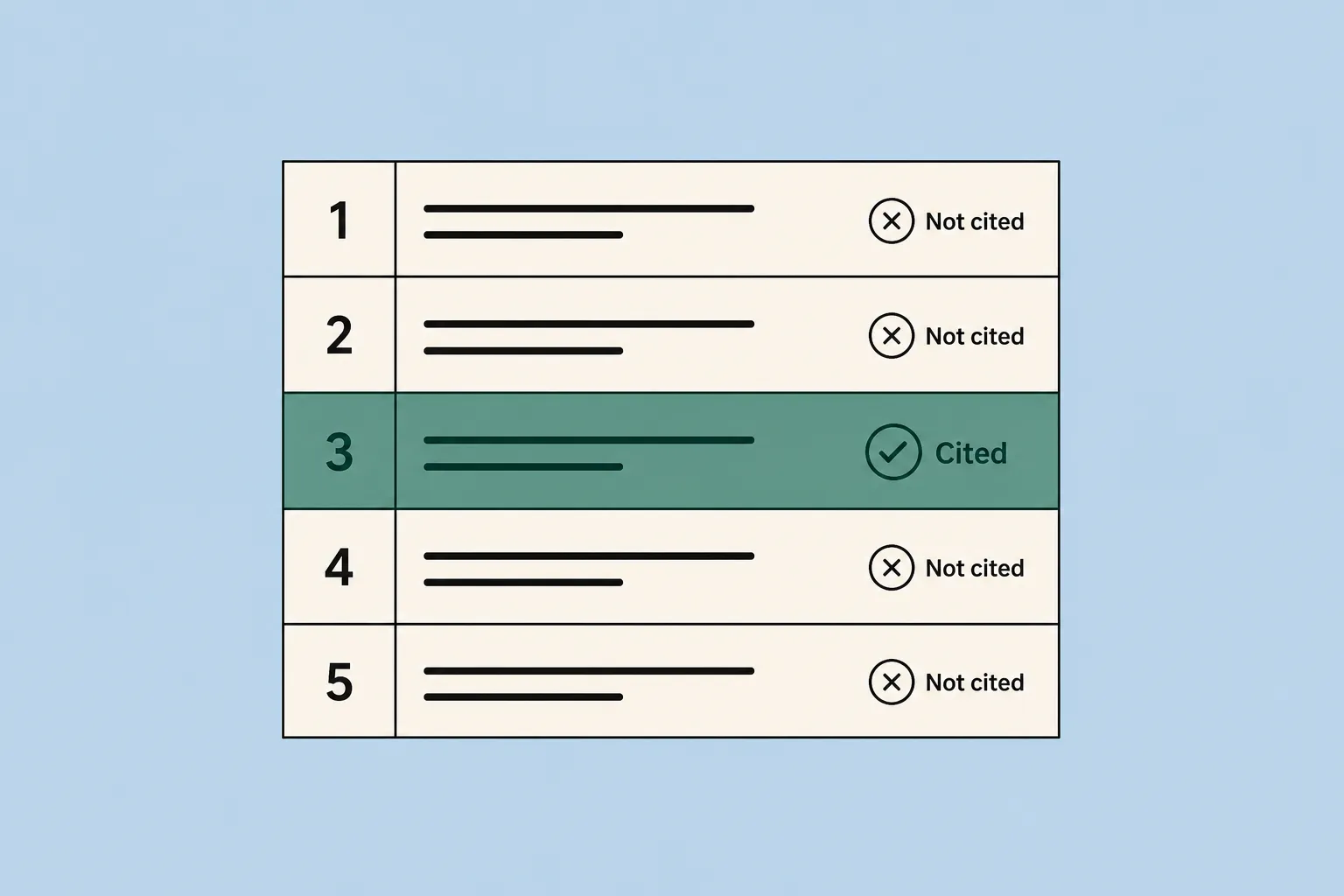
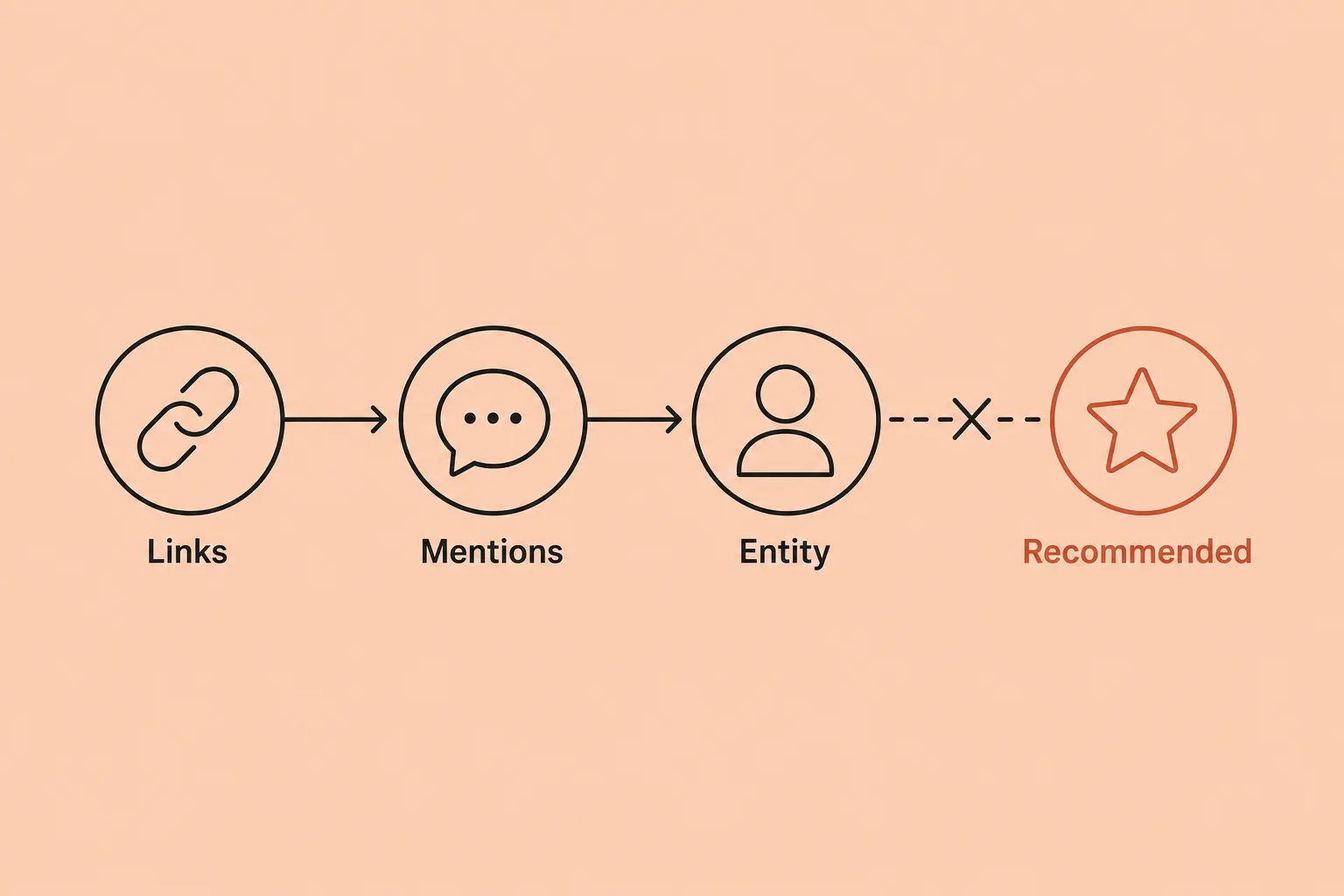
Be careful how far you push the citation promise. There is no solid public data showing interactive tools earn AI citations more often than other formats, and the whole GEO/AEO vocabulary around "being cited by AI" is contested, with Google's own line being that good SEO is good GEO. Search Engine Land makes the narrower, sensible claim that feeding a tool your own data "helps it get cited by AI engines rather than ignored." Treat that as reasoning rather than a guaranteed metric. Ranking a page and being cited in an AI answer are now two different outcomes, and a proprietary tool is one of the few assets that gives an engine a concrete reason to reach for the second. That is the argument to make in a QBR, and the service line it maps to is getting a client named in AI answers, not just ranked.
You don't need a developer anymore, but you do need to build it right
AI can now generate a self-contained, embeddable tool in raw HTML from a plain description of the inputs and the logic. Describe the calculation your client's buyers actually make, hand it your formula, and you get a working widget you can drop into a page. The barrier that used to live in a developer's backlog is gone.
The craft is not. The bar for what "interactive" means on the web keeps climbing. CSS-Tricks recently walked through Firefox 151's Document Picture-in-Picture API, which lets a widget live in a persistent floating window a user keeps on screen while they browse elsewhere. It is a glimpse of where rich widgets are heading, with a caveat that matters for anything you actually ship: support is uneven. The API is desktop-only, Safari doesn't support it, and there is no CSS feature-query path for it yet, so you detect support in JavaScript and fall back gracefully when it isn't there. That feature-detection-and-fallback discipline is precisely the layer AI does not add on its own. AI writes the tool. Whether it is safe to ship is the judgement a client pays an agency for, and it is where an AI-assisted build relocates its failures rather than removing them.
The standard that makes a tool citable and safe
"Built by AI" and "safe to ship" are two different states, and the gap between them is the standard your QA layer closes. Three things decide whether a tool earns trust from a user and an engine alike.
Accuracy comes first. A calculator that returns a wrong number is worse than no calculator, because it fails publicly with your client's name on it. The proprietary logic or dataset inside the tool is the part that has to be right, and checking it is human work that AI can't self-grade.
Accessibility is the second, and it is a legal standard in both markets, not a finishing touch. In Australia, WCAG 2.2 Level AA is the recognised conformance target, sitting on the Disability Discrimination Act 1992 as the underlying obligation. The explicit 2.2 AA mandate is clearest for government services; for a private client site the DDA is the general anti-discrimination basis and WCAG 2.2 AA the accepted bar. [AU] In the UK the duty reads more directly: the 2026 edition of the Equality Act 2010 Code of Practice for services confirms the reasonable-adjustments duty "also applies to the provision of services on a website," covering private providers whether the service is free or paid. [UK] An embeddable tool a keyboard or screen-reader user can't operate isn't a gap in polish, it's a reasonable-adjustment failure. A tool can look modern and still fall through the accessibility gate.
Then there is what the tool collects. A calculator that gates its result behind an email is a data-collection event, and both regulators are paying attention. In Australia the OAIC ran a privacy-policy compliance sweep in early 2026, assessing around 60 entities against the transparency requirement in Australian Privacy Principle 1, with penalties up to $66,000 for non-compliance. Privacy Commissioner Carly Kind noted consumers "often don't have access to all the information they might need to make an informed decision" when handing over data. APP 3 also requires you to collect only what is reasonably necessary, by lawful and fair means, an implicit duty to minimise. [AU] The design rule that follows is clean: compute in the browser, ask for the least data possible, and ideally return a result without demanding personal information at all. In the UK, if you do gate a result behind an email, valid UK GDPR consent has to be a clear affirmative action, unbundled from other opt-ins, with privacy information given at the point of collection. [UK]
One more is on the horizon. From 10 December 2026, new APP 1 transparency obligations for automated decision-making will require an Australian entity's privacy policy to disclose when a computer program uses personal information to make a decision that significantly affects someone. A decision widget that outputs a consequential recommendation could fall in scope, so build the disclosure habit before it commences. [AU]
Adding it to a retainer without replacing your SEO team
None of this asks you to hire a developer or stand up a new SEO function. An embeddable, AI-citable tool is a scoped build that sits on top of an existing retainer. For a client-services lead, that is the useful part: it is something reportable to put in front of a client who keeps asking what you are doing about AI search, and the answer becomes a shipped asset instead of another slide.
The division of labour stays simple. AI drafts the tool. Your SEO team keeps owning rankings and content. The value you layer on top is judgement: the proprietary logic that makes the tool worth citing, the accessibility and privacy that make it safe to publish, and the QA that catches the wrong number before a user does.
Key takeaways
- "X calculator" and "X template" queries are high-intent and buying-adjacent, and interactive content has a long track record of out-converting static pages (Demand Metric, 2014; MarketingSherpa's Tandberg case), so the format is worth scoping on conversion alone.
- A tool built on proprietary logic is information gain made tangible, a concrete asset an answer engine can reference. Whether that reliably lifts AI citations is unproven, so pitch it as a sound reason to be cited, not a guaranteed number.
- AI can generate a self-contained, embeddable tool in raw HTML, but feature detection, graceful fallback for unsupported browsers, and a correct result stay human work.
- Accessibility and privacy are the standard, not the polish: WCAG 2.2 AA against the DDA 1992 (AU) and the Equality Act 2010 (UK); OAIC data-minimisation and the 2026 compliance sweep (AU) and valid UK GDPR consent (UK).
- Ship it as a scoped add-on to an existing retainer. It answers the "what about AI search?" question with an asset, without replacing the SEO team.
Frequently asked questions
Do you need a developer to build an interactive tool for a website?
No. AI can now generate a self-contained, embeddable tool in raw HTML from a description of the inputs and the logic, per Search Engine Land (owned by Semrush). The work that stays human is quality: feature detection, graceful fallback for browsers that don't support a given capability, and verifying the tool returns a correct result.
Do interactive tools get cited by AI answer engines?
There is no solid public data showing interactive tools earn AI citations more often than other content, and the GEO/AEO framing around "being cited by AI" is contested. The sound argument is that a tool built on proprietary data or logic is information gain, a concrete and quotable thing an engine can reference rather than paraphrase from ten other pages.
Are interactive tools actually better at converting than static pages?
The evidence is directional and partly dated but consistent. Demand Metric's benchmark found 70% of interactive-content users rated it effective at converting prospects versus 36% for passive content (2014), and a MarketingSherpa case study found an ROI calculator converted three to four times better than the company's white papers.
What accessibility standard does a shipped tool need to meet in Australia and the UK?
WCAG 2.2 Level AA is the accepted conformance target in both markets. In Australia it sits on the Disability Discrimination Act 1992 as the underlying obligation; in the UK, the 2026 Equality Act 2010 Code of Practice confirms the reasonable-adjustments duty applies to services provided on a website.
What are the privacy rules if a tool collects user inputs or an email?
Collect the minimum. In Australia, APP 3 limits collection to what is reasonably necessary and the OAIC's 2026 compliance sweep put privacy-policy transparency under scrutiny; in the UK, gating a result behind an email requires valid UK GDPR consent, meaning a clear, unbundled opt-in with privacy information given at the point of collection.
A tool that is fast, accessible and correct is a build problem before it is a content one. Amina's performance-first web builds ship exactly that: interactive assets and sites that are fast, accessible, and structured so search engines and AI can actually read and cite them, added to the retainer you already run.