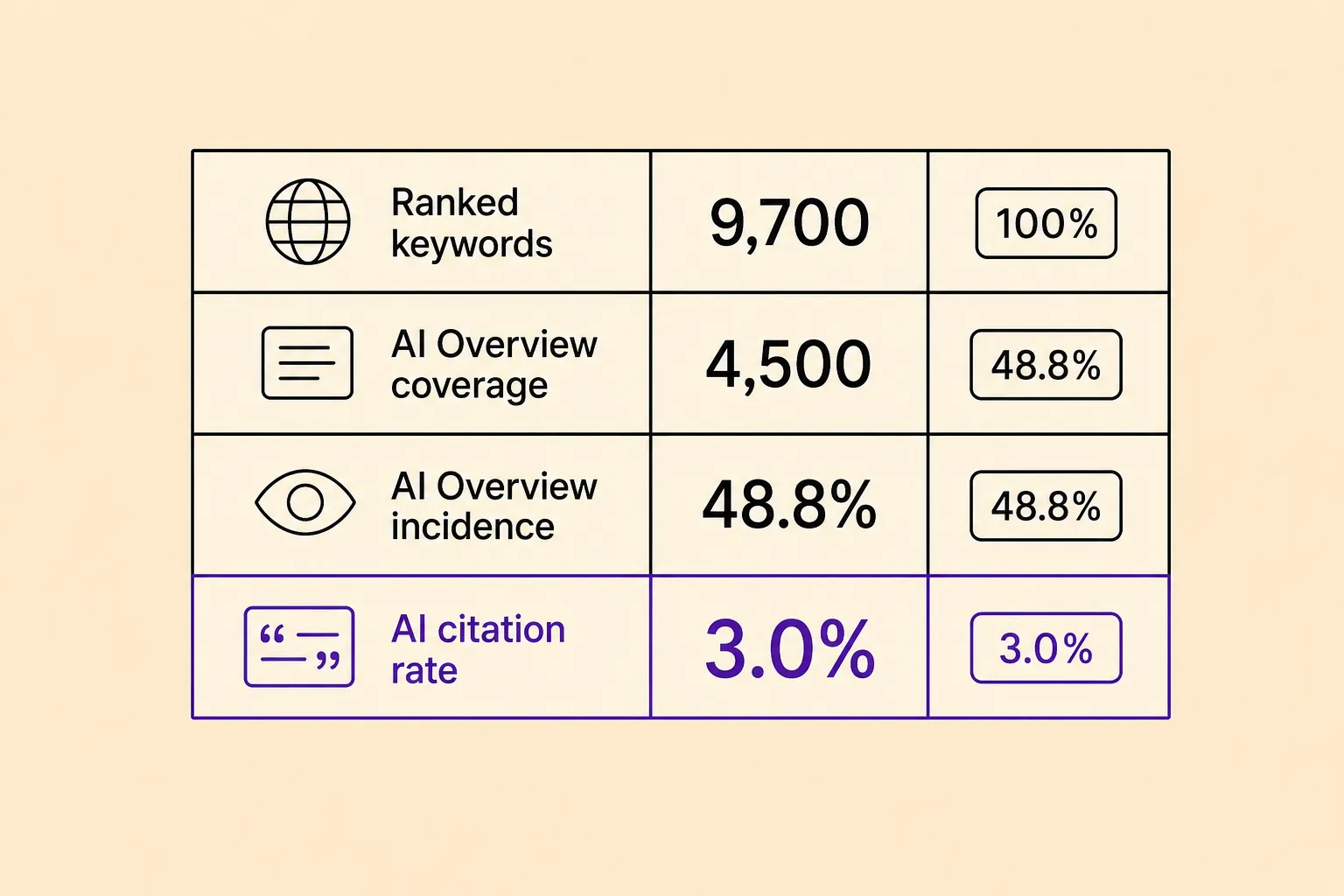
Open ChatGPT or Perplexity from your desk in Sydney or Melbourne and ask it the question your best prospect would ask — "who are the leading [your category] providers in Australia?" If your brand isn't in the answer, the instinct is almost always the same: we need to publish more. More posts, more comparison pages, more thought leadership.
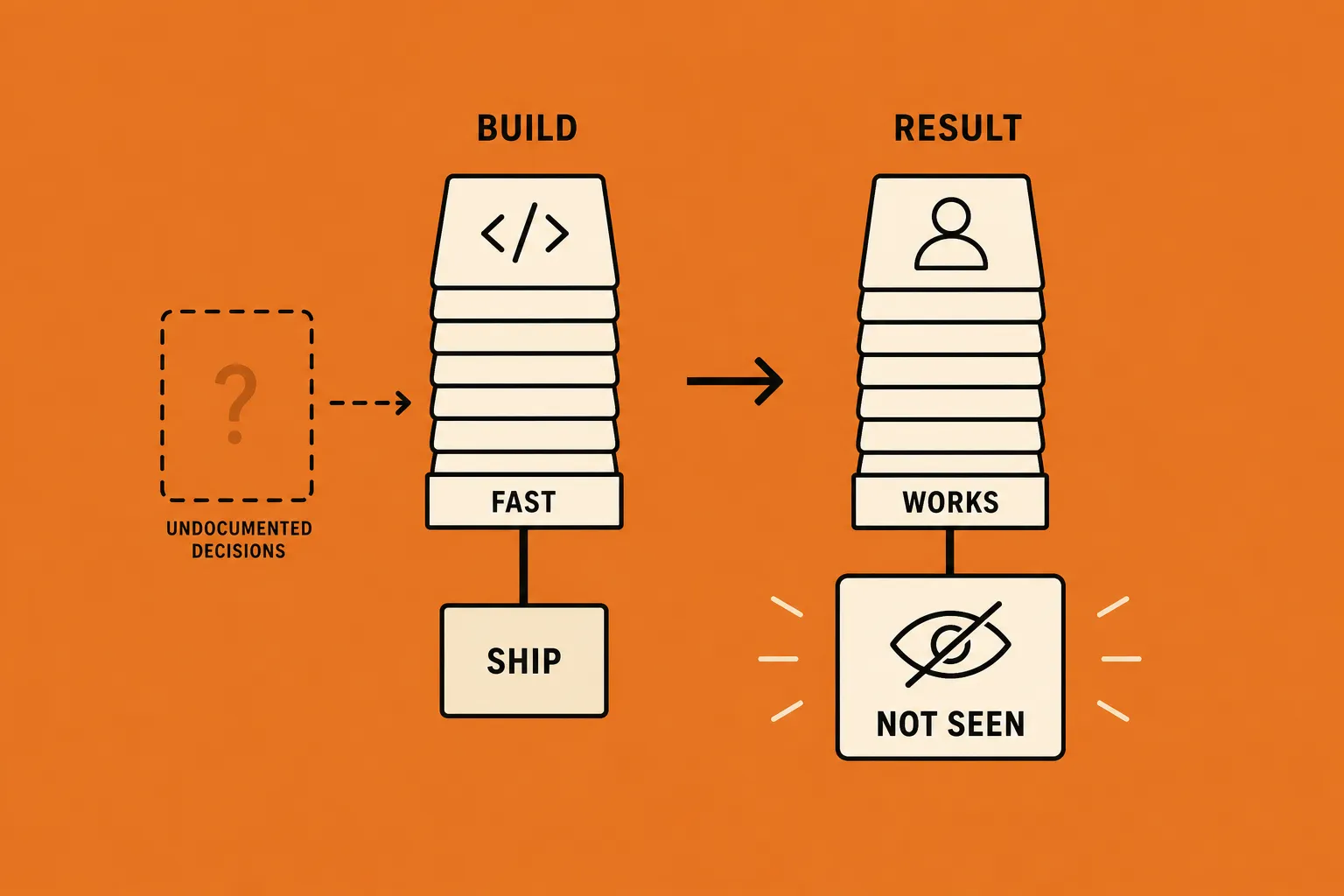
That instinct is usually wrong, and it's expensive. Whether ChatGPT, Perplexity and Google's AI Overviews cite your brand is largely decided before a single word is written — by how your site is built, not by how much content you produce. This piece reframes AI visibility as an architecture problem with three pillars (schema, structured content, internal linking), and hands you a three-question AI search visibility audit you can run on your own site to find where it is currently invisible to the engines now shaping B2B buying decisions.
You can't see how your brand appears in AI answers — and that's the problem
Here's the uncomfortable part of this shift: with Google and Bing you could at least see your rankings. With AI assistants you can't. As one practitioner put it in Search Engine Journal, "we don't have the same ability to control and measure success as we do with Google and Microsoft, so it feels like we're flying blind." You ask the engine about your category, you watch a competitor get named, and you have no dashboard telling you why.
So teams reach for the lever they know — production. They bolt generative tools onto the content workflow, automate a few steps, and call it progress. Search Engine Journal draws the distinction sharply: "Creating content with AI is a production question. Being findable by AI is a structural question about how the site is built." The structural question is the one that gets skipped, because it's the one nobody can see from the marketing dashboard.
And the gap is not niche. According to that same SEJ audit, "more than half of all websites have no structured data at all" — which forces AI tools to guess what a page is about instead of reading it directly. If your category-defining page is one a machine has to guess at, "publish more" simply produces more pages it also has to guess at. The fix is structural, and it splits cleanly into three things you can actually test today.
A quick caveat before we go further: the language around this — GEO, AEO, "AI search visibility" — is contested, and Google has publicly argued that good SEO is largely good GEO. So treat the three pillars below as durable site-quality fundamentals that happen to matter more in an AI-citation context, not as a separate doctrine with guaranteed rules. None of this is uniquely Australian, either — the schema and structure principles are genuinely global. What's local is the stakes: AU and UK B2B buying journeys increasingly begin in an AI assistant, and AI Overviews rolled out across both Australian and UK English-language search results, so a London or Bristol marketer faces the identical structural exposure as one in Sydney.
Pillar 1: Can the machine read your page? (schema markup)
Schema markup tells an AI system what your content means, not just what it says. SEJ frames it as the difference between a page that reads "Dr. Sarah Chen, Director of Admissions" and a page that explicitly labels that string as a Person, with a job title, an organisation, and a verified profile link. The first leaves the model guessing; the second hands it a fact it can cite with confidence. Without that label, AI systems "fill in the blanks probabilistically, and they often skip pages that are harder to parse in favour of sources that made the work easier."
There is evidence this moves the needle. SEJ cites a BrightEdge study finding "higher citation rates on pages with robust schema markup" in Google's AI Overviews. The honest framing matters here, though — SEJ is explicit that structured data "doesn't assure placement in AI Overviews or directly control what large language models say about your brand." It reduces ambiguity and strengthens attribution; it is not a guarantee. Anyone selling schema as a citation switch is overselling it.
What makes this the right place to start is economics, not magic. Schema is, in SEJ's words, "one of the cheapest items on this list to implement," and a basic rollout on your highest-value pages "can usually be done inside a single sprint." You don't need a specialist to check it: crawl your site, then spot-check the pages that carry the most weight — your homepage, your top service or product pages, your highest-traffic articles. If nothing comes back, that's your answer, and it's a common one.
Pillar 2: Is your content a labelled record, or one undifferentiated blob?
The second pillar is what SEJ calls the "blob body field" problem, and it surfaces in almost every content audit. Open a high-value page inside your CMS. If everything — hero headline, pricing, outcomes, the closing call to action — lives inside a single rich-text field, then "to an AI model trying to parse the page, the whole thing reads as one undifferentiated paragraph of HTML." The model can't reliably tell your pricing from your prerequisites from your customer outcomes, because nothing is labelled as such.
Structured content fixes this by splitting a page into labelled fields that each hold one meaningful thing — title, summary, duration, cost, outcomes, instructor — so each maps to something an AI tool can identify and pull independently. The operational upside is arguably bigger than the AI upside: editors fill labelled fields instead of wrestling formatting, pages stay visually consistent, and one structured summary can feed a product page, a comparison table and a syndication feed without anyone rewriting it.
This is reinforced from the writing side. A CSS-Tricks analysis of technical writing in the AI age explains that LLMs don't scan a page like a traditional crawler — they "ingest it, break it into tokens, and analyse the relationships between words." What they reward is clean hierarchy: a single clear H1, logically nested H2s and H3s, one idea per paragraph, and the answer front-loaded rather than buried beneath throat-clearing or interrupted by pop-ups and CTAs. CSS-Tricks goes as far as calling clean structure "a ranking factor… in the AI citation economy" — not in the classic sense, but in the sense that it decides what is eligible to be extracted and quoted.
There's a literal-minded twist worth knowing. Retrieval is still surface-level. CSS-Tricks recounts the author's own article on AI search failing to surface in their research — because the title said "AI search" while every competing result used the term "LLM." The model understands the two are related; it still returned the literal match. The author points to 2023 academic work (Doostmohammadi et al.) finding that simple keyword-matching methods like BM25 often beat purely semantic approaches. The practical lesson: the words in your titles and slugs still matter. Structure makes you legible; terminology makes you findable.
Pillar 3: Does your internal linking form a knowledge graph the model can follow?
The third pillar matters more for AI than it did for classic SEO. AI tools build their understanding of a brand by crawling the relationships between pages. As SEJ puts it, structured data deployed at scale builds a "content knowledge graph" — a data layer that tells machines "what your brand is, what it offers, and how it should be understood." Internal linking is how you teach that graph by hand: this service connects to these use cases, which connect to these customer outcomes, which connect to the people accountable for them.
A weak structure "leaves the model looking at a collection of loosely related pages without a clear story tying them together." Fragmented taxonomies, inconsistent tagging and broken links read, in SEJ's phrase, "as a confusing mess to any crawler" — Google's or an AI assistant's. The fix is concrete: take your single most important entity (your flagship product or headline service), map every page that should connect to it, then verify those links actually exist and that the anchor text describes the relationship in plain language — not "click here" or "learn more."
This is also where SEJ's deeper point lands — "context, not content, is king." The model that explains your organisation well is the one that can see the relationships between your pages, not the one that found the most pages.
Run the 3-question self-assessment — then decide what's worth fixing first
Here's the test. SEJ reduces a good audit to three honest questions; we've added a simple way to score each so you know where you actually stand.
1. Can a machine read your top pages? Crawl your homepage and top five pages for structured data. Read = schema present on the pages that matter. Invisible = nothing comes back.
2. Are those pages labelled records or blobs? Open each top page in your CMS. Read = multiple labelled fields. Blob = one rich-text field holding everything.
3. Do your links form a graph? Map your most important entity. Read = real, descriptively-anchored links connecting it to related pages. Invisible = orphaned pages and "click here."
Tally where most of your high-value pages land — read, blob, or invisible. That's a defensible first-pass picture of how citable your site is right now, and it tells you the order of work. This sequencing is our own analysis, built on the two sources rather than quoted from either: fix schema first (cheapest, roughly one sprint, immediate machine-readability), then structured content (higher effort, compounding operational payoff), then internal linking (most strategic, slowest to build). Crucially, if you're scoring "invisible," producing more content is the wrong first move — you'd be adding pages to a site the engines can't read.
One light note for when you move from a one-off self-test to ongoing tracking: how you instrument that monitoring is governed by the Australian Privacy Act, and by the UK ICO's consent expectations for British visitors — worth a line in your measurement plan, not a reason to delay the structural fixes.
Key takeaways
- AI visibility is engineered, not produced. Whether you're cited is mostly decided by site structure before any content is written; "publish more" can't fix a site the engines can't read.
- Schema is the cheap first move. More than half of sites have none (per SEJ); a basic rollout fits in one sprint and is linked to higher AI Overview citation rates — though it guarantees nothing.
- Kill the blob. Content trapped in one rich-text field reads to an LLM as a single undifferentiated paragraph. Labelled fields, clean H1>H2>H3 hierarchy and front-loaded answers make you extractable.
- Mind your terminology. Retrieval is still literal — the exact words in your titles and slugs decide eligibility, even for "smart" engines.
- Score yourself read / blob / invisible, then fix in order: schema → structured content → internal linking.
See exactly where you stand
The self-test above will tell you whether you have a problem. It won't tell you how you compare to the competitors quietly winning the citations you're not. That's the gap an AI Visibility Check closes — a measured audit of where your brand actually appears in AI answers against your category rivals, scored across the three pillars above. Where it surfaces structural faults — blob pages, missing schema, a broken link graph — a Website Review turns the diagnosis into a prioritised fix list. Start by running the three questions yourself; bring us the page that scored "invisible," and we'll show you why.