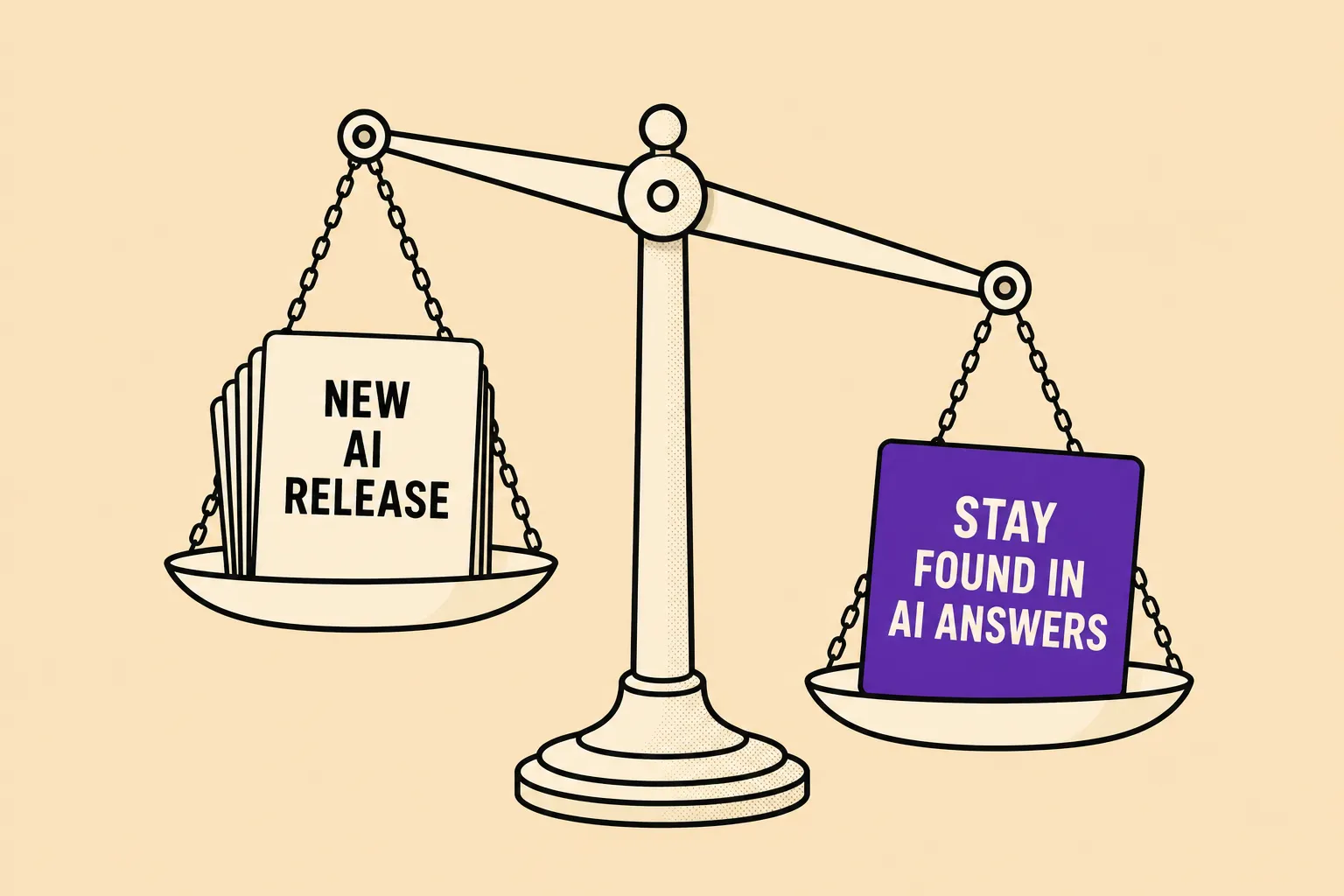
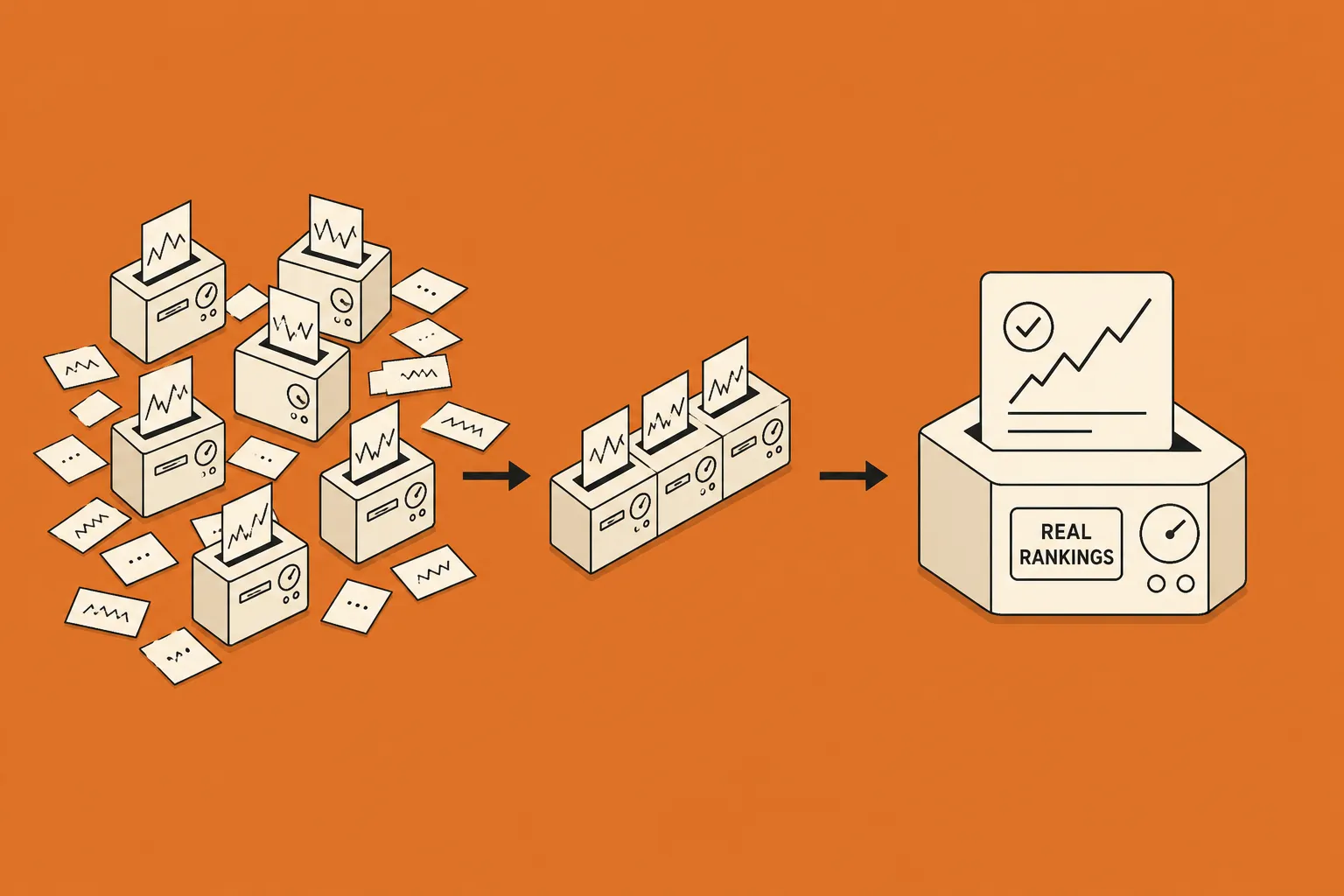
AI answers are naming fewer sources, and mentions are concentrating among domains the model already trusts. OpenAI has not announced a change, so read this as a trend, not a release.
What changed
Through the first half of 2026, independent trackers found that ChatGPT started citing sources less often, and naming fewer of them when it did cite. OpenAI has not announced any change, so this is best treated as an observed trend rather than a confirmed release. The pattern looks like volatility rather than a permanent step down: a sharp dip in the March to April window, then a recovery toward pre-March levels by May.
The numbers come from an analysis by seoClarity tracking ChatGPT's citation decline across markets. Citation volumes fell 86 to 94 percent across every market studied (the US, UK, Canada, Germany and Italy) between February and April 2026. In the US, the share of ChatGPT answers that cited nothing at all doubled in March, rising from 28 percent to 48 percent. Germany's zero-citation rate climbed to roughly 85 percent by April, the highest of the markets studied. Italy fell 66 percent in March, then recovered in April to a 52 percent zero-citation rate. By late April, one aggregate put zero-citation responses at 78 percent in the US, 84 percent in the UK and 85 percent in Germany. When ChatGPT did cite, it also named fewer sources per answer.
Part of the drop coincided with a model change in early March 2026. Separate reporting that ChatGPT referenced about 20 percent fewer websites after the transition found the average number of unique domains named per answer fell from 19 to 15, a shift also covered in analysis tying the drop to the early-March model version. That gives a datable hook, but the citing behaviour itself is emergent, not a setting anyone switched on. By May, citations had rebounded toward where they sat before March.
What it means for you
Concentration is the real story. Fewer citations, drawn from fewer domains, is not the same as being shut out; it means AI mentions are pooling around a smaller set of sources the model already trusts. If your firm was being named on the strength of a single well-timed web page, that footing is now less reliable. If the model already knows your firm, recognises your name and associates you with your area of work, you are more likely to hold your place when mentions concentrate.
For a professional-services firm, the practical shift is away from chasing live-web citations and toward becoming a brand the model recognises before it ever runs a search. That means a clear, consistent presence: your expertise stated plainly, your name tied to your specialisms across the places that describe you, and a site that is easy to read and quote. The idea of optimising for AI answers (sometimes called AEO or GEO) is still emerging and contested, so treat confident playbooks with caution. The measured response is to keep doing the things that make you a known, trusted name, and to watch whether the rebound holds.
Frequently asked questions
Do I need to do anything right now?
No emergency action is needed. This is an observed trend, not a confirmed change from OpenAI, and citations had already rebounded toward earlier levels by May 2026. The sensible move is to make sure your firm is clearly and consistently described wherever it appears, so the model recognises you without relying on a single web page.
Did OpenAI announce this?
No. There is no OpenAI announcement. The pattern comes from independent trackers measuring ChatGPT answers across several markets, so it should be treated as an unconfirmed trend rather than a released feature.
Will this hurt my search rankings?
This is about being named inside AI answers, not your Google position. The two are separate. A fall in AI citations does not move your search rankings, though both matter for whether buyers find and shortlist you.
Why did citations fall and then recover?
The decline looks like volatility around a model change in early March 2026 rather than a permanent policy. Citation volumes dropped sharply from March to April, then rebounded toward pre-March levels in May. Part of the drop coincided with a newer model version that referenced fewer websites per answer.
How do I become a firm the model names?
Focus on being known rather than chasing individual citations. State your expertise plainly, keep your name and specialisms consistent across the sources that describe you, and keep your site easy to read and quote. That makes you a brand the model can recognise and recommend, which matters more as mentions concentrate.