Google is expanding AI Mode by default and removing the "Show more" control on US search, and both Google and Bing have now published, in writing, that ranking and AI citation are gated separately. That means a brand can rank well and still be absent from the place where a buyer's decision-stage question actually gets answered. For a growth-stage B2B marketer, the defensible move this quarter is to confirm whether you are cited at revenue queries, not to count keywords.
There is a comfortable assumption sitting inside most B2B marketing dashboards: if we rank, we are visible. It felt true for two decades. The search surface just moved underneath it.
Google is pushing AI Mode toward being the default search experience, and both it and Bing have now written down, plainly, that appearing in an AI answer is a separate contest from ranking. So the real question for your quarter is not whether you rank. It is whether you are quoted when a buyer asks the machine.
The brake came off: AI Mode by default and the quiet death of "Show more"
For some US queries, Google is now loading the AI answer in an expanded, AI Mode-style format by default, with an "Ask anything" prompt box waiting and the old "Show more" button gone. A Google spokesperson confirmed the mechanic directly, saying that "for some queries, AI Overviews may dynamically expand for topics where our systems determine it's most useful for people," and Google's Robby Stein added that the expansion pauses if you have already started scrolling to avoid losing your place. The specific UI changes, the removed button and the default prompt box, come from reporters observing the behaviour rather than from Google's verbatim statement, so treat those as reporting on the rollout and the dynamic-expansion logic as Google's own on-record account. Independent tech press has corroborated the same default-expansion push.
Here is the part that matters commercially. The "Show more" click was a small brake, a moment where a user chose to see the classic results. Remove it, and the AI answer becomes the destination rather than a preview.
The compression this accelerates is measurable, and worth stating plainly before anyone waves it away as vendor noise. The Pew Research Center found that when an AI summary appeared, users clicked a traditional result in just 8% of visits, against 15% when no summary was present, based on the browsing activity of 900 US adults tracked in March 2025. Similarweb clickstream data, reported by the Semrush-owned Search Engine Land, put US zero-click Google searches at 68% in early 2026, up from 60% two years earlier. These are US and global figures, so hold them as directional for your market rather than a local measurement.
[AU] None of this is the Australian default yet. AI Mode arrived here as part of a 40-country expansion and, per SmartCompany's coverage of the Australian launch, it remains an opt-in feature that a user chooses, expected to reach more people on desktop and mobile in the months ahead. Read that as a window, not a reprieve. The US behaviour is the preview of your default, and the pre-arrival quarter is the cheap time to get audited, not the moment after the flip. Google's own AI Mode timeline is worth tracking as the rollout widens.
Both engines just wrote the rulebook: SEO gets you found, GEO decides if you're cited
The frustrating thing about AI visibility used to be that nobody would tell you the rules. That changed this cycle, and it changed on paper.
Bing's refreshed Webmaster Guidelines fold classic SEO into "Generative Engine Optimization" and state it about as bluntly as an engine ever will: "SEO does not guarantee rankings or traffic, and GEO does not guarantee grounding or citations in AI experiences." The same document warns that manipulative tactics can lead to suppressed grounding visibility, lost grounding eligibility, ignored structured data, or removal from the index. A major engine has now published, first-party, that being ranked and being cited are two different gates.
A caution on the vocabulary, because it is easy to oversell. The "GEO" label is contested. Bing is formalising it, while Google has resisted carving AI-answer optimisation out as a separate discipline from good SEO, and there is no settled, guaranteed rulebook underneath the acronym. Use the term for what it names, a real second gate, not as a doctrine with promised outcomes.
[UK] Britain now has a statutory version of the same message. The Competition and Markets Authority has imposed a "Fair Ranking" conduct requirement on Google, ordering it to rank organic results using objective and non-discriminatory criteria, explicitly including in AI Overviews, with greater transparency and advance notice of significant changes, on a six-month deadline. When a regulator writes AI Overviews into a fairness order, "how do we appear in the AI answer" stops being a soft question and becomes an auditable one, with an official instrument behind it for UK B2B teams.
Ranking is no longer proof of visibility: the gap boards keep missing
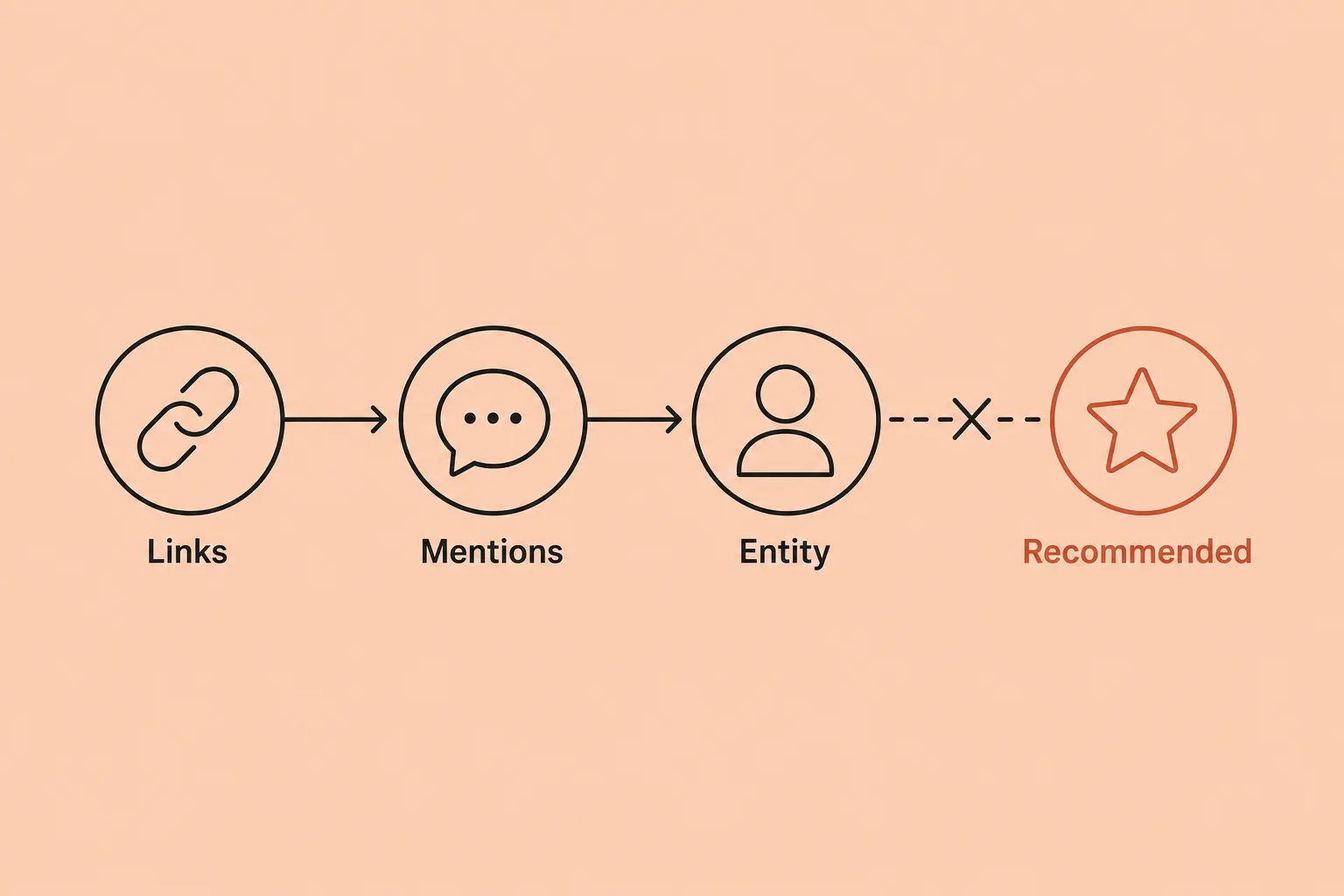
Think of ranking as earning a place on the shelf and citation as being the product the assistant actually hands the buyer. You can stock the shelf and never get picked up. That is the gap most board decks quietly skip, because the dashboard still reports the shelf.
The size of it is now measured rather than assumed. Walker Sands' benchmark found the median enterprise B2B brand ranks organically for nearly 9,700 keywords yet is cited in just 3% of the relevant AI-generated answers, with top-quartile brands reaching only 4.5% and 4.6% of companies never cited at all for their relevant keywords. That is drawn from 828 enterprise B2B companies across 14 industries and more than 45 million queries analysed in March 2026. One disclosure worth keeping in view: Walker Sands is a B2B marketing agency and this is vendor research, so treat the figures as directional GEO data rather than a fixed industry constant. Directional or not, a 9,700-to-3% ratio is not a rounding error. It is the difference between the report you present and the reality your buyer experiences.
[AU] Australian coverage reached the same conclusion in plainer language. SmartCompany, writing on AI Mode's arrival, warned that the format collapses discovery and recommendation into one controlled output and that traditional prominence no longer guarantees a small business is surfaced in the answer, with inclusion not even guaranteeing a click. This is the same rank-versus-cited gap our benchmark quantifies, described from the Australian side of it.
One more localisation call, so you spend the effort where it pays. The ACCC put Google at roughly 94% of Australian general search against Bing's 4.7%, and judged generative AI's impact on that competition limited so far. Bing published the clearest GEO rulebook, and it is genuinely useful reading, but for an Australian B2B audience the weight belongs on the Google AI surface. This maps directly to the gap between ranking breadth and AI-citation rate we have written about before.
The 90-day move: audit AI citation at your decision-stage queries, not your vanity keywords
Both a search engine and the dominant one's behaviour have now codified AI-answer gating. That makes "wait and see" a real choice with a real cost: you spend the transition unable to see where you stand. Let's make the alternative concrete.
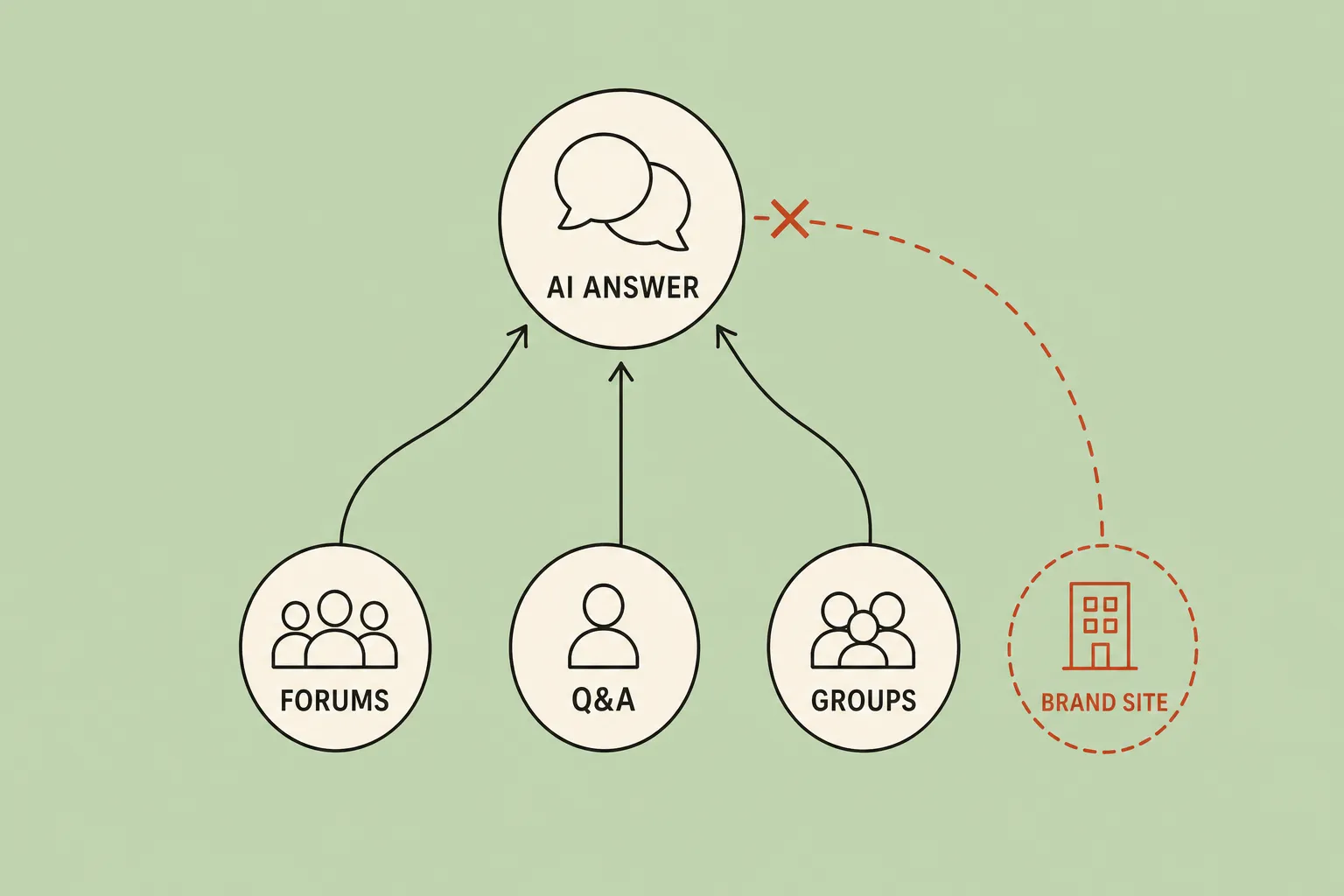
Start with your decision-stage queries, the ten or twenty questions a buyer actually types before they shortlist, not the high-volume keywords your ranking report already celebrates. AI Mode is multimodal, so one query can surface a page, a video and a social post together, which means you are checking whether the brand appears across surfaces, not whether a single blue link holds position. (That piece runs on the Semrush-owned Search Engine Land, worth noting when you weigh it as a neutral source.)
Then report the thing a board can act on. Not keyword counts, but citation inclusion at those revenue queries: are you named, on which questions, and against which competitors. This is the shift from being ranked to being the brand the AI recommends, and it needs an executive-ready metric rather than a vanity dashboard. If you want the reporting format that survives contact with a leadership team, we have set out how to measure AI visibility for boards.
The foundational work has not disappeared, and this is where the contested GEO label actually helps rather than hurts. Classic, crawlable, well-structured technical and on-page SEO is still what makes a page eligible to be grounded in the first place, which is exactly why Bing folded it into the same guidelines. You are not abandoning SEO. You are adding a second scoreboard next to it, and Bing has published an AI-citation tracking view that lets you start watching it.
Key takeaways
- Treat the US "AI Mode by default plus no Show more" development as your preview, not your current state. [AU] In Australia AI Mode is still opt-in, which makes this quarter the cheap pre-arrival window to get audited.
- Both Bing (in its Webmaster Guidelines) and Google (through AI Mode behaviour) have now put in writing that ranking and AI citation are separate gates. Plan for two scoreboards, not one.
- Ranking breadth does not prove AI visibility: the median enterprise B2B brand ranks for nearly 9,700 keywords but is cited in about 3% of relevant AI answers, per Walker Sands' vendor benchmark.
- Audit citation inclusion at your decision-stage revenue queries across surfaces, and report that to leadership instead of keyword counts.
- [AU] Weight Google far above Bing for Australian effort (ACCC: ~94% versus 4.7% share), while still using Bing's published rules as guidance. [UK] UK teams have a live regulatory hook in the CMA's Fair Ranking order covering AI Overviews.
Frequently asked questions
Is Google AI Mode the default search experience in Australia yet?
Not yet. In Australia AI Mode is still an opt-in feature the user chooses, per SmartCompany's coverage of the local launch, and the default dynamic expansion and "Show more" removal are US-led signals. Treat the current quarter as the pre-arrival window to audit your AI visibility before the behaviour reaches AU SERPs.
What is generative engine optimization (GEO), and does it guarantee AI citations?
GEO is a contested label for making content eligible to be grounded and cited in AI answers. Bing's Webmaster Guidelines formalise the term, but state plainly that GEO does not guarantee grounding or citations, so it is a real second gate rather than a settled discipline with promised outcomes.
Can a brand rank well on Google and still be missing from AI answers?
Yes. Walker Sands' benchmark found the median enterprise B2B brand ranks for nearly 9,700 keywords yet is cited in roughly 3% of relevant AI answers, based on 828 companies and 45 million-plus queries in March 2026. As vendor research it is directional, but it shows ranking breadth no longer proves AI visibility.
Should Australian B2B brands optimise for Bing and Copilot or focus on Google?
Weight Google first. The ACCC put Google at about 94% of Australian general search against Bing's 4.7%, so the Google AI surface matters most for AU effort. Bing's published GEO rules are still useful guidance, but they should inform the work, not redirect the priority.
Where this leaves your quarter
Amina helps professional-services and growth-stage firms get cited in AI answers, not just ranked in Google. We measure your share of AI visibility at the queries that decide deals and build the content and structure that earn the citation. See Amina's AI SEO and visibility service.