Intent-driven design replaces menus and buttons with a stated goal a machine carries out invisibly, and the same machine now reads your site to answer buyers directly. For agencies, that merges building a site and making it visible in AI into one connected job: the site has to work as content a machine can read, trust and quote, on top of being an interface a person clicks.
Most agency owners still price two things separately: build the website, then, maybe, worry about getting it found. That split made sense when a person did all the finding, clicking through menus and blue links to reach your client's page. The real story in 2026 is more interesting, because the finder is increasingly a machine that reads a page the same way whether it is rendering an interface or answering a question. The build and the visibility are becoming one brief, and the agency that sells them together wins work the SEO-less shop keeps losing.
From point-and-click to "what are you trying to accomplish?"
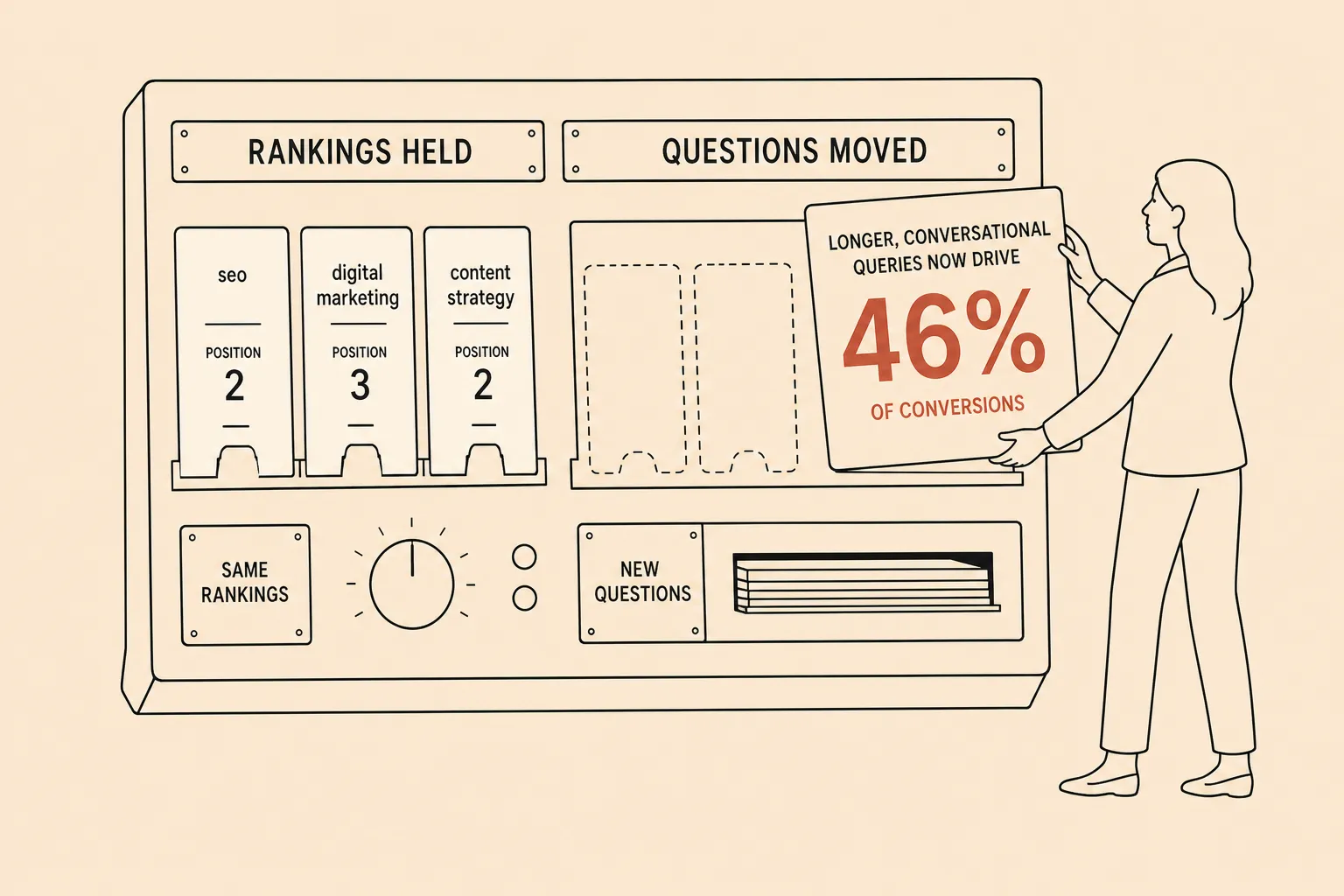
Users have quietly stopped hunting for controls and started stating the goal. In a 2026 Orbit Media survey of 1,110 US respondents, more than half said they now begin a search by opening an AI app instead of a traditional search engine, and 72% reach for an AI tool at least once a day. A separate study of 500 active AI users put the "start in AI" share lower, at 37% of consumers (Search Engine Land, which is Semrush-owned), so treat the figure as directional. Either way, roughly a third to half of surveyed users now open a conversation rather than a results page.
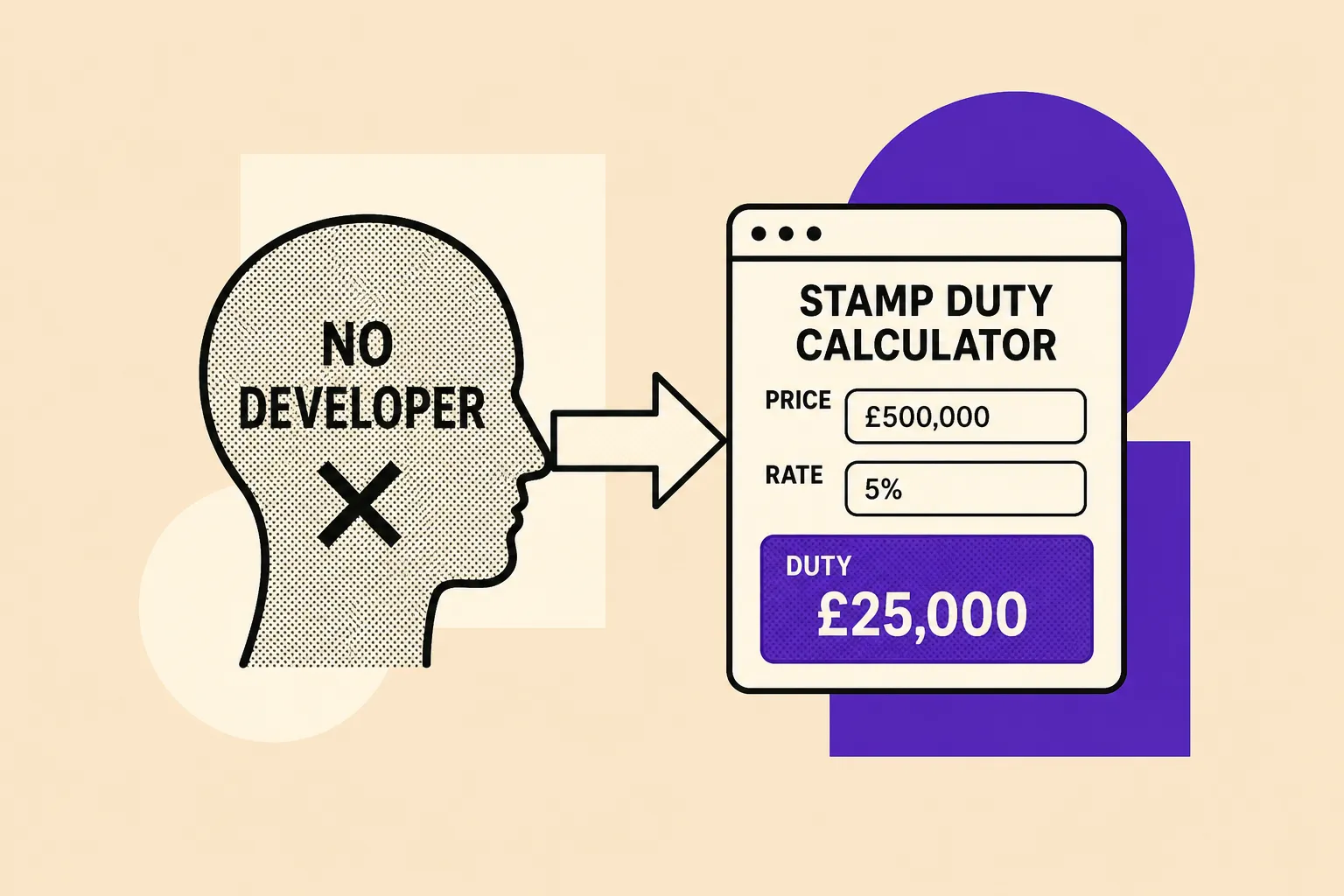
Web design is making the same move. Smashing Magazine's case for intent-driven design traces the point-and-click era back to the Xerox Star and the original Macintosh, then argues the destination now is to "eliminate the interface entirely": the software captures a high-level goal ("find me a non-stop flight to Chicago next weekend under $300") and does the grunt work in the background. Perplexity synthesises an answer instead of ten blue links, Vercel v0 renders working UI from raw intent, and Goblin.tools runs single-task AI utilities with zero sign-up.
The Australian picture makes it concrete. ChatGPT drives 90.2% of identifiable AI-referral traffic into local sites (Perplexity 4.25%, Gemini 2.5%), that traffic is up roughly 1,200% year on year at the September median, and the share of tracked projects seeing any AI traffic climbed from 13.5% in 2023 to 88.5% in 2025. Keep one caveat honest with clients: AI-referred visitors convert worse than organic ones, at a 2.9% purchase rate against 6.0%. Being surfaced is necessary, but the page still has to close the sale.
The same machine reads the interface and the answer
The machine rendering an interface and the machine answering a buyer's question are the same kind of system, and it treats your site as raw material either way. A UK government design lead saw it firsthand. On the Design in government blog, Mark Edwards, Head of Design at the Department for Education, reported "a rise in impressions coming from AI-mediated search" through Google AI Overviews and Microsoft Copilot while "visits to our actual pages have flattened or dipped." His warning is the thesis in one line: assistants "extract the answer they think is most relevant, remove the supporting detail around it, and present it as a self-contained response."
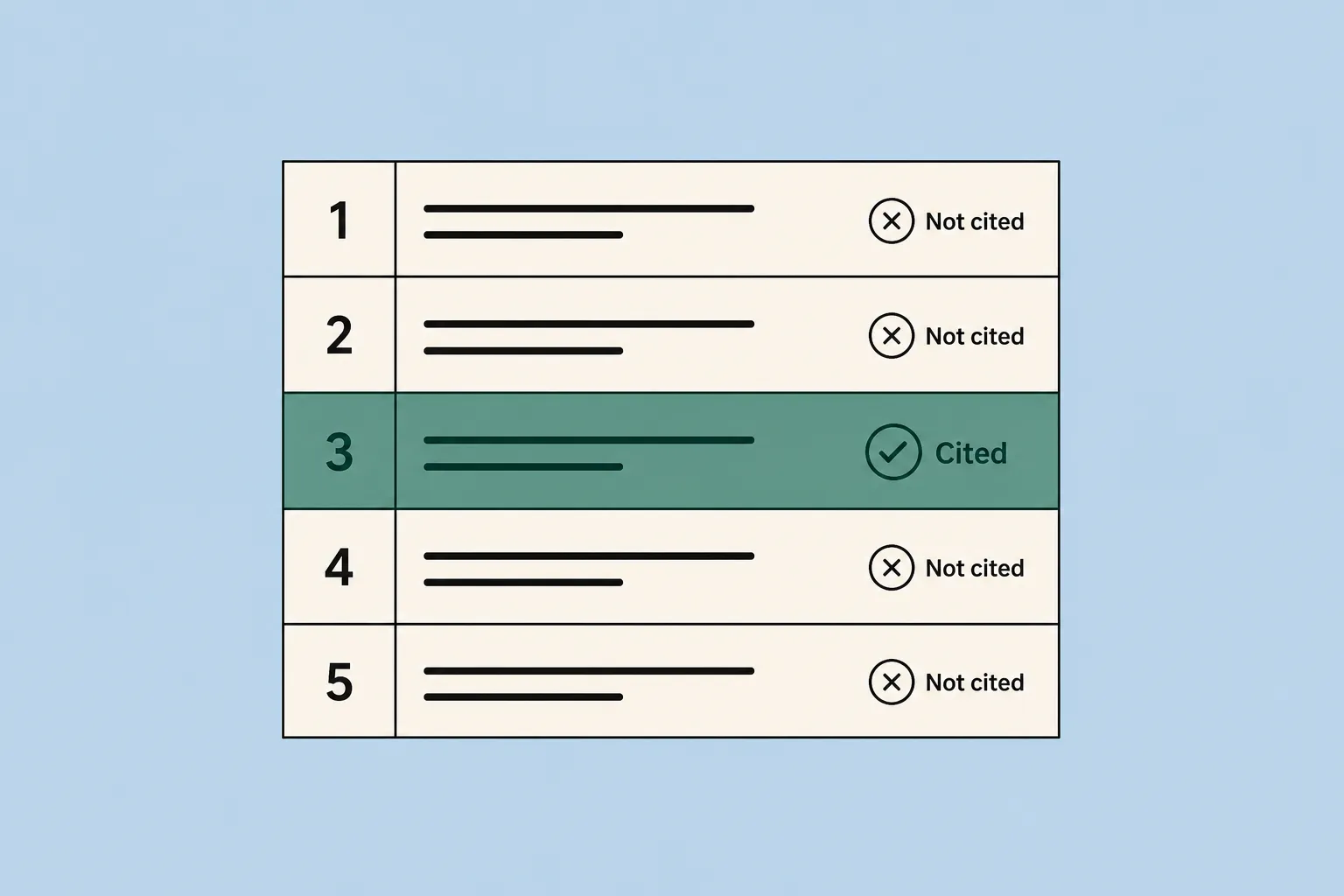
So getting found and getting clicked have come apart. A page can be the source an assistant quotes and still show flat sessions, the gap between ranking and AI citation that reframes what a visibility report should measure. The page now has to be readable, trustworthy and quotable to a machine, the same standard behind earning a recommendation rather than a ranking. None of this makes "AI search visibility" a settled discipline, and Google's own line still holds that good SEO is largely good GEO. The useful point is narrower: the build and the findability are one design problem, not two invoices.
What still has to be designed when the buttons are gone
Stripping out menus does not remove the design work, it relocates it. The Smashing piece names three pillars for keeping a menu-less site usable: contextual anticipation that reads device and context to act proactively, generative UI rendered on the fly for the task at hand, and easy reversibility, where a clear undo and audit logs replace the old wall of "are you sure?" pop-ups. Two obligations sit on top. The system has to state its interpretation back ("Searching for non-stop flights to Chicago under $300…") so people can catch a misread, and it has to force explicit confirmation before high-stakes actions like a payment or a privacy change.
For AU and UK agencies, this also carries a compliance obligation. Australian government digital services are held to WCAG 2.2 Level AA, and Commonwealth entities carry a Disability Discrimination Act 1992 duty to make services usable by screen readers, keyboard input and voice tools; the WCAG standard in the Australian Government Architecture is the reference. UK public-sector sites meet the same WCAG 2.2 AA bar under the Equality Act 2010. A generative interface still has to work with assistive technology, so the accessibility gate a modern-looking site can still fail applies in full. Britain's generative AI product safety standards point the same way on transparency and human confirmation, though that guidance is scoped to education, so read it as a direction of travel. And because an agent acts across connected tools, a single hallucinated output can cascade, a risk raised in the same 2026 outlook for Australian SMEs, which makes confirmation and reversibility a real safeguard. This is where judgement, not production, becomes the asset clients pay for.
Sell the build and the AI-visibility layer as one brief
The commercial opening is wider than it looks. The local readiness gap is stark. Only about 5% of Australian SMEs are considered genuinely "AI-enabled", according to SmartCompany's 2026 outlook for small business, even as discovery keeps migrating into tools like ChatGPT and its shopping-research features. The market is not short of demand. It is short of anyone joining the two halves. An agency that ships a fast, accessible build and, in the same engagement, makes it legible to AI is selling into a real gap.
"Legible to AI" has a spec. The Australian referral study found that brands with a consistent identity, verified location details and credible third-party proof show up more often inside AI-generated answers. That maps onto an AI-visibility service rather than a retainer bolted on later, and onto the platform layer where clients are discovered, from ChatGPT and OpenAI brand visibility to Google's AI surfaces. Treat "can a machine read, trust and quote this site" as a build requirement from the first wireframe, and AI-visibility stops being an upsell.
A starter audit for agencies without an SEO team
You do not need an in-house search team to run a first pass. Work the machine's three jobs, read, trust and quote, then check the build.
- Can a machine read it? Confirm the site is crawlable, renders content without requiring interaction, and exposes clean, structured markup rather than hiding copy behind scripts.
- Can a machine trust it? Check for a consistent identity across the site, verified contact and location details, and the kind of credible third-party proof the Australian data links to more frequent AI answers.
- Can a machine quote it? Write key answers so they stay accurate when lifted out of context, the failure mode Mark Edwards described. Self-contained passages survive extraction; buried, reference-heavy prose does not.
- Does the build still protect the user? For generative or agent-driven patterns, verify the interface states its interpretation, offers a clear undo, confirms high-stakes actions, and meets WCAG 2.2 AA.
Run that on a client's current site and you have a scoped engagement, plus a clear reason it is one project rather than two.
Key takeaways
- Intent-driven design moves users from clicking controls to stating a goal a machine executes; roughly a third to half of surveyed users already start in an AI app (directional, respondent-based).
- The same class of machine reads your interface and answers your buyer, so the build and AI-visibility are one design problem, and getting found no longer guarantees getting clicked.
- Removing buttons relocates design work into interpretation transparency, reversibility and high-stakes confirmation, still bound by WCAG 2.2 AA (AU Disability Discrimination Act 1992 / UK Equality Act 2010).
- "Legible to AI" has a spec: crawlable and readable, a consistent verified identity with third-party proof, answers that survive being quoted out of context.
- With only about 5% of Australian SMEs genuinely AI-enabled, selling build-plus-visibility as one brief means entering an under-served market.
Frequently asked questions
What is intent-driven design?
Intent-driven design captures a user's high-level goal and lets software execute the steps in the background, instead of making the person navigate menus, forms and multi-step funnels. Smashing Magazine describes the aim as eliminating the visible interface entirely, with tools like Perplexity and Vercel v0 as early examples.
How does intent-driven design affect AI search visibility?
It makes them the same problem. The systems that render generative interfaces and the assistants that answer search queries both read your site as source material, so a site built to be read, trusted and quoted by a machine is better placed to be cited in AI answers. Note that "AI search visibility" is still a contested, unsettled label; Google maintains that good SEO is largely good GEO.
Do users really start their journeys in AI assistants now?
A growing share do, though the exact figure varies by sample. In a 2026 Orbit Media survey of 1,110 US respondents, more than half said they start with an AI app, while a separate study limited to active AI users put it at 37%. Both are US-based survey findings, so treat them as directional rather than universal.
What should an agency without an SEO team do first?
Run a read/trust/quote audit. Confirm the site is crawlable and its content renders without interaction, check for a consistent verified identity and third-party proof, and make sure key answers stay accurate when quoted out of context. Then confirm the build meets accessibility and reversibility standards.
A site can look modern and still be invisible to the machines now doing the finding. Amina builds websites that are fast, accessible, and structured so search engines and AI can actually read, trust and quote them. See how Amina builds to be found.