A local SEO audit for a multi-location business should check four things first: that every location has one approved master record, that its Google Business Profile, location page, schema and key listings match that record, that each location page says something only that branch could say, and that review replies are calm and consistent, because AI assistants draw on that same trail directly or through coverage of it. The 19 checks below turn that into a per-branch fix list.
Ask most agencies what a local SEO audit covers and you'll get a rankings answer: map-pack positions by suburb, a citation count, a list of directories to join. For a client with a dozen branches, that audit measures the symptom. The costly problems sit upstream, in location data that contradicts itself across systems and in review replies nobody has reread since the day they went up.
Those upstream sources now feed more than the map pack. Customers ask AI assistants about local businesses before they call, and Semrush's multi-location SEO guide reports a 2026 Semrush survey in which 87.41% of people who use AI for company or seller research said they would at least occasionally consult a chatbot before hiring a local business, and 31.48% would always do so (a vendor survey; the guide doesn't state the sample size). Our recommendation: audit every branch against one master record and a written reply policy before you touch rankings. Both are cheap to fix and expensive to leave, and an agency without an SEO team can deliver them well.
How to use this checklist
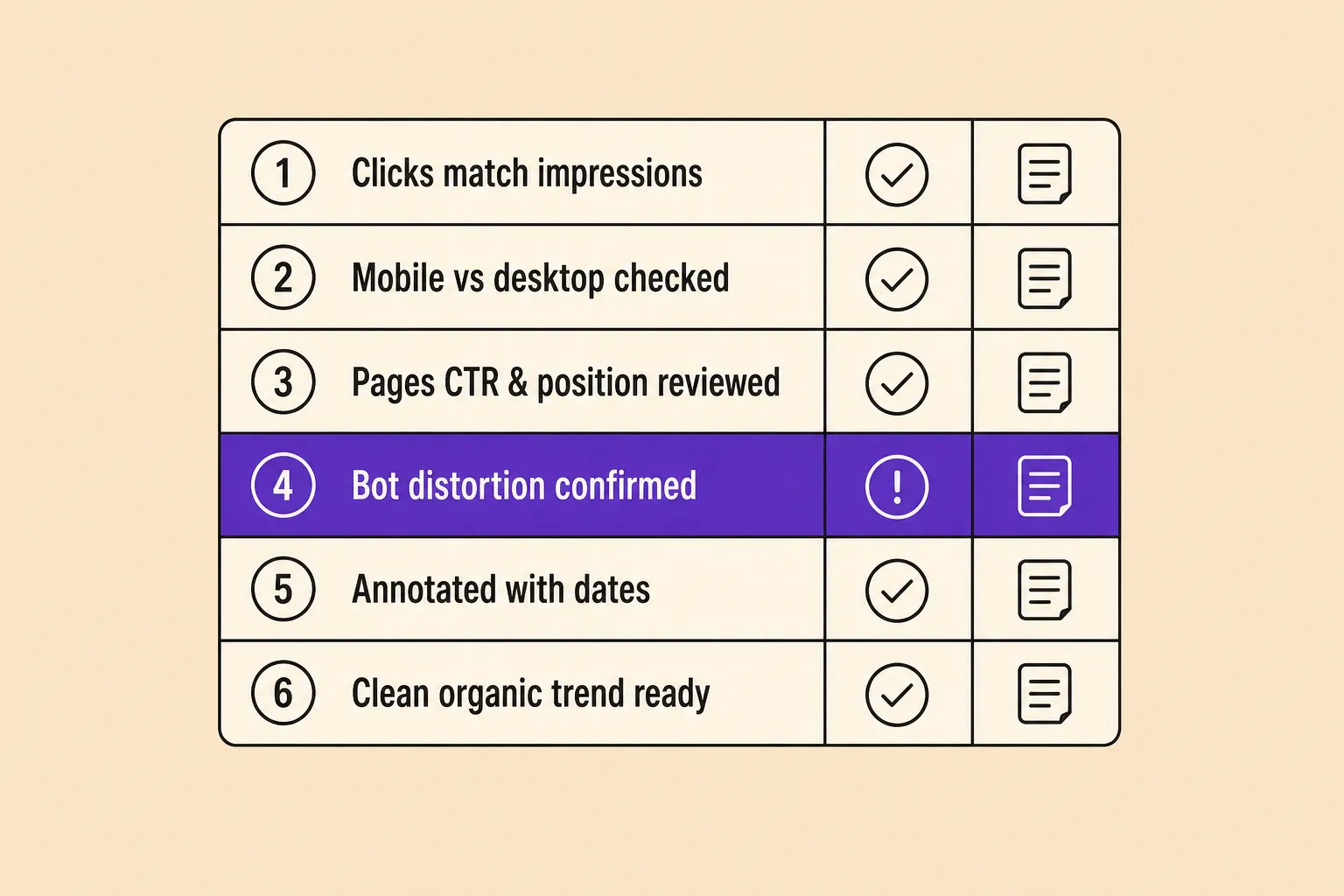
Build a spreadsheet with one row per location and one column per check. Mark each cell pass, fix or not applicable, then give every fix an owner and a due date. On a large estate, start with a sample (the busiest branch, the newest one and any that moved or changed hours this year) before you extend to the rest. If you already run a local retainer for the client, the same sheet works as a quarterly add-on.
The checks follow the order data travels: from the master record out to profiles, pages, markup, listings and reviews, and finally into what AI assistants say back.
The audit checklist
Group 1: The master record
Let's start with the record everything else copies from. Think of it as the master file at a print shop: correct a typo on one printed copy and the next run still carries it. Semrush frames multi-location SEO as an operations problem for exactly this reason, since every new branch adds data, pages, profiles, reviews and rankings to keep accurate. Its example is Sam The Concrete Man, a US franchise with more than 100 locations whose team keeps information accurate across more than 70 directories.
- Confirm one approved record exists for each location, covering name, address, phone, hours, services and website URL. Every downstream system should copy from it, so without it you have nothing to audit against.
- Name an owner for routine changes and an approver for high-impact ones such as closures, relocations and new numbers. A single source of truth only holds when there is also a single process for changing it.
- Check that updates go to the master record first and are then pushed or verified downstream, with a dated change log. Otherwise one team corrects a branch's Saturday hours on Google while another keeps sending the old hours to directories.
Group 2: Google Business Profiles
- Confirm one profile per real, eligible location, with no duplicates. Google's guidelines for representing your business say not to create more than one page for each location, and a business qualifies only if customers can visit it or it travels to them.
- Give each profile its local phone number and its own location page as the website link, tagged with UTM parameters. Google asks for a number that connects to the individual location and a website that represents it, and the UTM tag (Semrush's advice) separates profile clicks from the rest of Google organic traffic in your client's analytics.
- Move profile access into business groups and bulk management, away from shared personal logins. Google calls business groups "a more secure way" to share access, and businesses with 10 or more locations can add, verify and manage them in bulk, although bulk verification excludes service-area businesses and agency accounts holding several businesses.
- Set up businesses that travel to customers as service-area businesses, with the address hidden. Google's service-area guidance allows up to 20 service areas, generally within about two hours' driving time (guidance, not a hard cap), so a trades franchise listing a home address or a sprawling region is publishing a fact the record can't back.
Group 3: Location pages
Whether the client is a trades franchise or a group of allied health clinics, each branch needs a page a customer could actually choose from. The structure matters as much as the copy, which is why the information architecture behind AI search applies to a locations hub too.
- Check that every location page is reachable through a crawlable `<a href>` link from a locations hub, not only through a store locator. Locators that only show results after a postcode is entered are a common failure point, according to Semrush, because search engines may find no link to follow.
- Run the "swap the city name" test on every page, and merge or remove pages for places the business doesn't serve. If a page would still be true with another suburb dropped in, it lacks local substance, and Google's scaled content abuse and doorway policies target near-identical place pages that funnel users to one destination.
- Match location and service links to what each branch actually offers. If only four clinics offer a service, its page should link to those four only, so a customer (or an assistant reading the site) gets the same answer the front desk would give.
Group 4: Structured data and listings
The listings question has a local wrinkle. In September, Perth-based agency Search Scope logged 2,400 AI responses across 20 industries and found ProductReview, hipages and Word of Mouth among the domains observed, while a little-known Australian business directory appeared in about 8% of responses, SmartCompany reported. That is agency and founder testing, not an independent study, but it suggests the sources AI draws on for local answers extend well beyond Google. Smaller platforms can pay off too: Generation Tux added showrooms to Apple Business Connect and reported a 72% increase in direction requests and 34% more calls in the first month (company-reported, via Semrush).
- Add LocalBusiness markup with the most specific subtype to every location page, describing the business the page shows. Google's LocalBusiness documentation requires only `name` and `address`, so also check the recommended `telephone`, `url`, `geo` and `openingHoursSpecification` against the master record, because valid markup can still carry stale hours.
- Choose priority listings by category and market rather than by directory count. The directories that matter differ between a plumber and a physio, and between Brisbane and Birmingham, so a short, accurate set beats a long, neglected one.
- Check each priority listing against the master record. Semrush reports that Lily Ray saw an outdated job title keep appearing in AI answers until she corrected it across the sites citing her, a clean-up she likened to NAP consistency in local SEO.
Group 5: Reviews and replies
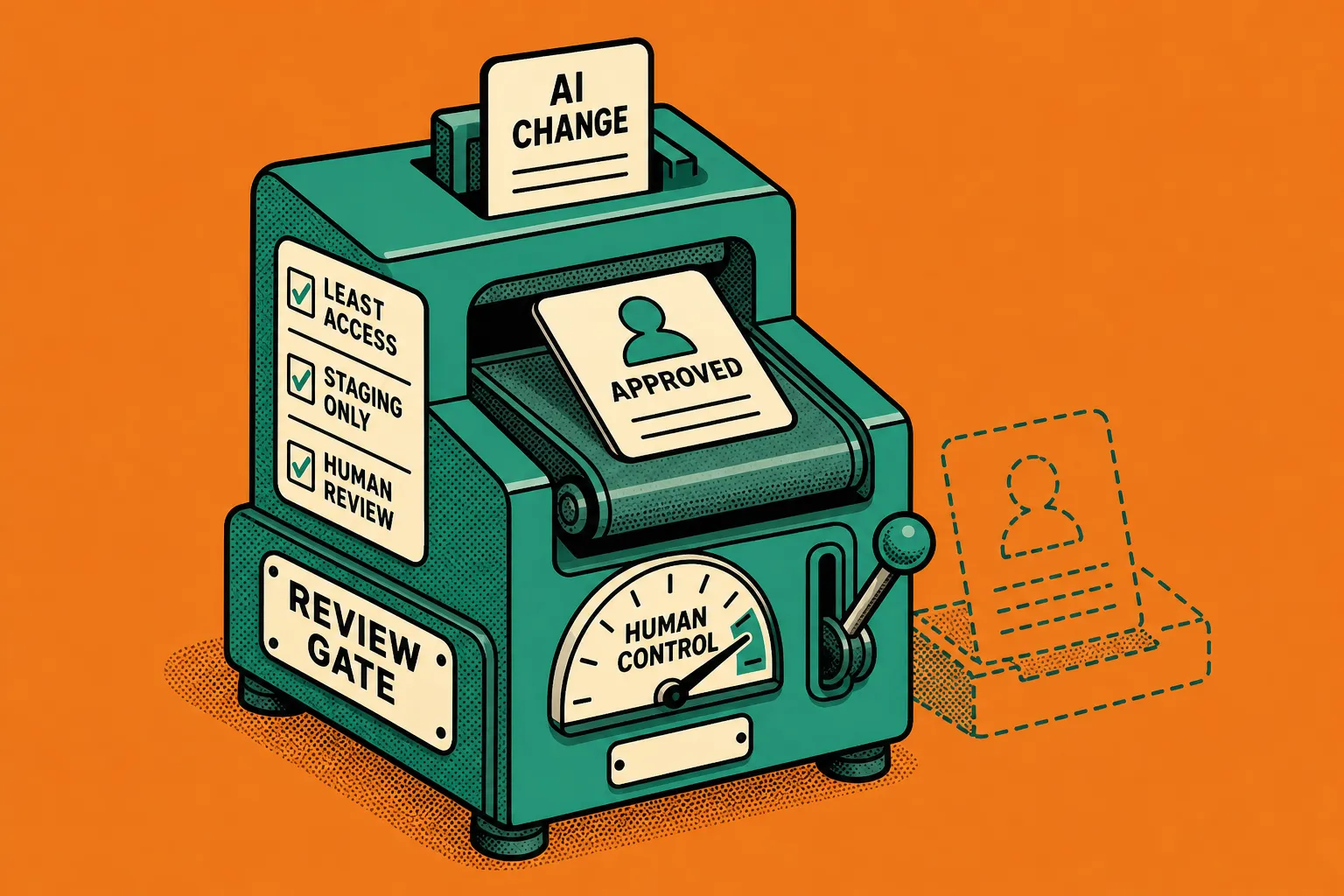
Keep this group to what an agency checks per location; broader reputation work is a separate brief. Search Engine Land's guide to bad owner replies argues that a hostile reply does more damage than the negative review, because it becomes a permanent public record of how the business treats customers. That is the guide's argument rather than a survey finding, and note that Search Engine Land is owned by Semrush and this guide was written by a Semrush employee or contractor, so it and the Semrush guide are one publisher group's advice, not independent corroboration. Its "screenshot test" is a useful gate: draft the reply, step away, then reread it as a prospective customer before posting.
- Check that review requests aren't gated and that no branch sets staff review quotas. Google's prohibited content policy bars merchants from selectively soliciting positive reviews and from asking staff to solicit a set number, and the UK's CMA enforcement update warns that a business asking its own staff to write reviews could be unlawful.
- Write one reply policy that every branch and contractor follows, covering every review, a response time and the screenshot test. In BrightLocal's 2026 consumer survey of 1,002 US adults, 80% said they were likely to use a business that responds to all its reviews, and generic or templated replies put off half of them (a local-SEO vendor's US data; treat it as directional for Australia and the UK).
- Find old hostile replies at every branch and follow up where you still can. Search Engine Land couldn't get ChatGPT or Google AI Mode to display owner replies directly, but both picked up third-party coverage of combative replies, so a reply that drew press is already part of what AI repeats.
- Document the reporting routes for each location, with screenshots kept as evidence. Google runs a separate extortion report form for a sudden burst of low-star reviews followed by a payment demand, while other policy-violating reviews go through standard flagging, and Australian businesses that can't resolve a platform dispute can escalate to the Australian Small Business and Family Enterprise Ombudsman (ASBFEO).
The escalation route is not hypothetical here. SmartCompany reported that an Adelaide-area kitchen business received 24 or 25 one-star reviews and a demand of US$200 per review to remove them, and its rating fell from about 5.0 to about 4.3 before recovering to 4.9. A Sydney removalist struggled to get a response from Google until she contacted TV and radio outlets, and Google also removed some genuine five-star reviews in the clean-up. ASBFEO says digital-platform disputes rose from 49 of 405 new actively managed cases (12%) in the June quarter of 2025 to 359 of 743 (48.3%) a year later, though it couldn't say how many involved Google. In the UK, the CMA's investigations into review practices at Autotrader, Feefo, Dignity, Just Eat and Pasta Evangelists remain open, with no findings of breach, and its fake reviews guidance under the DMCC Act 2024 covers businesses that commission or publish reviews as well as those who write them.
Group 6: What AI says about each branch
This group is our addition to the standard audit. Some vendors call the work generative engine optimisation; the label is contested, and Google's line is that good SEO is good GEO. The practical point stands either way: how an assistant describes a branch is a reputation question in its own right, and a branch-level sample is where an AI visibility check for a local client starts.
- Ask ChatGPT and Google AI Mode about a sample of branches, and log the answer and its cited sources. Search Engine Land found AI surfacing a 2014 professional review in answer to a question about a chain restaurant, so outdated hours, closed sites and old disputes can resurface long after the fact (background on each platform sits in our Rundown items on Google AI Mode and ChatGPT brand visibility).
- Check that location pages aren't blocked to AI crawlers in robots.txt or at the CDN. At the IAB AI and Search Summit in Sydney, Microsoft's APAC partner-sales director Renee Stopps said "just over 80%" of brands still block some form of AI bot, limiting their visibility in AI-generated results, Mumbrella reported; that's a speaker's claim rather than a measured study, but the check takes minutes.
Priority: what to fix first
Rank fixes by how fast a wrong fact reaches a customer. Our order:
1. Deal-breakers, this month: a missing master record or owner; a wrong phone number, address or hours anywhere; duplicate or ineligible profiles; hostile replies already covered by third parties; and any active extortion attack.
2. Next: crawlability and local substance on location pages (Group 3), plus a written reply policy if one doesn't exist.
3. Then: schema completeness and listings breadth, which pay off steadily but rarely cause harm on a given day.
Rankings work comes after the deal-breakers. Better positions for a branch with the wrong phone number simply send more customers to a dead line.
What to do with the results
Turn the sheet into a fix list grouped by location and sorted by the priority above. Semrush suggests every branch meets the same baseline (accurate information, a crawlable page, an eligible profile, and ongoing review and listing management), with extra investment set by tier, such as Growth, Defend and Test markets, reviewed quarterly. Use the same quarterly rhythm for the audit: re-run the checks, re-ask the AI prompts and compare answers with the last round.
For agencies, this is a deliverable you can run without an in-house SEO specialist. The checks are verifiable, the evidence is screenshots and a spreadsheet, and the output is a fix list a franchise or multi-site client can assign to named people.
Key takeaways
- Build or confirm one approved master record per location before auditing anything else; every profile, page, markup block and listing should copy from it.
- Treat wrong contact details, duplicate profiles and press-covered hostile replies as deal-breakers to fix before any rankings work.
- Apply the "swap the city name" test to every location page and cut pages for places the business doesn't serve.
- Give every branch the same written reply policy, an ungated review-request flow and a documented route for extortion and platform disputes, including ASBFEO in Australia.
- Ask ChatGPT and Google AI Mode about a sample of branches each quarter and log what they repeat.
Frequently asked questions
What is a local SEO audit?
A local SEO audit checks whether a business's location details, Google Business Profiles, location pages, structured data, listings and reviews are accurate, consistent and useful in local search. For a multi-location business, it means checking each branch against one approved master record and producing a prioritised fix list.
Do review replies affect local rankings?
Not directly, as far as anyone has shown. Google says more reviews and positive ratings can help local ranking, and local SEO practitioners quoted by Search Engine Land describe owner replies as having an indirect effect through conversions and engagement.
Can ChatGPT see Google review replies?
Not directly, based on Search Engine Land's testing, which could not prompt ChatGPT or Google AI Mode to display owner replies. Both did pick up third-party coverage of combative replies, so a reply that attracts press can still shape what AI says about a branch.
Does each franchise location need its own Google Business Profile?
Each real, eligible location should have exactly one profile. Google's guidelines say not to create more than one page per location, and businesses that travel to customers should hide their address and define up to 20 service areas instead of creating profiles for places without a real operating location.
What are the main local search ranking factors?
Google says local results are mainly shaped by relevance, distance and popularity. Popularity includes how well known a business is, including links and the number of reviews, which is why accurate profiles and a steady flow of genuine reviews at each branch matter.
About Amina
Rankings still matter, and Amina builds them properly, starting with location data that is right everywhere a customer or an AI assistant might look. Amina's SEO practice gives agencies this audit white-label for franchise and multi-site clients, so every branch is built to be found; ask to see a sample local audit before you offer it.