AI made agency work cheaper to produce and more expensive to run, and both halves land on the person who signs the retainer. The two things worth documenting this quarter are an explicit AI-consumption line in the fee and a named reviewer for every AI-assisted number that reaches a client. Regulators and trade bodies in Australia and the UK are already converging on the second one.
The received wisdom about AI in agency delivery is that it lowers your cost of production. Half of that is true, and it is the half that never appears on the invoice from the platform. Production got cheaper. Running the work got more expensive, and that cost is variable, billed monthly, and priced in a currency your retainer is not.
Both halves land on the same desk. The head of client services owns the fee, owns the deliverable, and stands in the quarterly business review when someone asks where a number came from.
Two invoices arrive, and only one of them is fixed
Most agencies are not pricing the first one at all. Forrester's 2026 research with the 4As, announced in June, found 61% of marketing agencies classify AI as a cost of business and only 6% define it as a line of business sold to clients. It polled close to 200 agency decision makers at VP level or above in April 2026, and the 4As is the American body, so read it as the pattern rather than an AU or UK measurement.
The UK trade body has moved first on the advice. The IPA's Pricing Playbook, published in March 2026, carries dedicated sections on pricing for technology and on AI's impact on each pricing model [UK]. It lands on a commercial base that was already thin: an earlier IPA report found only 27% of agencies believe they are paid a fair price and 58% report little to no progress reforming commercial agreements, based on 63 qualitative interviews.
In Australia, how you communicate an AI-driven price change is already a consumer-law question. The ACCC has taken Microsoft to the Federal Court over Microsoft 365, alleging that since 31 October 2024 it told roughly 2.7 million Australian subscribers they had to accept Copilot and a higher price or cancel, while concealing cheaper "Classic" plans until after a subscriber began cancelling. These are allegations and no penalty has been determined [AU]. Microsoft then offered refunds to Australians who switched back, conceding it "could have been clearer about the availability of a non-AI-enabled offering", with AI-enabled plans at $16 and $18 a month against classic plans at $11 and $14.
The remedy was showing the customer the priced alternative. An agency folding AI consumption quietly into next year's uplift, without naming the line or stating the without-AI option, is running a smaller version of the same play under the same law. Australian clients are already asking for the transparency that line provides: a survey of more than 100 senior Australian marketers, run by the agency Scooter and reported by B&T, found roughly 40% expect total transparency in strategy and spend and fewer than 5% want an AI-led agency replacing the traditional model. It is a vendor-run survey, so weigh it accordingly. The direction still holds. Clients are buying the judgement, so price it and show it.
Usage-based pricing punishes the agency that gets good at it
Seat-based software is inert. As HubSpot's guide to managing AI credit spend puts it, a $10,000 contract for 50 seats costs $10,000 whether or not anyone logs in, while usage-based pricing scales with what the AI actually does, so an organisation that deploys AI successfully will almost by definition see consumption grow. Think of the retainer as a fixed-price meal and the platform as a meter running behind the kitchen. The better your team gets, the faster the meter spins, and the fee does not move.
The same guide cites Zylo's 2026 SaaS Management Index: 78% of companies had unexpected charges tied to AI or consumption-based pricing in the past year, 61% cut projects because of unplanned cost increases, and business units now control 81% of SaaS spend against the 15% IT manages directly. Ownership diffuses by default, since marketing runs the content agent, sales runs the prospecting agent, support runs the customer agent, and nobody holds a mandate over credit spend as a whole. Gartner projects the average Fortune 500 enterprise could have more than 150,000 AI agents in use by 2028, up from fewer than 15 today, with only 13% of organisations believing they have the right governance in place. Gartner's Max Goss calls it "an ungoverned sprawl of agents".
British trade press reached the same mechanic independently. After Anthropic, OpenAI and GitHub shifted to usage-based billing, The Register reported that 29% of senior leaders surveyed struggle to understand operating costs when scaling enterprise AI and close to half of organisations have rescheduled AI deployments when costs exceeded expected value [UK]. Its conclusion names the same pair this article is arguing for: organisations "need clear rules for when employees can intervene, who owns AI-related costs, how AI outputs are reviewed and what happens when systems fail."
Australian agencies carry a third variable nobody hedges, because consumption is bought in US dollars and the retainer is signed in AUD. The RBA's published daily exchange rates put AUD/USD at 0.7123 on 22 September 2026, roughly 1.40 Australian dollars per US dollar. Movement matters more than level, and the RBA's August 2026 Statement on Monetary Policy records the Australian dollar trade-weighted index down 1.2% since May and 5% higher than at the start of the year. Trade-weighted is not the USD rate, and the 2026 direction has actually favoured Australian buyers of US software. That is the point: a twelve-month fee carries unhedged, two-way currency risk on a growing input cost, and nobody in the delivery chain owns it. A UK agency billing in sterling holds the same structural exposure.
The second bill is a valid answer that is the wrong answer
Cost gets a finance director's attention. Credibility is what ends retainers.
Webflow's data team compressed the problem into one line while describing the operating system it built around its agents: an agent can write valid SQL and still produce the wrong business answer. Their conclusion is that trustworthy self-service analytics depends less on the model than on what surrounds it, specifically encoded business definitions, approved sources, permissions and review expectations, alongside architectural controls and human judgment. Becoming effective users of agents and becoming builders of them turned out to be the same transformation, because both force expertise that lived inside individual workflows to be written down.
Apply that to your own delivery. Your senior strategist's definition of a qualified visit, your analyst's rule for which of three conflicting numbers wins, your standing decision about which source is authoritative: none of it sits anywhere an agent or a junior can reach it, and it never had to. AI-assisted work is the first process in agency delivery where undocumented judgement produces a confident, fully formatted answer instead of a visible gap, much as AI-assisted builds relocate failures rather than removing them.
What a review layer looks like when a regulator has already written it down
In Australia the named human is not a maturity nice-to-have. The OAIC's guidance on commercially available AI products states that "a human user should be responsible for verifying the accuracy of any personal information obtained through AI, and can overturn decisions made", treats outputs as probabilistic assessments rather than established facts, ties this to the APP 10 accuracy obligation, and asks organisations to consider "where the servers are located and whether personal information could be disclosed outside of Australia" under APP 8 [AU]. Scope it properly when you quote it: the obligation attaches to personal information, not to every AI-assisted analysis you run.
Which makes the hosting question less decisive than a procurement team assumes. Privacy Commissioner Carly Kind has said publicly that "data sovereignty is not essential to the Australian privacy framework" and that the object of the legislation is that data is protected wherever it is, in an interview that also reports 86% of Australians are more concerned about privacy than five years ago. When a client's security review asks where its data sits, the defensible answer is a documented control and review process rather than a claim about a postcode.
There is a date on the calendar too. The automated decision-making transparency obligation commences on 10 December 2026, requiring affected entities to state in their privacy policy the kinds of personal information used in ADM and the kinds of decisions made, and the OAIC has been consulting to build the guidance. A human-reviewed SEO report is very unlikely to be caught, since the obligation bites on substantially automated decisions affecting rights or interests. Read it as direction of travel. In the UK, regulations in force since 12 May 2026 require the Information Commissioner to prepare a statutory code of practice on AI and automated decision-making, so the standardisation is arriving on both sides of most agency client bases [UK].
Your own industry said it first. The IMAA's AI Guiding Principles state that agencies need to be transparent with clients and customers about their AI processes, and the 2026 update reported by Campaign Brief keeps that principle and adds one on vendor transparency and supply chain trust [AU]. The CIPR's guide to responsible AI use in PR, published in June 2026, offers a checklist covering how to review outputs, what to ask before publishing AI-assisted content, and where accountability sits when something goes wrong. Neither body mandates an AI-use statement on a client report. Both expect you to describe your process and review the output before it goes out.
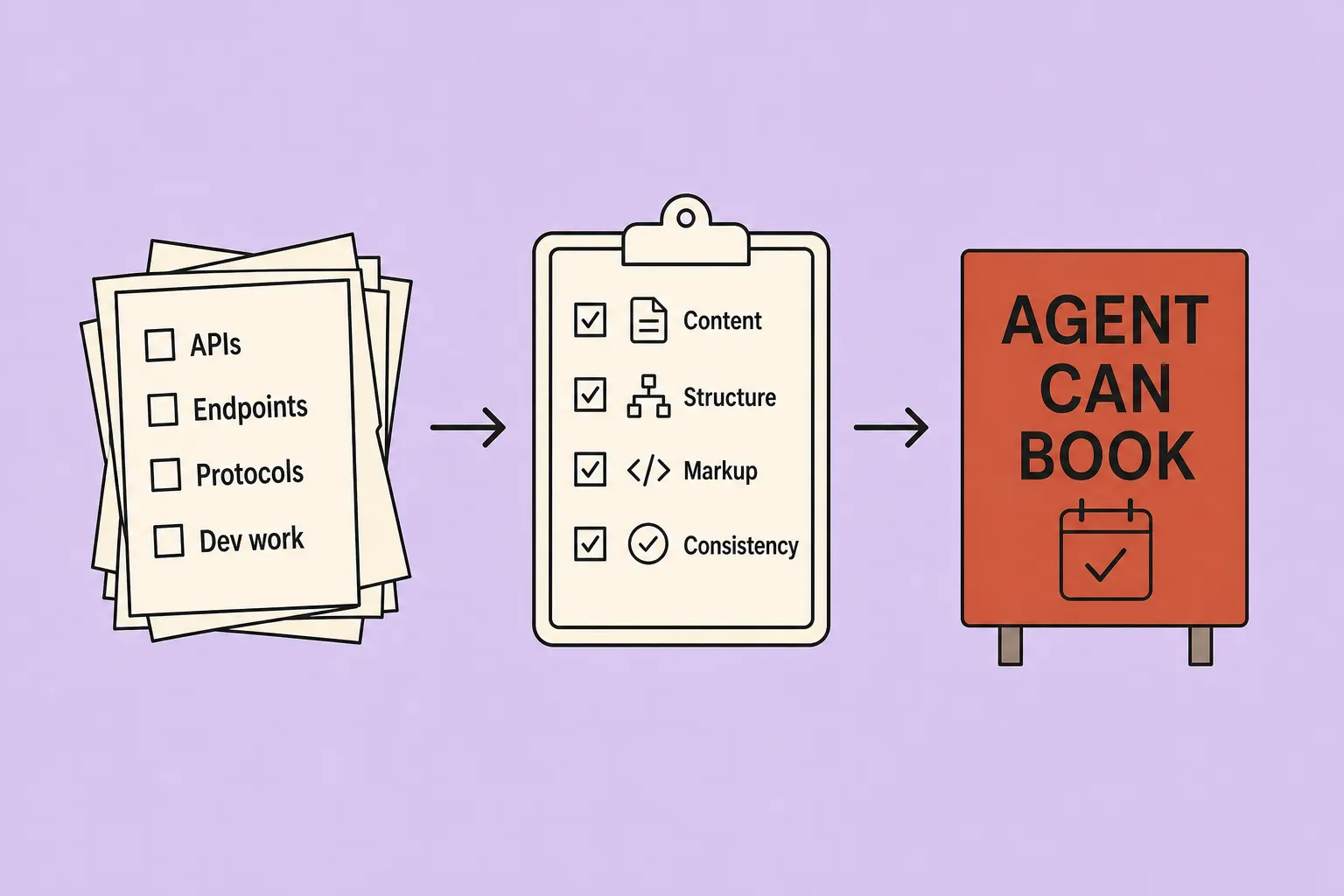
So the review layer is four documented things, and none of them need a platform: the definition behind each client-facing number, the approved source it comes from, who may run it, and the named person who signs it. That is judgement made legible, and it is the part a competitor quoting a cheaper AI-generated report cannot match.
Deferring to the machine is predictable, so design for it
Assuming the human check will happen is the weakest link in the arrangement. Automation bias has been in the literature since Kathleen Mosier and Linda Skitka named it in the 1990s: people defer to a machine even when it is wrong and the evidence sits in front of them. A UX Collective essay on the industry's safety argument pairs that with Stanford's 2026 AI Index finding that model performance collapses when a false statement is presented as something the user believes, and draws the operational conclusion: deferring to a wrong output is predictable product behaviour rather than user error, and the harm lands at the interface.
Read that as a design instruction. A review step that depends on someone noticing something is wrong will fail at exactly the moment the output is confident and well formatted. A review step tied to a deliverable type, with a named owner and a defined question to answer, will not. Enterprise buyers are scoping it the same way: reporting from Dreamforce found AT&T and Crocs building agentic deployments around human verification rather than full autonomy, while Salesforce's own numbers put roughly 30,000 customers on Agentforce, about 20% of its customer base.
The QBR answer when a client asks whether AI produced this
Let's make the last part concrete, because this is where the cost half and the governance half pay for each other. "Did AI write this?" has two bad answers and one good one. Denying it is fragile. Saying yes with no process attached invites the follow-up you cannot handle. The good answer names the process: this figure uses our documented definition, pulled from an approved source, produced with AI assistance, reviewed and signed by a named person before you received it. Those same four things are what we write down behind our own content production, which is the only reason the answer is sayable in a meeting rather than drafted after one.
A board will not accept a number nobody will put their name to, which is why the review layer is the precondition for selling executive-ready reporting at all. That matters most in AI-visibility reporting, a category whose vocabulary is still being argued over and whose metrics are newer than a board's tolerance for them. Two things to write down this month, then. An explicit AI-consumption line in the retainer, priced rather than absorbed, with the without-AI option stated. And a named reviewer per deliverable type, starting with anything that carries a number into a client meeting. Everything else in an SEO retainer is already scoped.
Key takeaways
- Price the AI line rather than absorbing it. US data puts 61% of agencies still treating AI as a cost of business, and the ACCC's case against Microsoft shows that repricing an AI feature quietly is a consumer-law exposure in Australia.
- Model consumption against success, not headcount. Usage-based pricing means the better your team gets at AI, the larger the platform bill, on a fee fixed for twelve months.
- Treat currency as an unhedged input cost: Australian agencies buy consumption in USD and bill in AUD, and the RBA's figures show mid-single-digit trade-weighted movement inside one year.
- Document the definition, the approved source, the permissions and the named reviewer for every client-facing number, which is the OAIC's stated expectation wherever personal information is involved.
- Tie the review to the deliverable rather than to someone's vigilance, because a check that relies on spotting an error will fail when the output looks right.
Frequently asked questions
What should SEO project management cover for AI-assisted work?
Two things most retainers leave undefined: how AI consumption is priced inside the fee, and who reviews an AI-assisted output before a client sees it. Forrester's 2026 research with the 4As found only 6% of US agencies define AI as a line of business sold to clients, so the pricing half is where most delivery processes still have a gap.
Should an agency pass AI consumption costs on to clients?
Price it explicitly rather than absorbing it, and state what the engagement looks like without it. The IPA's 2026 Pricing Playbook includes dedicated guidance on pricing technology and AI within agency commercial models, and the ACCC's action against Microsoft over undisclosed non-AI plan options shows what happens in Australia when an AI-driven price change is communicated poorly.
Who should review an AI-assisted client report before it goes out?
A named person attached to the deliverable type, decided in advance. The OAIC's guidance on commercially available AI products states that a human user should be responsible for verifying the accuracy of personal information obtained through AI and can overturn decisions made, which makes a named reviewer the baseline expectation in Australia wherever personal information is involved.
Do Australian or UK rules require agencies to disclose AI use to clients?
No rule requires an AI-use statement on a client report, but industry bodies in both markets now expect agencies to be transparent with clients about AI use and to review AI-assisted output before publication. The IMAA's AI Guiding Principles ask agencies to be transparent about their AI processes, and the CIPR's 2026 guide sets out how to review outputs and where accountability sits when something goes wrong.
About Amina
Amina helps professional-services firms get cited in AI answers, not just ranked in Google, and every number we hand a client carries a documented definition and a named reviewer behind it. See Amina's AI SEO and visibility service.