Since AI Mode arrived, short head-term queries have collapsed while longer, conversational queries now drive most impressions and conversions. A client can hold the same rankings and still be answering a question buyers have largely stopped asking. For agencies, the real QBR question has moved from position on head terms to whether the site is the source AI systems quote for the queries that actually convert.
Every quarterly review has a slide that reassures everyone in the room: the client still ranks for its priority keywords. Green arrows, held positions, a tidy story. The keywords held, and the questions moved. Since Google's AI Mode began reshaping how people search, the shape of the query itself has changed, and a ranking report built on head terms is now measuring a surface buyers have quietly left.
That is the tension worth naming before your next client review. Rankings did not stop mattering. The reporting surface moved out from under them, and the client's harder question is no longer "are we ranking?" but "do we come up when AI answers?"
The data: short queries are collapsing, conversational queries have taken over
Short queries are shrinking, and the change is not subtle. According to Google Ads data compiled by Search Engine Land (Search Engine Land is owned by Semrush, worth noting when you cite it as a neutral read), impression share for one and two-word queries fell from 42% to 24% between January 2025 and August 2026, an 18-point drop. The three and four-word bucket became the new centre of gravity, climbing from 33% to 48%.
The commercial signal is sharper than the traffic one. Conversions followed the same path, and faster. One and two-word queries drove 62% of conversions at the start of that period and now account for 52%. The three and four-word segment absorbed most of the shift, rocketing from 20% to 46%. Even the long strings that used to look like noise are converting now: five and six-word queries tripled their share from 3% to 9%, and seven-plus-word queries quadrupled from 1% to 4%. The highest-intent buyers, the ones ready to act, are typing more detail than ever.
This is not a US-only quirk. AI Mode launched in Australia in October 2025, and Google's VP of product Hema Budaraju told Australian press that AI Mode users type queries "nearly three times the length of traditional searches," using a "query fan-out technique" that splits a prompt into subtopics and runs several searches at once. No AU dataset yet replicates the US Google Ads figures, so treat Budaraju's number as directional corroboration rather than a matching study. Directionally, it lands in exactly the same place. [AU]
It is spreading beyond Google, too. REA Group has brought conversational AI search to realestate.com.au, expanding a beta from 10% to 50% of visitors, with CEO Cameron McIntyre describing an AI agent that "generates a conversation which takes you down more interesting pathways." When a national property portal retrains buyers to talk to search, they carry that habit back to Google the next morning. [AU]
Why "we still rank" is the wrong reassurance in a 2026 QBR
A held ranking answers a question. The problem starts when buyers stop asking it. Think of a head-term ranking like a well-lit sign on a street the foot traffic has left. The sign is still there, still legible, still "position two." The shoppers just took a different route.
There is already aggregate evidence of the gap in this market. The same SmartCompany reporting notes that since AI Overviews began appearing above traditional results in 2024, several of Australia's largest news websites have seen year-on-year organic traffic fall, some outlets down by as much as 35%, as AI Mode filters and summarises results before a user ever sees the list. Those pages did not necessarily lose their rankings. They lost the click. [AU]
Independent data points the same way. SEO firm Ahrefs, in numbers reported by The Register, found that AI Overviews now correspond to a 58% lower average click-through rate for top-ranking pages, up from 34.5% eight months earlier. That is a global figure rather than AU/UK-native data, but the read-through is direct: a number-one position can hold while the clicks it once earned go to the AI answer sitting above it. [International]
Ranking and citation have split: crawlability and content quality now decide who gets quoted
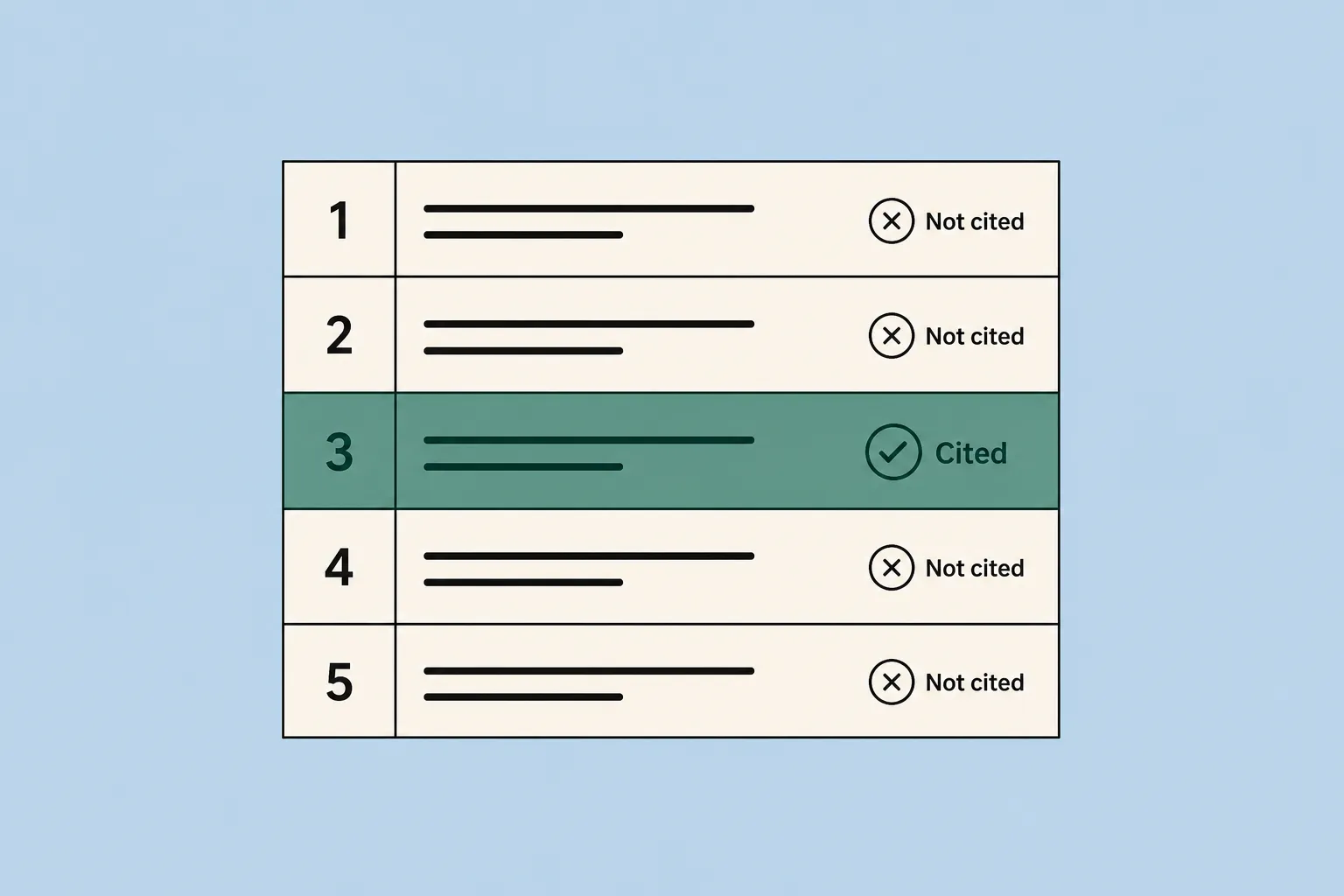
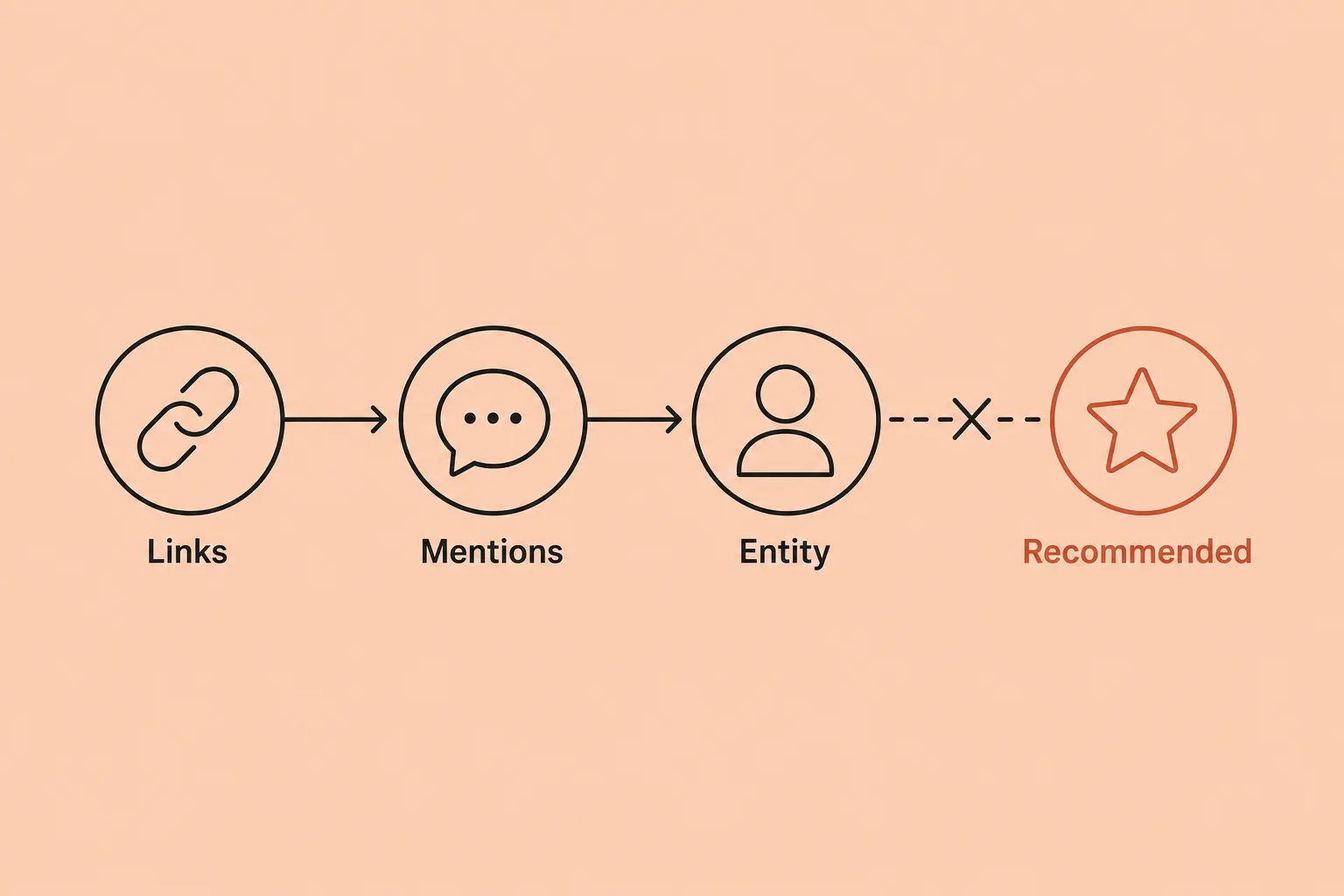
Ranking and being quoted have come apart, and this is where the QBR conversation gets genuinely uncomfortable. The clearest number comes from Ahrefs research on AI Overview citations, which found that only 38% of the URLs cited in Google's AI Overviews also rank in the top 10 for that query, down from about 76% in July 2025. Roughly six in ten AI Overview citations now come from pages that do not rank in the top 10 at all. The study covered 863,000 keyword SERPs and four million AI Overview URLs, and Search Engine Journal reported the same finding independently. Ahrefs itself flags that part of the drop may reflect improved citation detection rather than a pure change in Google's selection, so treat the direction as the signal, not the decimal. Other measurements land on different exact figures because methods differ, and AI-citation measurement is still contested, but they all point the same way: the tie between a top-10 rank and how ranking and citation now diverge has weakened sharply.
Why would a top-ranked page get skipped? Because the mechanism underneath changed. Most large language models do not run their own index, so they ground answers by retrieving from crawlable, "trusted" pages, as Search Engine Land sets out in its guide to SEO audits (also Semrush-owned). Whether a brand surfaces now turns on crawlability and content quality, not on where a keyword sits.
Google is not hiding the shift either. In a recent Search Engine Roundtable roundup, Google acknowledged that the old "position one through 10" is hard to map for site owners, noted that almost 100% of People Also Ask results are now powered by AI Overviews, and confirmed it is testing thinner citation panels. The reporting surface is contracting even as the queries expand.
It is tempting to file all this under a shiny new acronym and call GEO or AEO a separate discipline with its own guaranteed rules. Google pushes back on that, arguing good SEO is still good GEO, and that caution is fair. Whatever you call it, the practical unit of visibility is moving from a ranked position to a cited answer.
The UK regulator has now written both surfaces into its rulebook. Under proposed conduct requirements following Google's strategic market status designation, the CMA says Google must demonstrate that it ranks results fairly "including in its AI Overviews and AI Mode," and publishers gain the ability to opt out of their content being used in AI Overviews, the opt-out that publishers now have to weigh. Ranking and AI-answer visibility are now distinct enough that a competition authority regulates them as separate things. [UK] In Australia, the ACCC has flagged AI search in its ongoing monitoring but frames the risks around scams and fake reviews, so it does not yet quantify a ranking-versus-citation gap, which means the measurement burden still sits with agencies. [AU]
What to put in the client report instead of head-term positions
So what replaces the head-term slide? Swap position-on-head-terms for a small set of measures that track the surface buyers actually use. Four are worth the space in a QBR:
- Citation share on conversational buying queries. For the intent-rich questions that convert, is the client the source AI quotes, for which questions, and against whom? This is the number the head-term report can no longer see.
- Query-length movement in the client's own data. Mirror the Search Engine Land cut on the client's Google Ads and Search Console exports: where are their impressions and conversions moving by query length? It localises a global trend to their account.
- Crawlability and content-quality health. Because retrieval now gates visibility, technical readiness belongs in the report, not just the audit backlog.
- Head-term rankings as context. Keep them, but demote them from the headline to a footnote that explains what the other three measures already showed.
Framed this way, the report stops describing a surface buyers are leaving and starts describing defensible measures a board will actually trust.
The three questions to bring to your next client review
You do not need a new dashboard to start. You need three questions that reframe the room.
1. For which conversational, intent-rich queries is the client genuinely the source AI recommends, and who is winning those answers instead?
2. Can AI systems crawl and retrieve the client's key pages, and is the content strong enough to be quoted once they do?
3. When a green ranking and a lost citation disagree, which one goes in the headline of the report?
Answer those honestly and the QBR changes character. The client stops asking whether the arrows are green and starts asking whether AI cites their brand when a buyer asks about their field. That is the question worth being ready for, because it is the one they are about to ask you.
Key takeaways
- Head-term rankings can hold while impressions and conversions migrate to longer, conversational queries; the ranking report is measuring a surface buyers are leaving.
- Being ranked and being cited have split: only about 38% of AI Overview citations now come from top-10 pages, down from roughly 76% a year earlier (directional, given contested measurement).
- Crawlability and content quality, not keyword position, increasingly decide whether AI can retrieve and quote a site.
- Rebuild the QBR around citation share on conversational buying queries, query-length movement in the client's own data, and technical health; keep head-term rankings as context.
- The AU/UK context is live: AI Mode launched in Australia in 2025, and the UK's CMA now regulates fair ranking across AI Overviews and AI Mode.
Frequently asked questions
What is the AI Mode query length shift?
It is the measured move from short head-term searches to longer, conversational queries since AI Mode arrived. Google Ads data shows one and two-word queries fell from 42% to 24% of impressions between January 2025 and August 2026, while three and four-word queries rose to a 48% share.
Can a website rank well and still not appear in AI answers?
Yes. Ahrefs found that only about 38% of URLs cited in Google's AI Overviews also rank in the top 10 for that query, down from roughly 76% in July 2025, so a top ranking no longer guarantees the citation. Measurement in this area is still contested, so read the trend as directional.
Why do "we still rank" reports mislead clients now?
Because they measure position on head terms buyers are using less. Impressions and conversions have shifted to longer, conversational queries, so a held ranking can describe a question buyers have largely stopped asking.
What should agencies report instead of head-term rankings?
Report citation share on the conversational buying queries that convert, impression and conversion movement by query length from the client's own data, and crawlability and content-quality health, with head-term rankings kept as context rather than the headline.
Is AI Mode live in Australia and the UK?
Yes. Google launched AI Mode in Australia in October 2025, and the UK's CMA has proposed rules requiring Google to rank fairly "including in its AI Overviews and AI Mode," treating both as recognised search surfaces.
Amina helps professional-services firms get found in search and named in AI answers, combining SEO, AI-visibility work and websites built to be found from day one. Talk to Amina.