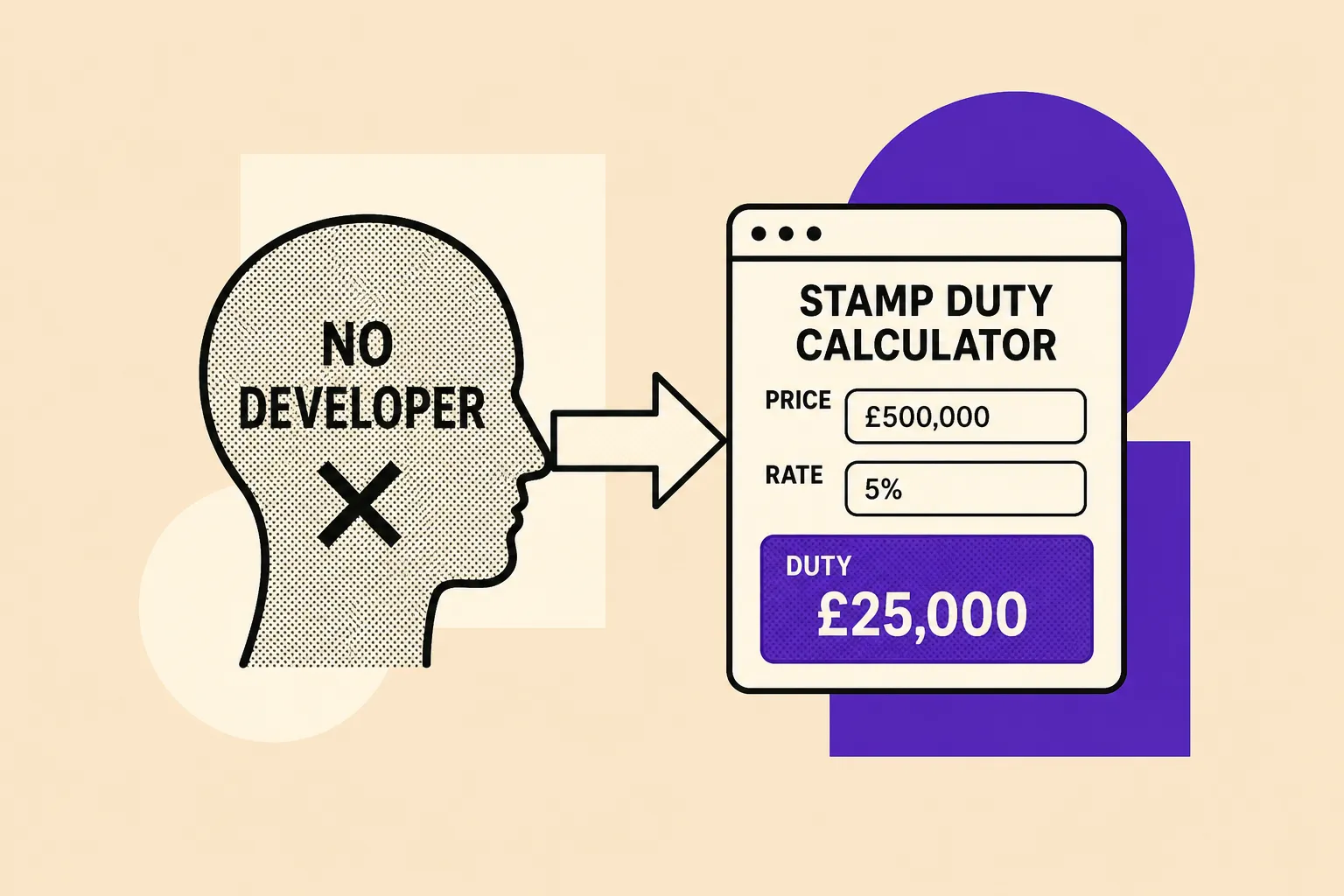
The link-building deliverable has quietly inverted. In 2027 the asset that moves rankings and AI answers is the earned brand mention that makes you an entity AI systems describe and recommend, not the count of links in a report. Agencies still pricing and reporting link volume are selling the one input Google's policies can penalise and AI answers largely overlook. This is the repricing playbook for the agency owner who sells that retainer.
Ask most agency owners what their link-building retainer delivers, and they will point at a number. Twelve links this month, twenty the next, a tidy row in a client report. The number feels like proof, and it is the thing the client renews against.
The deliverable moved while the report stayed the same. The value in an earned placement no longer sits mainly in the link. Search Engine Land's rundown of link building in 2027 (Search Engine Land is owned by Semrush) argues it now extends to the brand mention, the publication's audience, and the topical authority of being tied to a story worth covering. Context matters more than count, and for an agency selling links by the dozen, that reframes the whole retainer.
The link report your clients still ask for is measuring the wrong thing
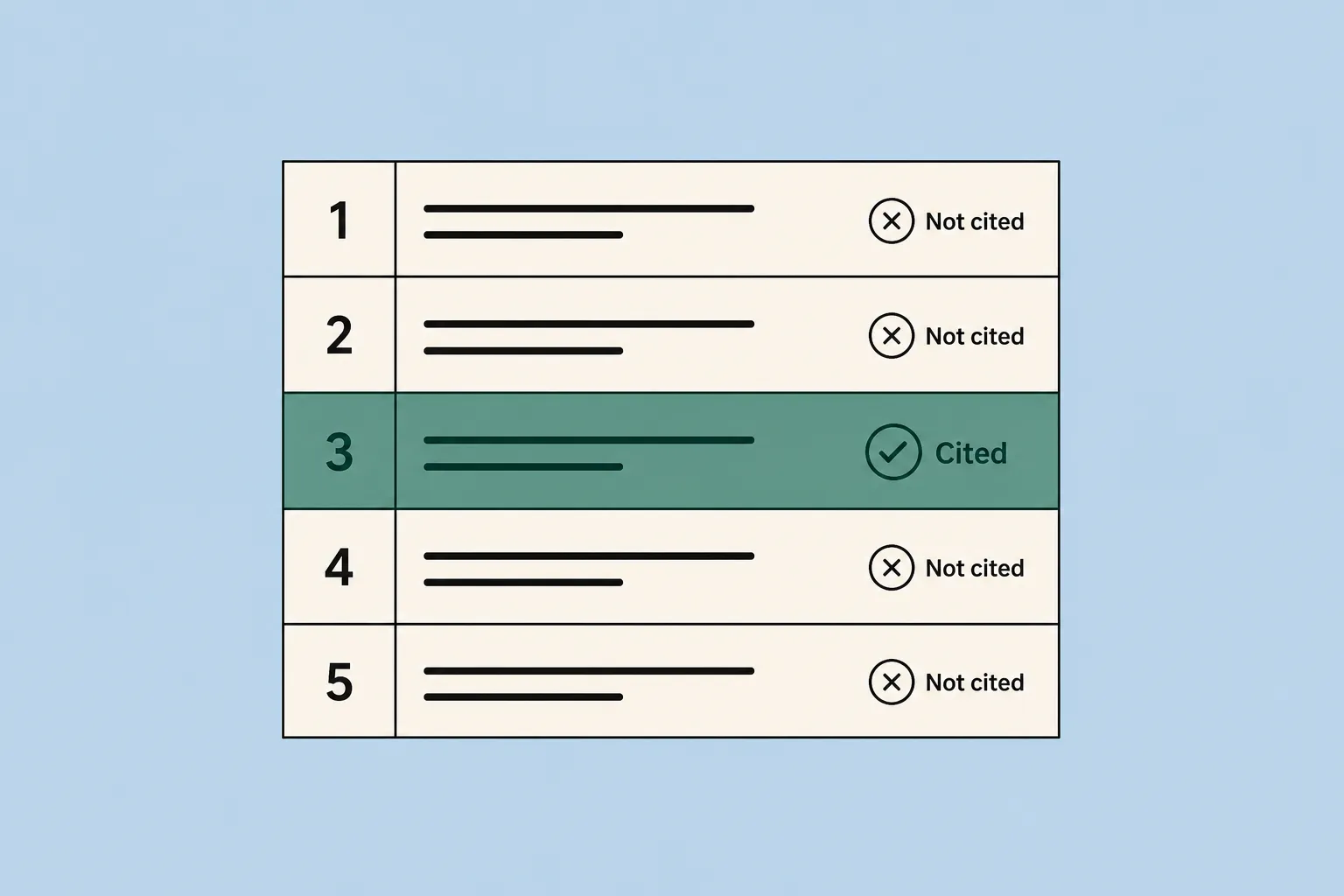
A link count measures an input, not an outcome. Think of it as an odometer that came loose from the wheels: the dial still climbs, but it stopped telling you how far the client actually travelled. Your report can show a healthy month of acquired links while the thing the client is really buying, visibility at the moment a buyer is deciding, goes unmeasured.
The practitioners doing this work already feel the shift. In a recent survey of SEO professionals, 66.6% said finding unique opportunities beats replicating a competitor's backlink profile, per the same Search Engine Land analysis. Your client's own data, experts, and story are inputs a rival cannot copy. A scraped list of their competitors' backlinks is the opposite: a plan to be the second site saying the same thing.
Why volume plays now actively lose
Let's be blunt about the downside, because it is no longer neutral. Chasing link volume through bought or manipulated placements carries ranking risk, not merely low value. Google's spam policies for web search define link spam as creating links primarily to manipulate rankings and name "exchanging money for links" explicitly. The consequence is plain: sites that violate the policies "may rank lower in results or not appear in results at all." That is the rule an agency inherits every time it buys a placement for a client.
The relationship side is eroding too, and Australia has hard data on it. Earned tier-one coverage still runs through human journalists, and AI-slop outreach is poisoning that channel. Medianet's 2026 Australian Media Landscape Report, a survey of 803 Australian journalists in January 2026, found 78% say AI-written pitches decrease their trust in PR as a source and 48% can almost always tell a pitch was written by AI. Journalists now use the tools themselves (54%, up from 37% a year earlier), which makes them faster at spotting the generated pitch. Press releases and PR contacts still surface stories (86% use press releases, 66% rate PR professionals important), so the relationship is not dead, just far less forgiving of volume. For a Sydney, Melbourne, London, or Manchester agency, the defensible asset is senior judgement about a real story. This is where a genuine SEO and digital-PR practice earns its retainer, and where a link farm does not.
From links to entities: how earned mentions become the thing an LLM cites
Quote a named expert repeatedly on a topic and they become an entity AI systems associate with it. Muck Rack's State of Journalism 2026 research found access to credible sources is among the things journalists most value in a pitch, which is what turns a spokesperson into a recurring, quotable authority the models learn.
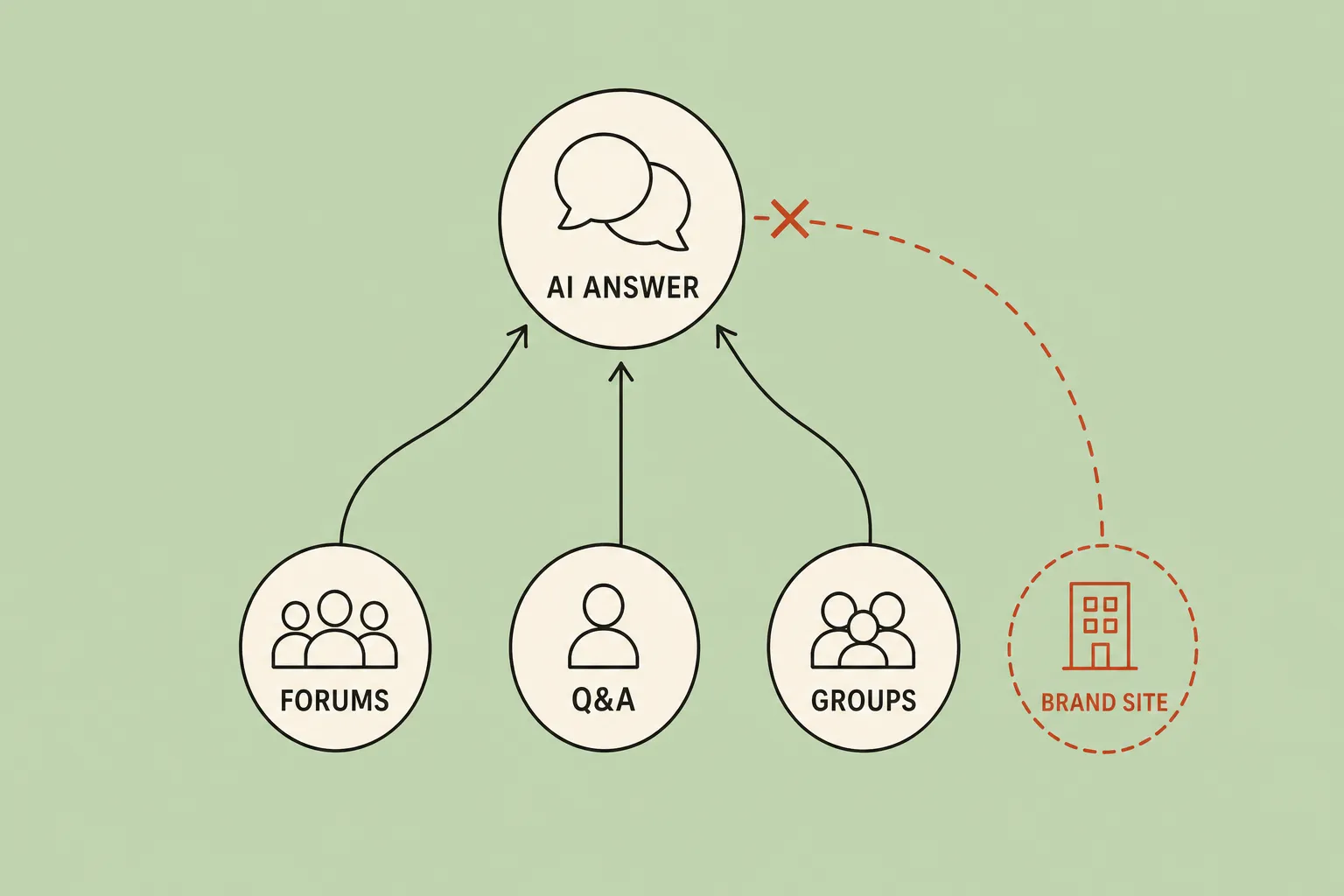
The bulk of what AI engines cite is earned coverage, not owned pages. Muck Rack's recurring "What Is AI Reading?" analysis, drawn from more than 25 million links cited by ChatGPT, Claude, and Gemini across 17 industries, put earned media at around 84% of all AI citations in its May 2026 edition, with paid and advertorial content at just 0.3%. Muck Rack is a PR-software vendor, so treat the figure as directional, and remember AI-citation measurement is still contested. An independent test points the same way: a Stacker and Scrunch experiment found the same article, once distributed across third-party news sites, saw its AI citation rate climb from 8% to 34% across 944 prompt-and-platform combinations on five AI engines (Scrunch is an AI-visibility vendor, so again read it as directional).
For an Australian agency this is no longer a US-only payoff. A first-party study of 115 Australian businesses by the agency Optimising, covering 24.8 million sessions, recorded median AI-referral growth of about 1,200% year on year, with the share of projects receiving any AI traffic rising from 13.5% in 2023 to 88.5% in 2025. ChatGPT drove 90.2% of that identifiable AI traffic, but Perplexity and Gemini visitors converted three to six times higher. Being the entity AI describes now maps to a measurable, fast-growing channel.
The worked proof is already local. For the luggage brand Kadi, a comparison of base fare versus final fare across the top ten carriers produced the headline "Australian airlines charge up to 66% more in hidden fees," which was picked up by Yahoo Finance, Australian Traveller, and escape.com.au. Those tier-one placements then got pulled into ChatGPT, Perplexity, and Google's AI Mode, where they keep answering the "which airlines have the most hidden fees" question long after the news cycle moved on. That is a brand mention doing the work of an evergreen citation, produced by original data rather than a bought link. It is the case for building original, AI-citable content as a deliberate asset.
One digital-PR motion, not three silos
Most agencies still run SEO, PR, and brand social as separate teams with separate reports. That leaves money on the table, because a single earned placement pays three ways at once: a link signal for classic search, a brand mention for reach and recall, and a potential citation an AI answer can pull. Merge the motion and every win compounds instead of being logged in one silo and forgotten in the others.
It is the same shift underlying the move from being ranked to being the brand AI recommends to B2B buyers, and it runs alongside the reputation question of how earned press coverage shapes your AI brand citations. The placement that builds reputation is the same one that builds the link and the citation. One story, one pitch, three outcomes.
What to sell instead: an earned-authority offer you can deliver white-label
Change two things and the retainer follows. Reprice the deliverable from "links acquired" to "mentions earned, plus where the brand is now described and recommended by AI." Re-report it the same way, because ranking breadth and citation inclusion are not the same measure, a gap covered in ranking versus AI-citation rate. What you sell is senior digital-PR judgement (the real story, the credible source, the data angle) rather than resold link volume.
The market is already funding this category. In the UK, the AI-visibility platform Searchable raised £10.3 million to track brand visibility across AI search engines, and its founder Chris Donnelly claims customers converting from ChatGPT and other assistants arrive at roughly three times the rate (a vendor's own figure, so weigh it as such). Closer to home, the Australian "performance PR" platform Linkby raised a US$23 million Series B, its CEO framing brands' LLM-focused strategies as the opportunity as more product search moves to channels like ChatGPT.
For an agency owner without an in-house SEO team, the practical route is white-label. You keep the client relationship and the brand on the report while a wholesale partner delivers the earned-authority work and an AI Visibility Check underneath it. Note that "digital PR for AI search," sometimes labelled GEO, is a contested term (Google's own line is that good SEO is good GEO), so sell the outcome, being the entity that gets described and recommended, rather than a buzzword.
Key takeaways
- Reprice and re-report the deliverable from "links acquired" to "mentions earned, plus where the brand is now described and recommended by AI." The count is an input; the mention is the asset.
- Treat bought and manipulated links as a ranking risk, not a cheap win: Google's link spam policy allows demotion or removal for links exchanged for money.
- Anchor the AI-visibility case to sourced figures (earned media at roughly 84% of AI citations in Muck Rack's directional analysis, plus the measured Australian AI-referral growth) rather than a single anecdote.
- Merge SEO, PR, and social into one digital-PR motion so each earned placement pays as a link, a mention, and a citation.
- Deliver the earned-authority offer white-label if you have no SEO team, keeping the client and the brand yours while a wholesale partner does the senior digital-PR work.
Frequently asked questions
Is link building dead in 2027?
No. Links still carry weight, but the value of an earned placement has shifted toward the brand mention, the publication's audience, and the topical authority of being tied to a real story, according to Search Engine Land's analysis of link building in 2027. The count is a weaker proxy for authority than it used to be.
Do bought or low-quality links carry a ranking risk now, not just low value?
Yes. Google's spam policies define link spam as creating links primarily to manipulate rankings, explicitly including exchanging money for links, and state that sites which violate the policies may rank lower or not appear in results at all. That makes paid link volume a downside risk, not a neutral input.
What share of AI citations comes from earned media versus owned pages?
Muck Rack's recurring "What Is AI Reading?" analysis put earned media at around 84% of AI citations in its May 2026 edition, drawn from more than 25 million cited links across ChatGPT, Claude, and Gemini. Muck Rack is a PR vendor and AI-citation measurement is still contested, so treat the figure as directional, but the direction favours earned coverage over owned pages.
How should an agency reprice link building for AI search?
Report the mentions earned and where the brand is now described or recommended by AI, rather than a raw link count, and merge SEO, PR, and social into one motion so each placement pays three ways. Agencies without an SEO team can deliver this white-label under their own brand.
Amina helps professional-services firms and the agencies that serve them get named in AI answers, not just ranked in Google. We measure your share of AI visibility and build the earned coverage and structure that win the citation, work you can deliver under your own brand. See Amina's AI SEO and visibility service.