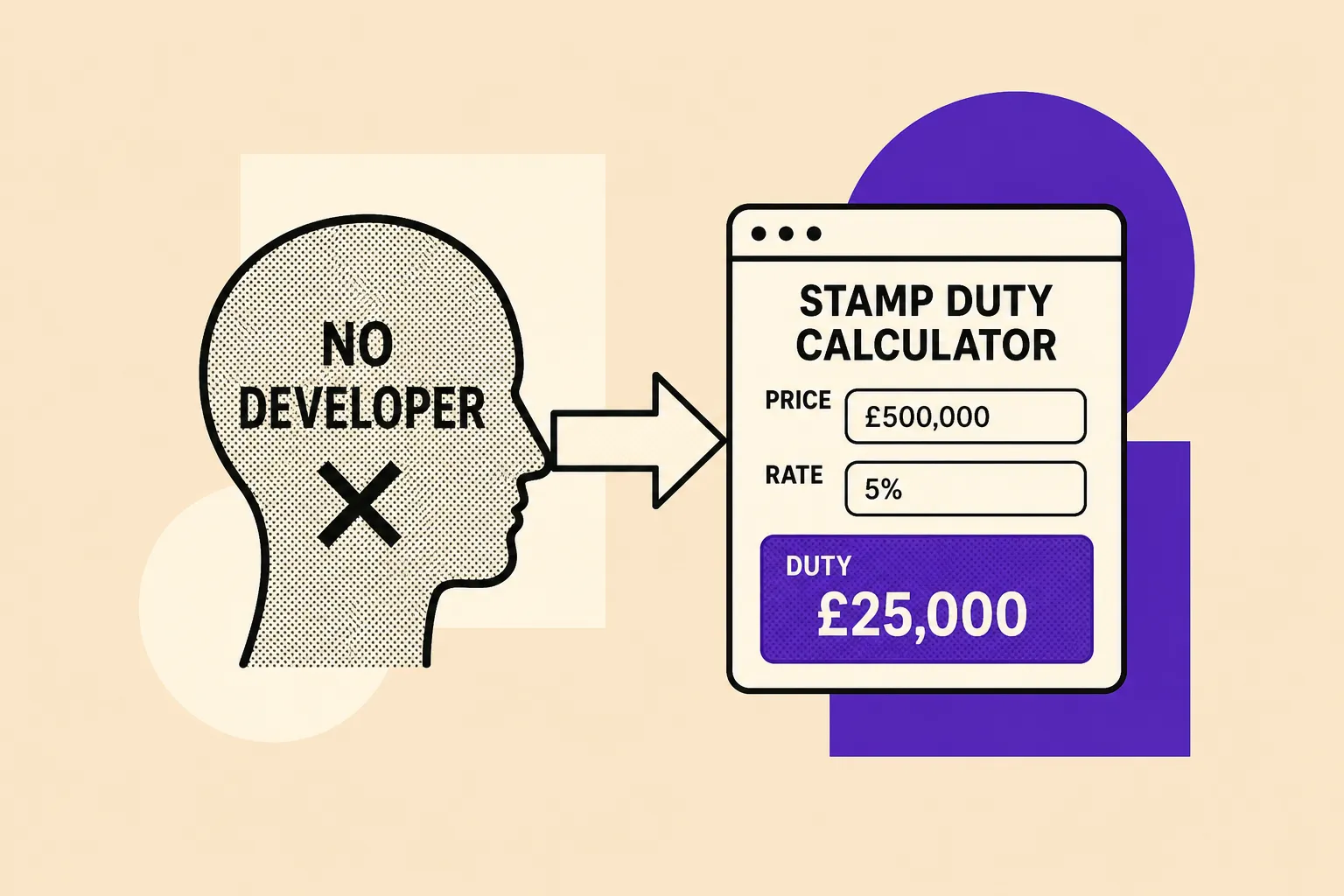
AI answer engines now send visits without a referrer, so GA4 files them under "direct" and your dashboard stops explaining where demand came from. A marketer can watch sessions climb while quietly losing the ability to prove which channel is working. The fix is a deliberate AI-visibility measurement layer that GA4's default channels cannot provide, and this piece shows what to instrument before your next budget round.
The most reassuring number on a growth dashboard right now is often the most dangerous one. When direct traffic climbs, the instinct is to read it as brand strength: people know you, they type you in, they come straight to you. A growing share of that "direct" traffic is not loyal buyers finding you from memory. It is AI-referred traffic that GA4 can no longer identify, quietly piling up in the one bucket that means "I don't know."
That is the trap this piece exists to name. As buyers shift to AI answer engines, GA4's default channels lose the ability to tell you where demand is actually coming from, even as the headline sessions look better than ever. For a B2B marketer taking numbers to a board, that gap is not an inconvenience. It sets up a confident, wrong decision.
The dashboard that looks like a win and can't be defended
ChatGPT has gone from novelty to daily habit faster than most measurement tools noticed. ChatGPT.com is now the ninth most visited site in the United States, with about 1.09 billion monthly visits, up 48.38% year over year and sitting ahead of both DuckDuckGo and Bing, according to Search Engine Land's analysis of a year of US traffic. (Search Engine Land is owned by Semrush, and the figures come from Semrush's Traffic Analytics tool.) Bing, despite three years of bolting Copilot onto search, fell 50.43% over the same period. That climb is the clearest sign yet of ChatGPT's move into mainstream brand discovery.
Those shifts show up in individual accounts in a way that should worry anyone who reports to a board. Take one real GA4 property Search Engine Land examined: sessions up more than 105%, engaged sessions up almost 111%, key events up around 80.5%. Stop reading there and you would tell the client they are winning. Keep reading and direct traffic is up over 157% and now accounts for more than 78% of all traffic, up from about 62.5% a year earlier. Nearly four in five visitors arrive with no identifiable source, and that share grows every month.
Why "direct" is now where AI-referred traffic goes to disappear
Direct is the junk drawer of analytics, the place GA4 tosses every visit it cannot label. It was never really a channel at all. Historically that meant bookmarks, typed URLs and untagged email. Now it increasingly means AI.
The mechanism is mundane, which is exactly why it is dangerous. AI chat interfaces routinely strip the referrer data GA4 depends on, so the visit arrives with nothing to identify it. Analyst Jes Scholz called this the "Bermuda Triangle of analytics," and the label fits: measurable traffic sails in and its origin never comes back out. Search Engine Journal reports that the biggest blind spot is AI traffic with no referrer at all, most of it from AI mobile apps and in-app browsers that "pass nothing for GA4 to read," with links opened inside those embedded browsers tending to strip the referrer entirely.
How big is the leak? One AI-traffic vendor, Loamly, found that 70.6% of AI-referred traffic arrives with no referrer header and lands in GA4 as "direct," based on 446,405 visits in its own database. Treat that as directional rather than settled: Loamly sells AI-traffic detection and has said the figure comes from analysing its own data, not independent verification. The pattern it describes is corroborated in the wild, though. On the site of measurement expert Katie Delahaye Paine, Search Engine Journal documented that 86% of new users over 28 days came from direct, with direct up 126% year over year while referral collapsed 90%. As the author put it, more than six out of seven users now arrive without a traceable referrer. That is one account, not a population, but it is a second, independent case showing the same shape.
For Australian marketers, this is not an imported American problem. [AU] An Australian study of 115 local businesses by the agency Optimising, tracked over 12 months to September 2025, found ChatGPT drives 90.2% of identifiable AI traffic locally, that AI traffic grew a median 1,200% year over year, and that 88.5% of sampled sites now receive AI traffic. The researchers were careful, and their caution is the point: many AI-assisted journeys "arrive without an AI referrer, so they log as organic or direct," which makes their own totals, in their words, conservative. The misclassification is happening here, measured on local GA4 data.
[UK] In the UK, the blind spot is compounded before referrer-stripping even starts. The ICO's final guidance on storage and access technologies, published under the Data (Use and Access) Act 2025, confirms that analytics cookies do not fall within the "strictly necessary" exemption and need consent. Every visitor who declines is already invisible to GA4, so a rising direct bucket sits on top of an analytics picture that was undercounting to begin with.
Why GA4's own AI Assistant channel doesn't rescue you
Google's answer to all this is the AI Assistant channel, and it is worth understanding why it does not rescue you. Added on 13 May 2026, the channel groups visits from ChatGPT, Gemini, DeepSeek, Copilot and Grok. On the same real account above, it captured just 0.47% of traffic. Whatever AI-driven visits that site earns, they are not showing up where GA4 files them.
The bigger gap is what the channel cannot see at all: it excludes Google's own AI Overviews and AI Mode entirely, and that is a fast-growing share of where answers now appear. Australian commentary makes the stakes concrete. [AU] As SmartCompany has reported, click-through rates are already declining as users "get what they need directly from AI-generated summaries," and businesses may find their content is used behind the scenes "without clear attribution or meaningful traffic flowing back." As Google's AI Mode keeps expanding, the surface consuming your content is the one your analytics can see least, which is the heart of the AI Overviews visibility trap. Be precise about the label, though: "AI search visibility" and "GEO" are still contested terms, and Google's own position is that "good SEO is good GEO." The measurement gap is real whatever you call it, and the traffic loss runs through Google's answers as much as through third-party chatbots.
Stop measuring the road behind you: what to instrument instead
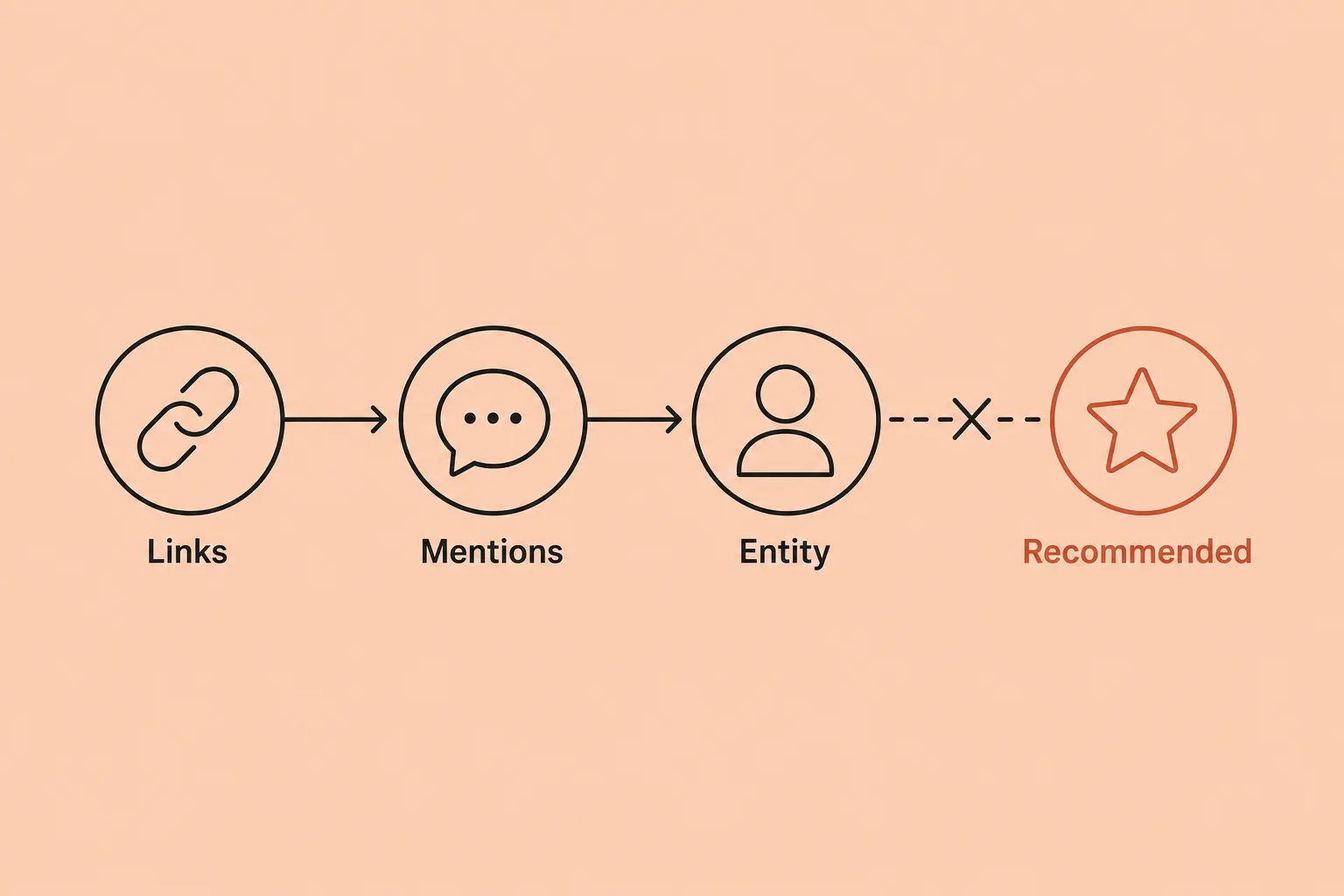
So if the default channels are going blind, what replaces them? The shift is from counting clicks to tracking presence, and it means adding a measurement layer GA4 was never built to provide.
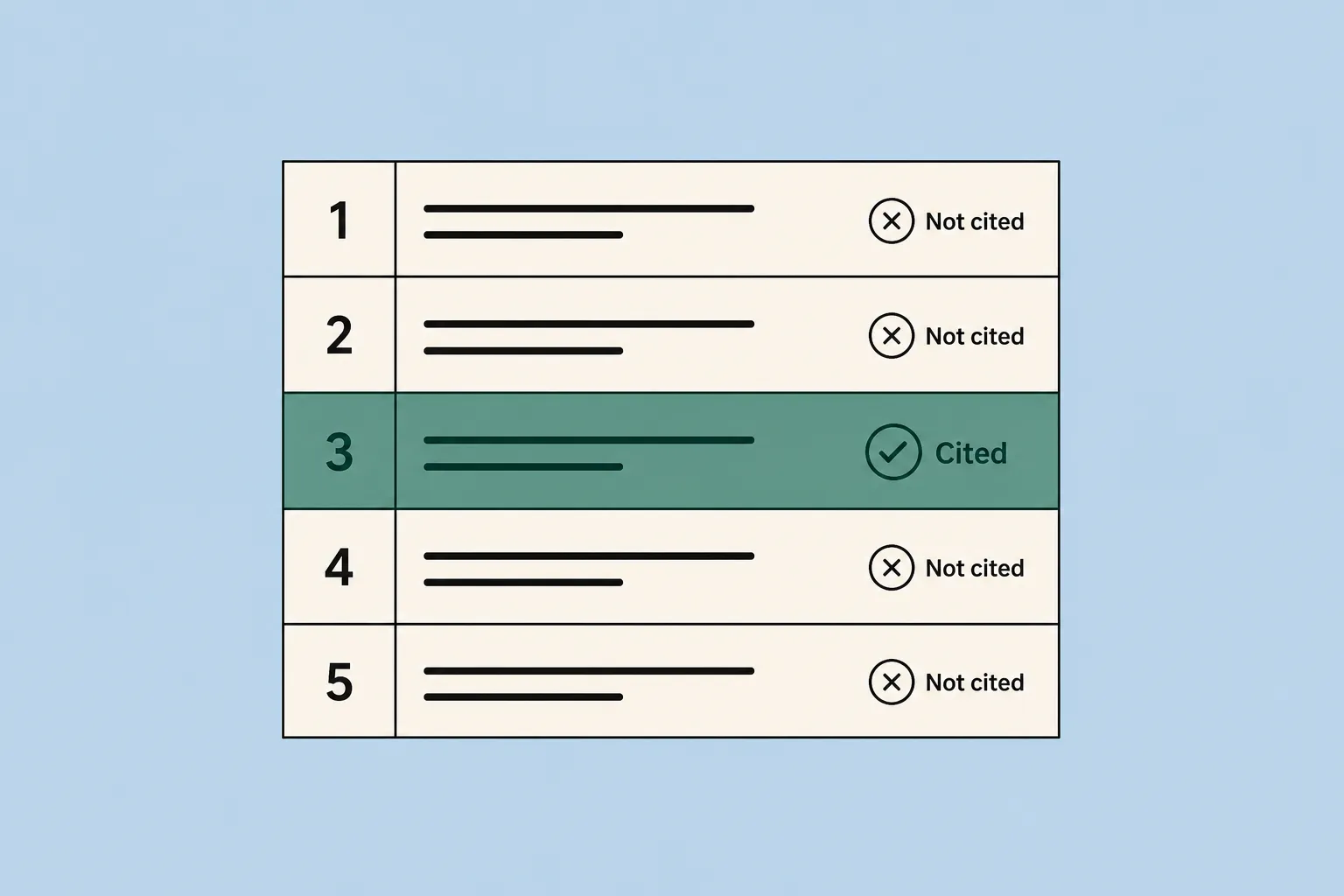
Start with citation and share-of-model tracking. Being cited, not only visited, is increasingly the number that matters. When an AI Overview appears and you are not cited, click-through drops 65%; when you are cited it drops 49%, against 46% when no AI Overview appears at all, according to Seer Interactive data reported by Moz. The same analysis notes that around 24% of Americans, per Adobe, now begin their search on ChatGPT. If a quarter of buyers start where you cannot be measured, presence in the answer becomes the leading indicator, and citation rate rather than ranking position is what to watch.
UK practitioners are already reframing the metric this way. [UK] As one UK marketing analysis puts it, AI answers "don't behave the same way as search rankings"; a brand can be first in one answer and sixth in another depending on how the question is framed, so the job is to monitor citations and mentions across ChatGPT, Perplexity and Google AI Overviews rather than chase a fixed position. Then layer in audience-intelligence and market-research tools that can see the road ahead, and do the unglamorous thing: survey your own customers about where they actually heard of you. That last source is the one channel AI cannot strip.
A note of realism belongs here. Most marketers are betting on this shift without a way to score it yet. In a Fractl study of 150 marketers fielded in 2026, 54% said they prioritise GEO or AEO optimisation, but only 12% reported being very confident they can measure the results, and 8% said they have no way to measure at all. That makes the measurement layer the difference between a bet and a guess.
The board question you must be able to answer before the next budget round
Every marketer diversifying away from rising paid costs eventually faces one question in a budget meeting: where is our traffic actually coming from now? If the honest answer is "78% direct, and we are not sure," the organic and AI investment case falls apart precisely when it should be strongest. The channel that would prove the pipeline is the one collapsing into "I don't know."
This is why the fix belongs in how you measure, well upstream of how you report. A rising direct bucket read as brand strength is the specific misread that turns a genuine AI-search win into an unprovable one. Boards do not fund what cannot be explained, so the reporting has to change before the budget does. For a framework on turning this into a defensible board metric, the goal is simple to state and hard to fake: be able to say whether AI engines are sending, and citing, you.
Key takeaways
- A rising "direct" number rarely means brand strength anymore. More often it is AI-referred traffic GA4 cannot identify, so treat a growing direct share as a measurement warning.
- The cause is referrer-stripping by AI apps and in-app browsers. GA4 gets nothing to read, so the visit lands in "direct" (up to 70.6% of AI traffic, per Loamly's own database).
- GA4's AI Assistant channel captured just 0.47% on one real account and cannot see Google's AI Overviews or AI Mode at all. Do not rely on it as your AI-traffic number.
- Instrument presence, not only clicks: citation and share-of-model tracking, audience-intelligence tools, and direct customer surveys. In Australia, ChatGPT already drives 90.2% of identifiable AI traffic (Optimising).
- Walk into the budget round able to answer "where is our traffic coming from now?" with something better than a swelling direct bucket.
Frequently asked questions
Why is my GA4 direct traffic suddenly increasing?
A rising share of "direct" traffic is often AI-referred visits that lost their referrer data in transit. AI chat apps and in-app browsers frequently pass nothing for GA4 to read, so the visit is filed under "direct" by default. Loamly's analysis of its own database put this at 70.6% of AI-referred traffic, which is directional vendor research rather than an independent benchmark.
Can GA4 track AI search traffic from ChatGPT and Gemini?
Only partially. GA4's AI Assistant channel, added in May 2026, groups some visits from ChatGPT, Gemini, DeepSeek, Copilot and Grok, but it captured just 0.47% of traffic on one real account Search Engine Land examined and excludes Google's own AI Overviews and AI Mode entirely. Most AI-referred traffic still lands in "direct."
What should I measure instead of GA4's default channels?
Track presence rather than clicks: AI citation and share-of-model tracking, audience-intelligence and market-research tools, and direct customer surveys that capture where buyers actually heard of you. Being cited in an answer matters because click-through falls 65% when an AI Overview appears and you are not cited, per Seer Interactive data reported by Moz.
Is AI-driven attribution loss happening in Australia and the UK?
Yes. An Australian study of 115 businesses by Optimising found ChatGPT drives 90.2% of identifiable AI traffic locally and that many AI journeys arrive with no referrer, logging as organic or direct. In the UK, ICO guidance confirms analytics cookies need consent, so declined-consent visits are missing before referrer-stripping even applies.
Does "GEO" or "AI search visibility" mean GA4 is obsolete?
No. GA4 remains useful for on-site behaviour; it is the default channel attribution for AI that fails. Terms like GEO and AEO are still contested (Google argues "good SEO is good GEO"), so treat AI-visibility measurement as a layer you add on top of GA4, not a replacement for it.
This is the work Amina does every day: our AI-visibility service measures how often your firm is named across the major AI assistants and closes the gap, so you are the answer when a buyer asks AI about your field, and you can prove it when the board asks where the demand came from.